Finishing our culinary journey through Japan, we conclude the final few days in Kyoto. Read Part 1 here. Also, there were previous posts on Tokyo and Hakone. In our final few days we visited a number of museums and temples, but we also had an opportunity to dive into Japanese whisky culture. Whisky highballs are advertised everywhere and the liquor stores carried an impressive array of national and international selections. Our trip to a tiny distillery on Lake Biwa was certainly one of trip highlights.
Day five in Kyoto started at the Kyoto National Museum and then to Sanjusangen-do, the temple of thirty-three bays, and finally back to the shopping district that night for dinner.
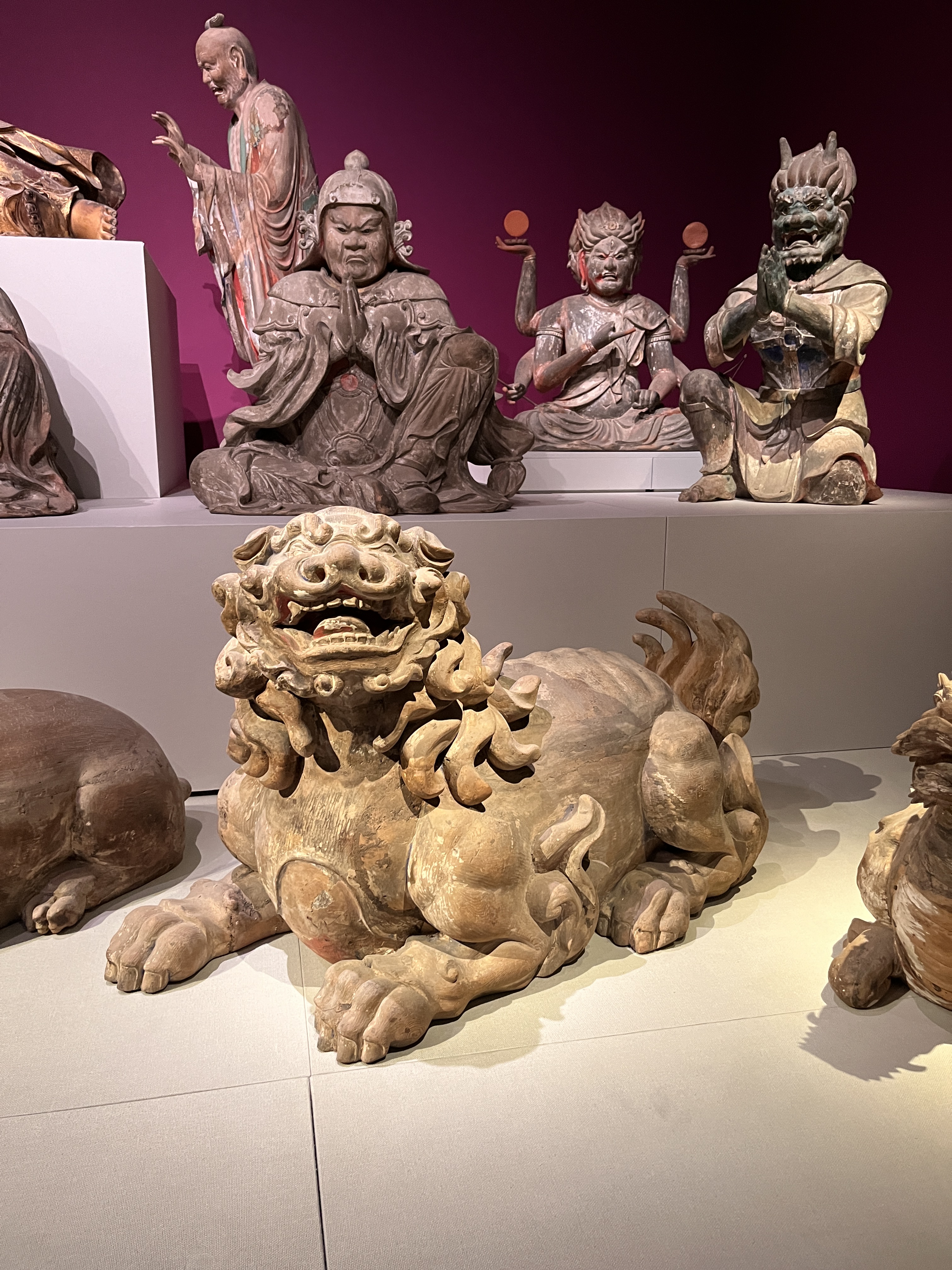
Kyoto museum,
Honen’s three simple words,
Become many thousand.
But oh! The sculptures!

Sanjusangen-do,
One hundred bodhisattvas,
Beware the arrows!
This temple is famous for its 1001 statues of Kannon, the goddess of mercy. Founded in 1164 and rebuilt a century later after being destroyed in a fire. At 120 meters long, the temple is Japan’s longest wooden structure. The hallway behind the statues was once used by warriors to test their marksmanship indoors, lists are still displayed of warriors names and the number of arrows that they successfully shot the length of the building.
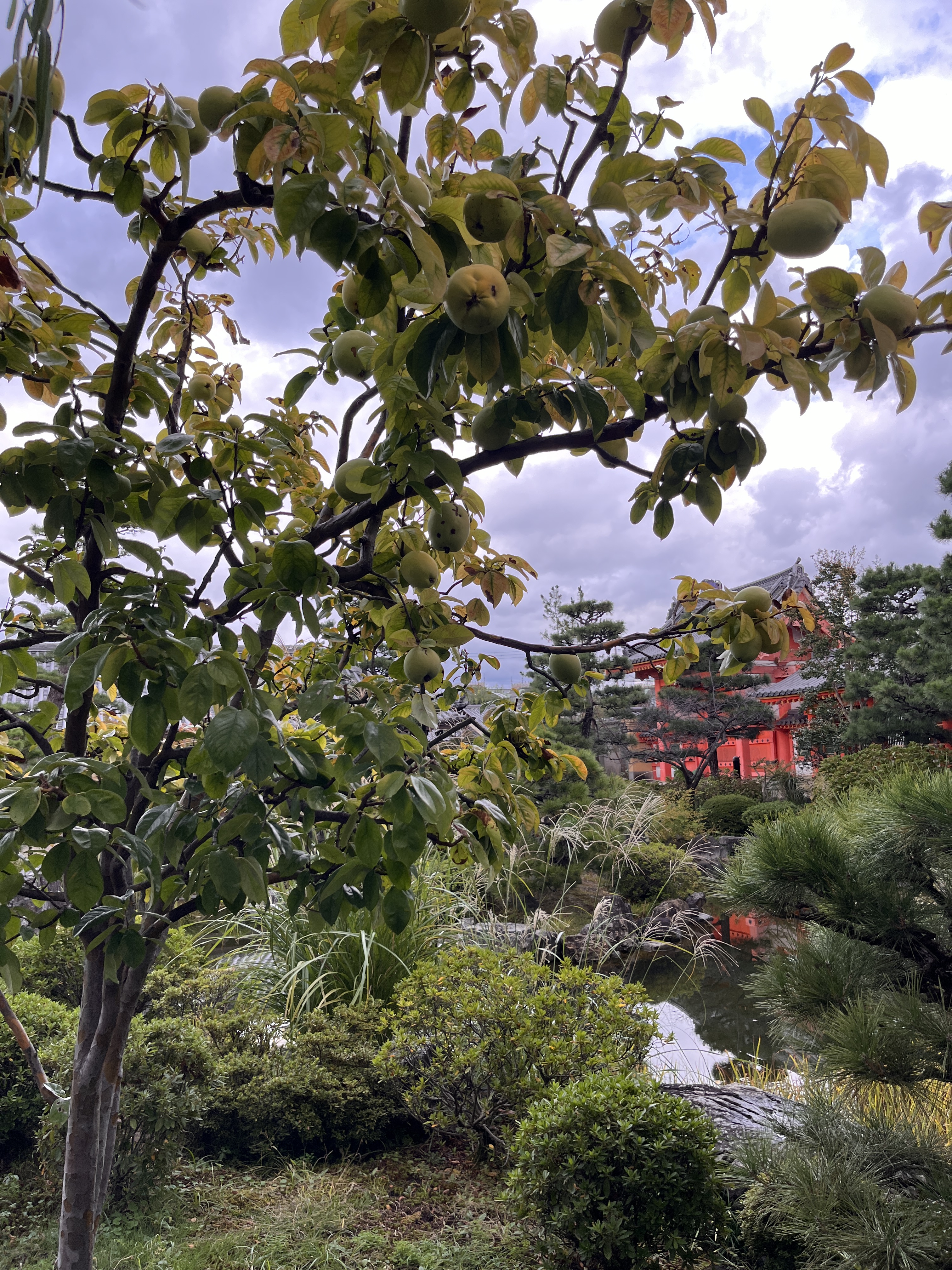
In the quiet gardens,
Where crowds choose not to travel,
Quince is not yet ripe.
Kyoto offers so many culinary options, including one we chose not to embrace – beef. There were options for Waygu (which translates simply as beef in Japanese) everywhere. Here’s a write-up on everything you might want to know about Waygu. I just don’t eat a lot of red meat these days as I find seafood and vegetables far more interesting, and I had all seafood I could handle in Japan. Here were a couple options for lunch:


Yeah…those are garlic burgers at Burger King and McDonalds available in Kyoto (ninniku means garlic). I always love seeing how fast food gets adapted around the world. I have to admit, these look pretty tasty!
But we kept walking until we returned to the shopping district. Just outside the Nishiki market are a myriad of high-end casual restaurants. We stopped at Stars ‘n Caccio to grab a cocktail and stayed for dinner, which started with these Hokkaido scallops with eggplant and salmoriglio sauce.

Stars ‘n Caccio’s
Dry-aged kampachi –
A revelation.
The dry-aged kampachi was served with roasted peppers and a pecorino cheese. I had never tried dry-aged fish, much to the surprise of the chef who visited our table while we enjoyed it. Here is great write-up on the process. The fish is uncooked, served as a crudo, and has a wonderfully delicate texture. What fresh water fish could we dry-age? Walleye and northern pike seem like the most likely candidates, but even Lake Superior whitefish might be an interesting option.
Day six in Kyoto, we decided to travel up to Hikone Castle, which is largely original from the castle built in the 1600s, on the shores of Lake Biwa.

Of Hikone Castle, I wrote:
Black pines, water’s edge,
Moat walls of Hikone,
And beams of the keep.

Genkyu-en Gardens,
Protected by Hikone,
Even now, solace.
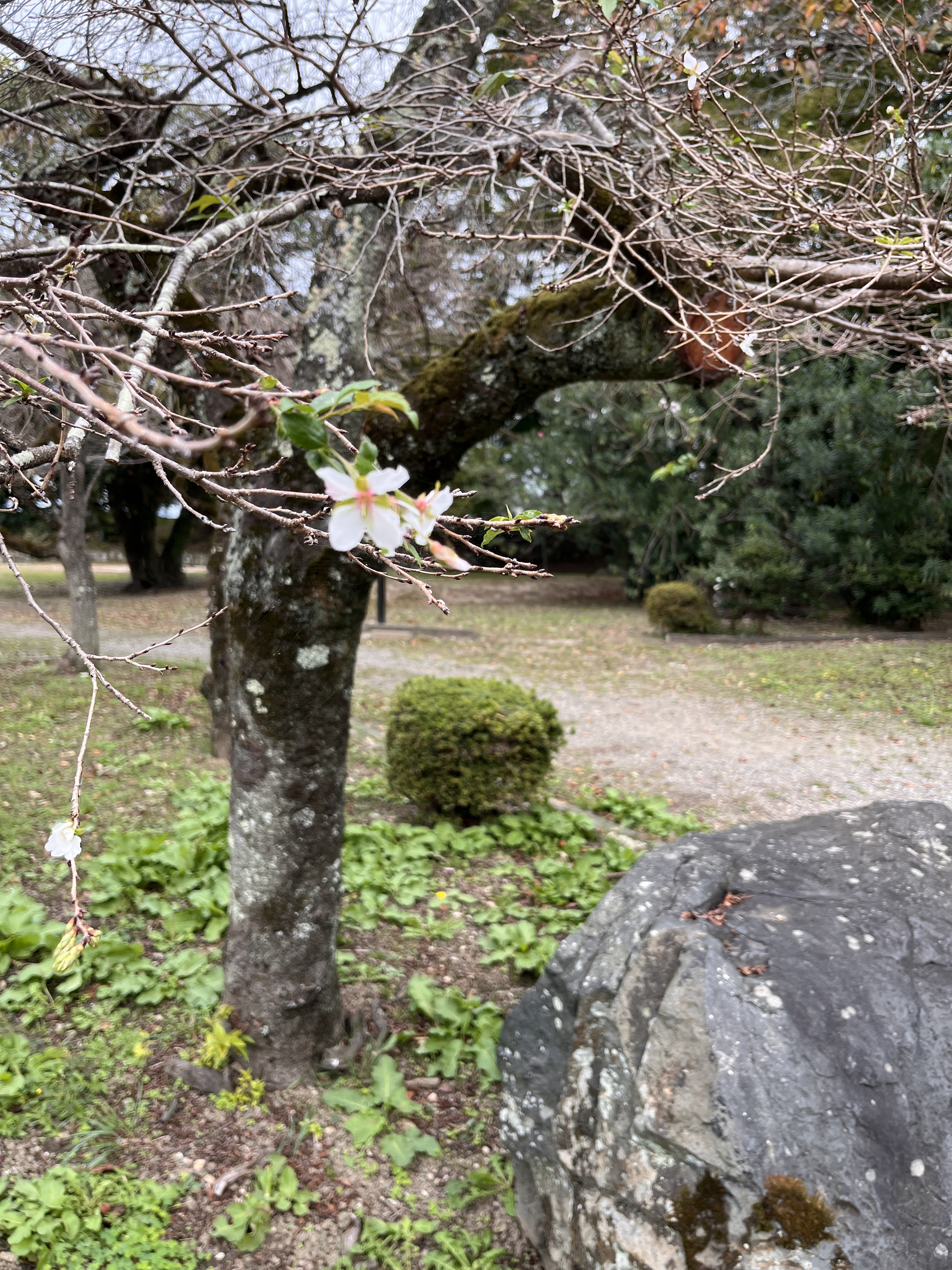
Walking garden grounds,
These warm days of late autumn,
Confused plum blossoms.
Then on to Roman Beer, which has begun to distill their own spirits as Namahaga Distillery. They use the name Amahagan (an anagram of Namahaga) for their blended whiskies that are not 100% Japanese Single Malt, and call them “World Whisky”, which has become the common naming convention in Japan. Japan has passed a law requiring anything labelled as Japanese whisky must be distilled and bottled in Japan. It was a very common practice in Japan to blend Japanese distilled spirits with whisky from Scotland and Canada. This is a tiny distillery (they claim to be the smallest in Japan), so the great majority of their product is blended from other distillers.
Ah! Namahaga,
German beer hall, Scotch music,
All whisky heaven.
The company started in craft brewing and their signature Roman Beer is still available at the tap room, which is designed like a German beerhall. I started with a sampling of their Amahagan whiskies.
Amahagan Edition1:
Standard scotch whisky expression, hint of banana bread on the nose
Amahagan Edition 3:
Mizunara oak adds influence, lovely mellowed flavor
Edition Yamazakura:
Apparently aged in cherry wood, full-bodied, gorgeous nose.
Alongside the whisky, we enjoyed Ko-Ayu (baby sweetfish) which are native only to Lake Biwa. They are less than 10 cm in length, and preserved in a teriyaki style sauce.

The umami-fishiness and the whisky play together in fascinating ways that I would never have expected. It’s a reminder the terroir matters – eat and drink things paired from their region of origin. There is often a reason flavor profiles are accentuated in certain ways. I have mimicked this pairing at home with a teriyaki glaze over smoked sprats. Marlin jerky enjoyed in Hawaii has the same fish/teriyaki notes. A surprising flavor combination with whisky!
Then we moved on to the Namahaga single malt whisky selections.


Single Malt, aged in Mont Perat red and white wine barrels: cherry pit notes and light smoke on the nose. Wine offers some interesting notes in the flavor, with the white wine finish adding a lovely taste.
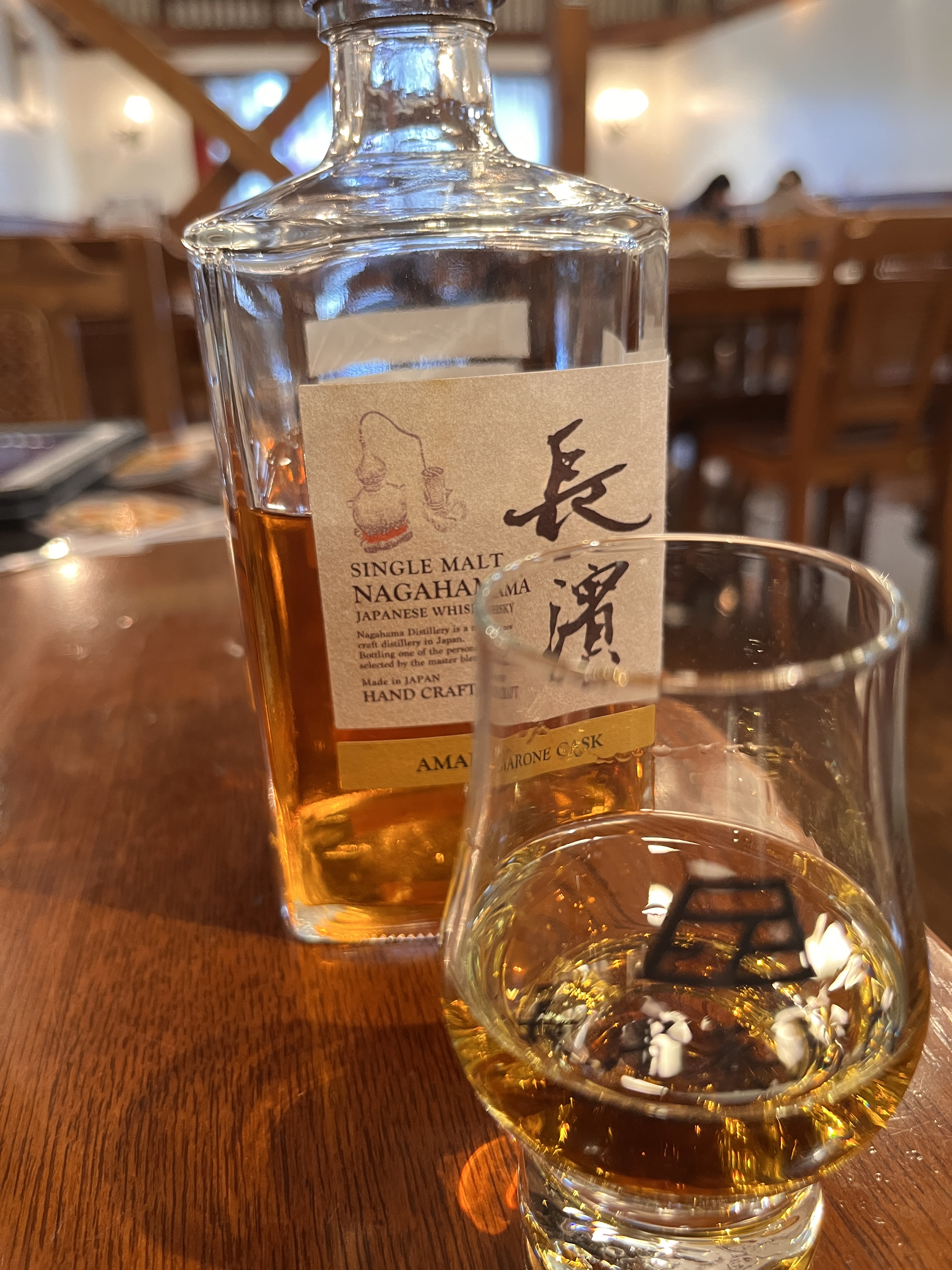

Single Malt, aged in Amarone barrels: This one, with traditional Italian wine aging, brings smoke on the nose, sliding almost into a cedar smoke flavor.


Single Malt, aged in Sherry Casks: Intense raisin on the nose, initial burst of scotchy-smoke resolves into dark chocolate, cherries, and a hint of crème brulee caramel tones. This one…this one is worth the whole trip!
We returned to Kyoto by rail with no place lined up for dinner in advance, but we stumbled across a local restaurant that looked promising. Fairly traditional setting, we took off our shoes and stepped up to sit on the raised floor with low tables. There was no English spoken by our server, but the menu had an English translation for each dish title. Beyond that, we were on our own, but we did ok!


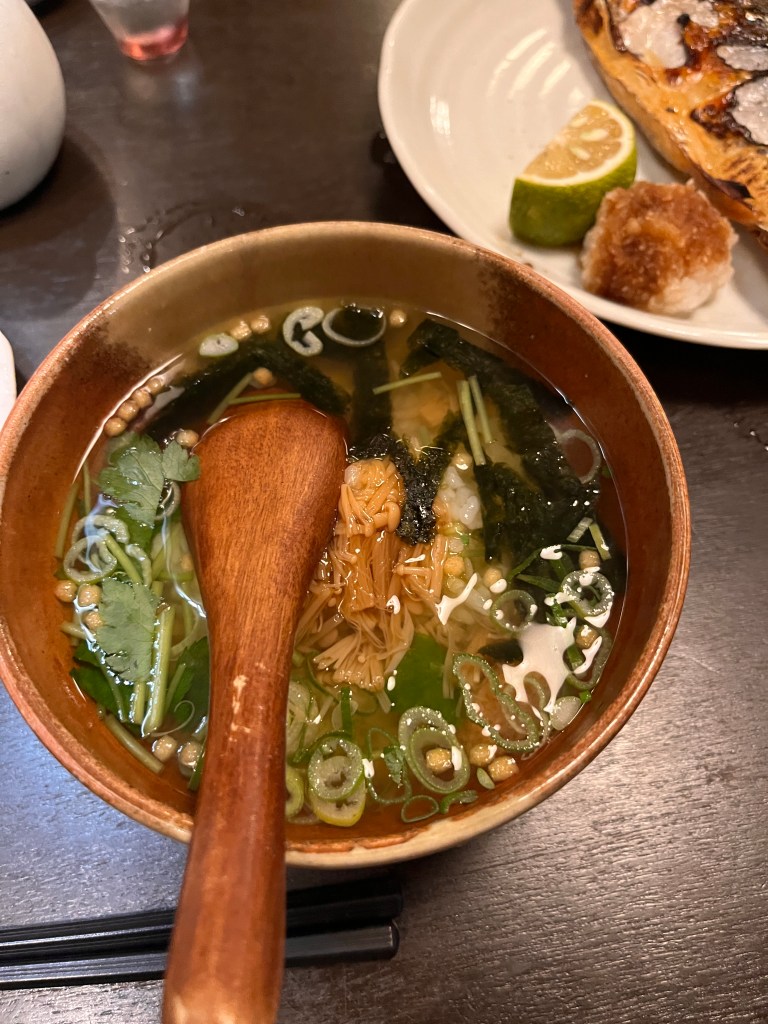

Our meal started with a pasta salad (upper left), similar to a macaroni salad, with what I believe was a mayonnaise base dressing. Followed by a set of gyoza, a Japanese filled dumpling in a wonton wrapped (upper middle). We then enjoyed a tempura fried shrimp, zucchini, sweet potato, shitake mushroom, and perilla leaf (upper right). The main entrée (bottom) was a charcoal grilled horse mackerel, also sometimes called jack mackerel, served alongside a vegetable broth. The citrus on the plate is a Sudachi lime, which were in season at the time.
It was an excellent meal. Knowing Gyoza are dumplings and anything tempura is going to be nicely fired, you always can find an option in Japan. The fish was the real winner, with the charred flavors and the aromatic lime setting off the rich flavors of mackerel.
Day seven was another day trip from Kyoto, this time to Nara to see the Todai-ji Temple. One of Japan’s most historically significant temples, it was constructed in 752 as the head Buddhist temple for the country. The main hall until recently was the world’s largest wooden building, despite the reconstruction in 1692 being only two thirds of the original temple hall’s size. The massive building houses one of Japan’s largest bronze statues of a seated Buddha at over 55 feet tall.
Nara is also home to the deer park with thousands of small deer roaming unfenced through the town, being fed by tourists.
Tiny Sika deer
Roam free across fields, parks, streets
Giant appetite!
Visiting Nara in 1865 before the reconstruction had begun, Basho wrote:
“first snow –
when will the temple building start
for the Great Buddha?”
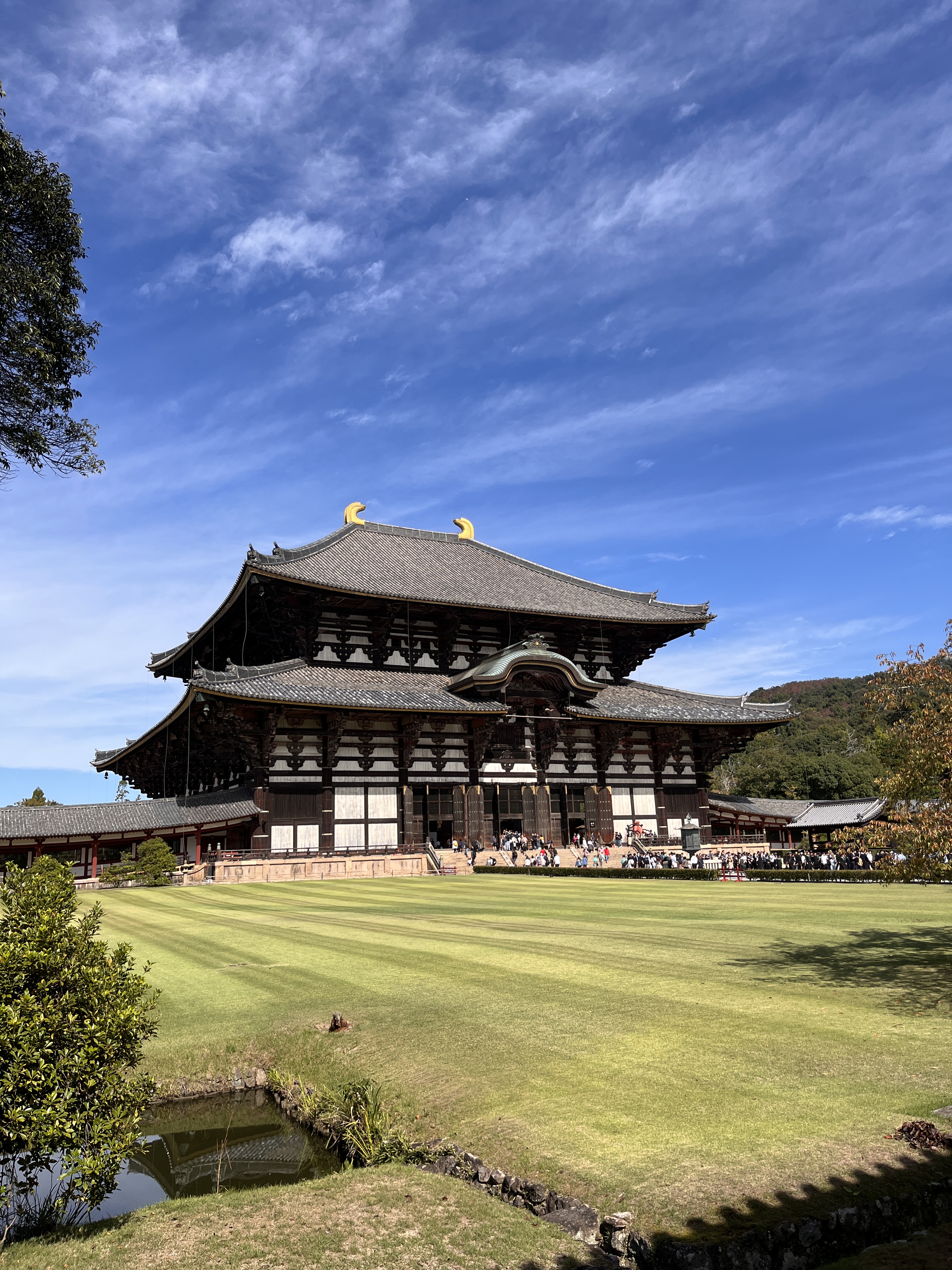
Inspired by Basho and the Todai-ji, I write:
Autumn’s sun rises –
The giant timber’s transcend
My humble vision.
Within Todai-ji,
The Great Buddha solemn rests.
Frantic people peer.

Outside Todai-ji,
Guardians watchful eyes glare –
No musubi or beer!

This laminated sign was affixed to the ground right at the guardian gates to the Todai-ji. Something about the combination of beer and musubi struck me as very funny.
After touring the temple, we walked through rolling hills, teeming with Sika deer, up to more temples built into an ancient primeval forest. These “old-growth” forests exist around the world and are virtually untouched by human hands. The one located in the Sylvania Wilderness in the Upper Peninsula of Michigan is one of my favorite places in the world so I made it a priority to visit the forests of Nara. The ancient trees in the Nara primeval forest include one long revered species called Lord’s Oak or Ichii Gashi.

Ichii Gashi
Most noble oak, evergreen
Stretching to the sky

Stubborn Hinoki –
Storm shorn, stunted, yet striving,
Strong, though hollowed through.
Primeval forest
Gives way to wandering streets,
A voice calls – Oranges!
After walking through the temples in the ancient trees, the trail outlets to a street of homes. As we walked along back to the railway station, we suddenly heard a man calling out, “Oranges!” We stopped and bought the juiciest, most satisfying orange ever. Or it may have just been a long day of walking and anything would have tasted amazing.
We returned to Kyoto by rail, and as we discussed our final dinner in Japan, there was really only one choice – a return to Isami Sushi which we discussed at great length in Part 1.
An Isami return –
Same tastes, somehow more enthralling,
Kyoto’s finest.

Even the empty plate is a work of art. (Again, we went deep on this topic in our previous post so if you were looking for write-up on the dinner you will find it there as I ordered the exact same meal.)
One last whisky tasting back at our hotel in Kyoto:
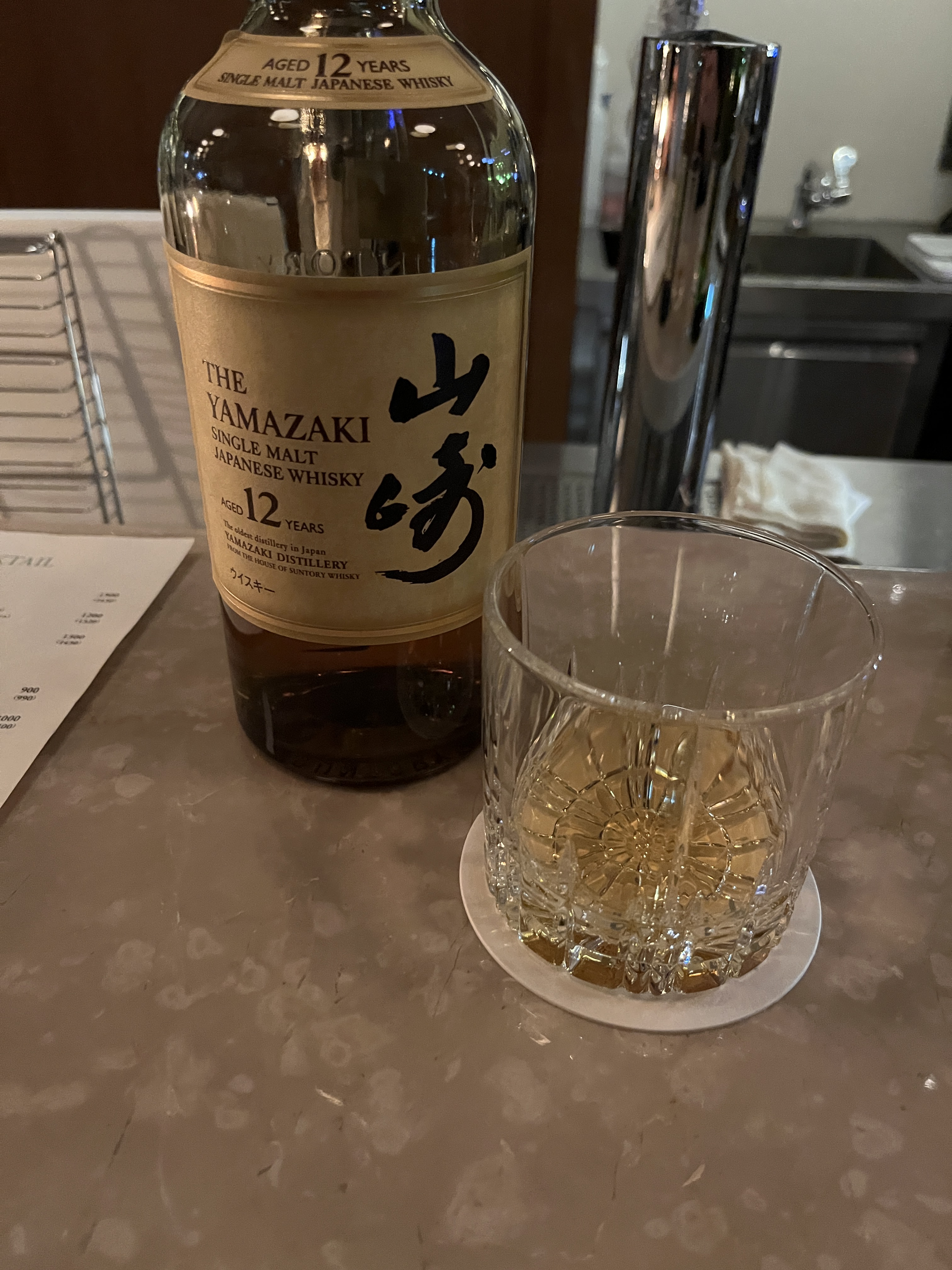
Yamazaki 12 year-old Single Malt – Nose initially of leather with metallic overtones, maybe copper? Then hints of French toast with maple syrup. Tastes initially of orange peel, resolving into cherry notes with mild chocolate and a light burnt sugar flavor. Incredibly balanced from a flavor, burn, taste, texture standpoint. Overall, great structure.

Hakushu 12 year-old, Single Malt – Aromas of pine smoke, but soft, maybe smoked rosemary or cedar, briny. Flash of smoke with a sip, resolving to notes of authentic wasabi on rice. Loved the initial smoke, but it fades too quickly with no underlying flavors to savor, surprisingly little caramel in those 12 years.
The next day was a travel day, initially from Kyoto to Haneda Airport in Tokyo via the bullet train on a trip that once took Basho over 2 months on foot. And then from Tokyo back home.
Bullet to Tokyo,
Two months have become two hours,
Still, mist-laden hills.

Fujikawa bridge,
Lotus Peak blooms from the clouds,
Good-bye, Fuji-San.
 Great Lakes Cuisine