We started our Italian Culinary Journey in Florence (see Part 1 here) and then spent a day travelling to Siena, the culinary epicenter of Pecorino Toscano. We were searching for a very specific cheese – Pecorino Foglie di Noce.
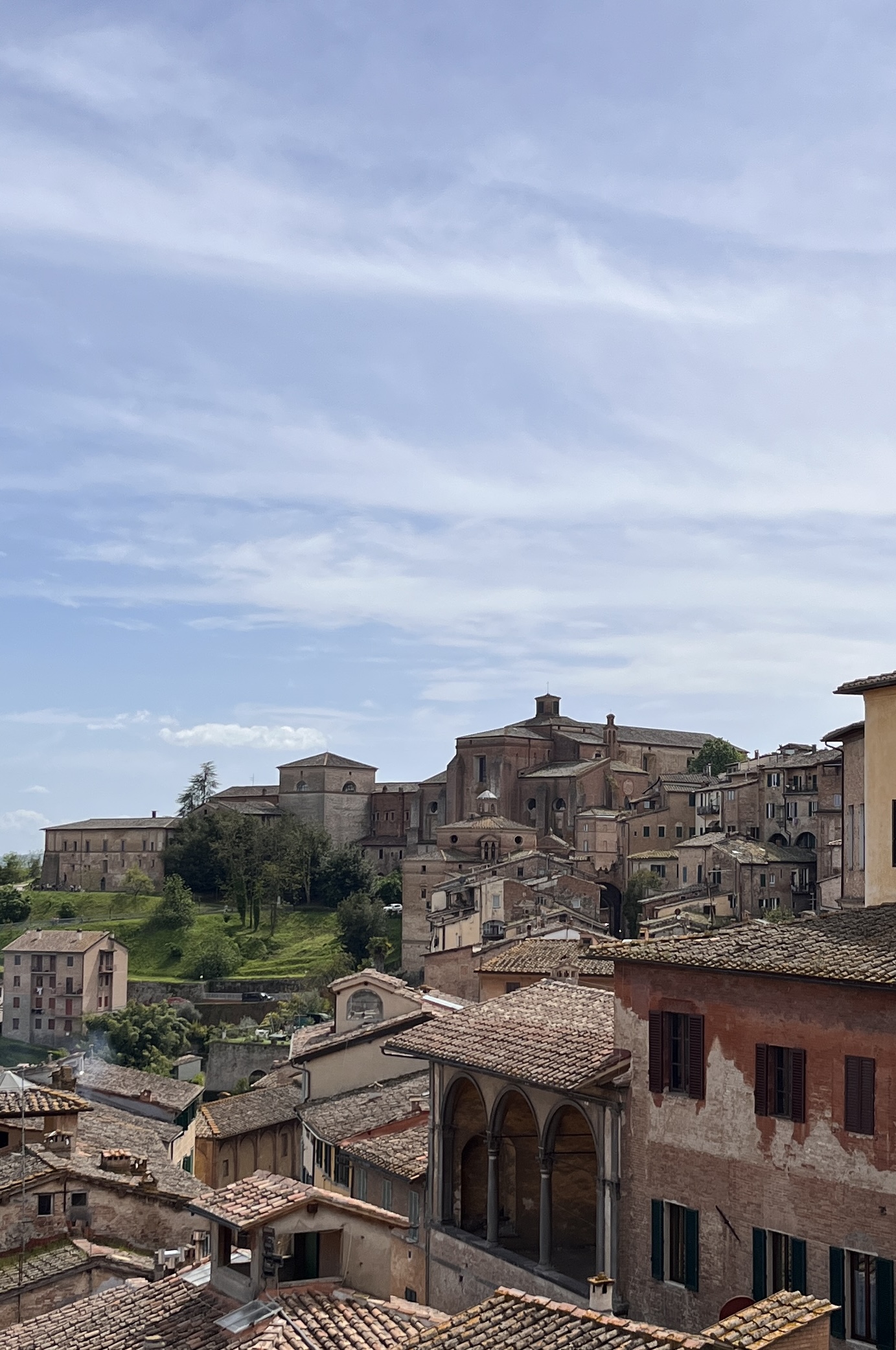
Outside Italy, Pecorino Romano is the most well-known, but Pliny the Elder wrote about Pecorino Tuscano in his Naturalis Historia in the first century, referring to it as the Cheese of March, a reference to the month production traditionally started. Produced from the milk of the sheep that graze in the hills surrounding Siena, today it is carefully controlled by Consortium for the Protection of Pecorino Toscano PDO which is based in Siena.
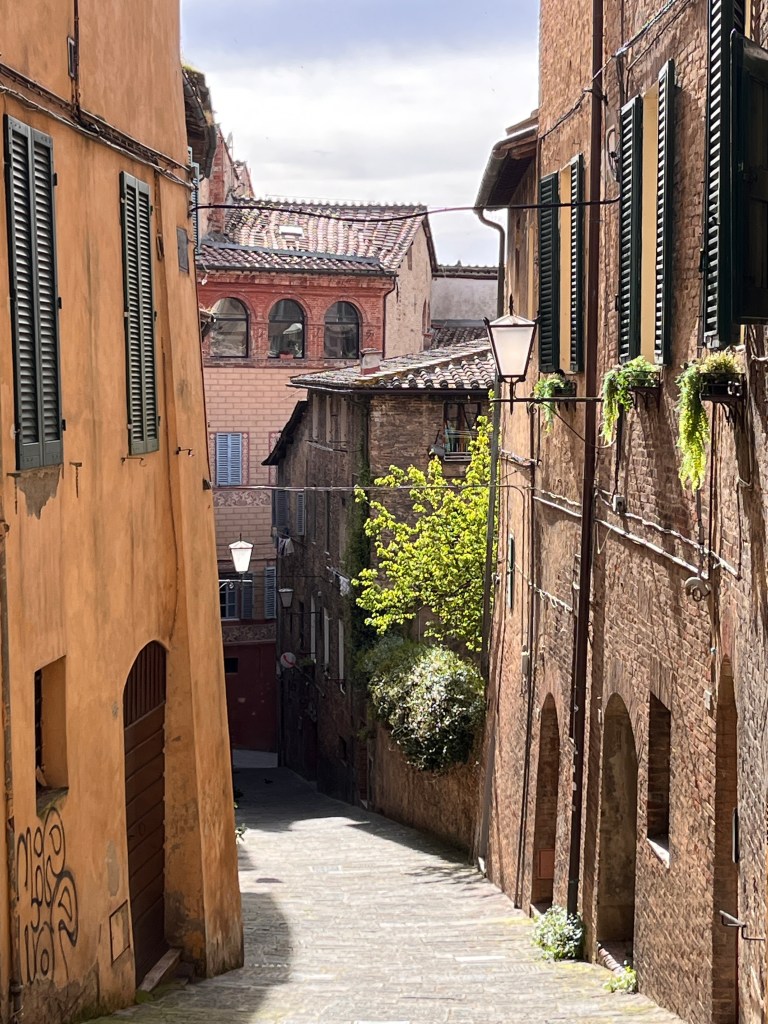
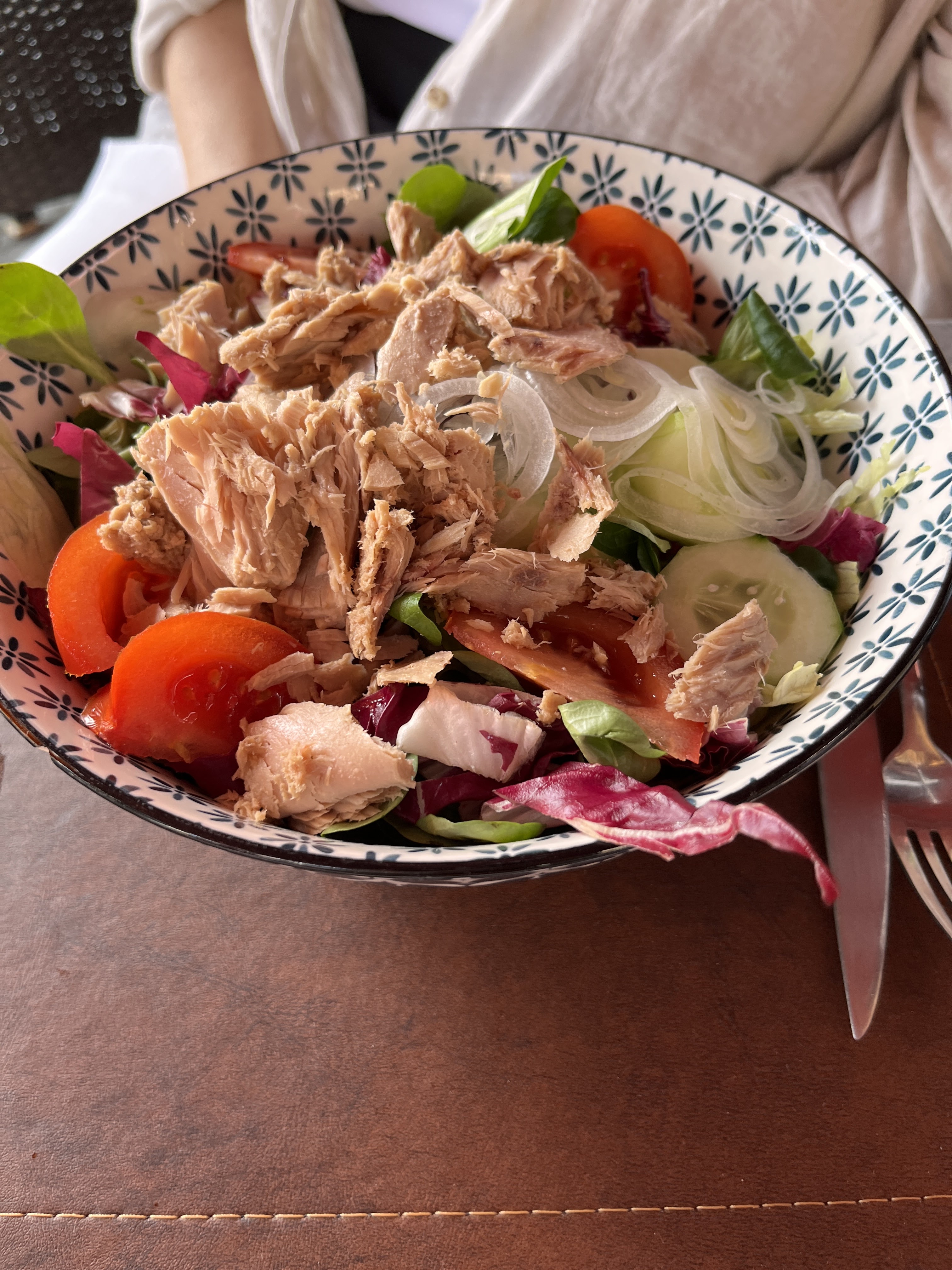
This is an ancient town, built on the top of a hill by the Estruscans before being settled by the Romans. The center of the town is the sunken Piazza del Campo surrounded by an wide walking path. There is a horse race held here twice a year, called the Palio di Siena, with representatives from the towns different districts racing for nothing more than bragging rights until the next race. But on our visit, the piazza is surrounded instead by outdoor dining where we enjoyed cocktails and a light lunch. We had a tuna salad, which features tuna jarred in Italian olive oil for a firmer texture.
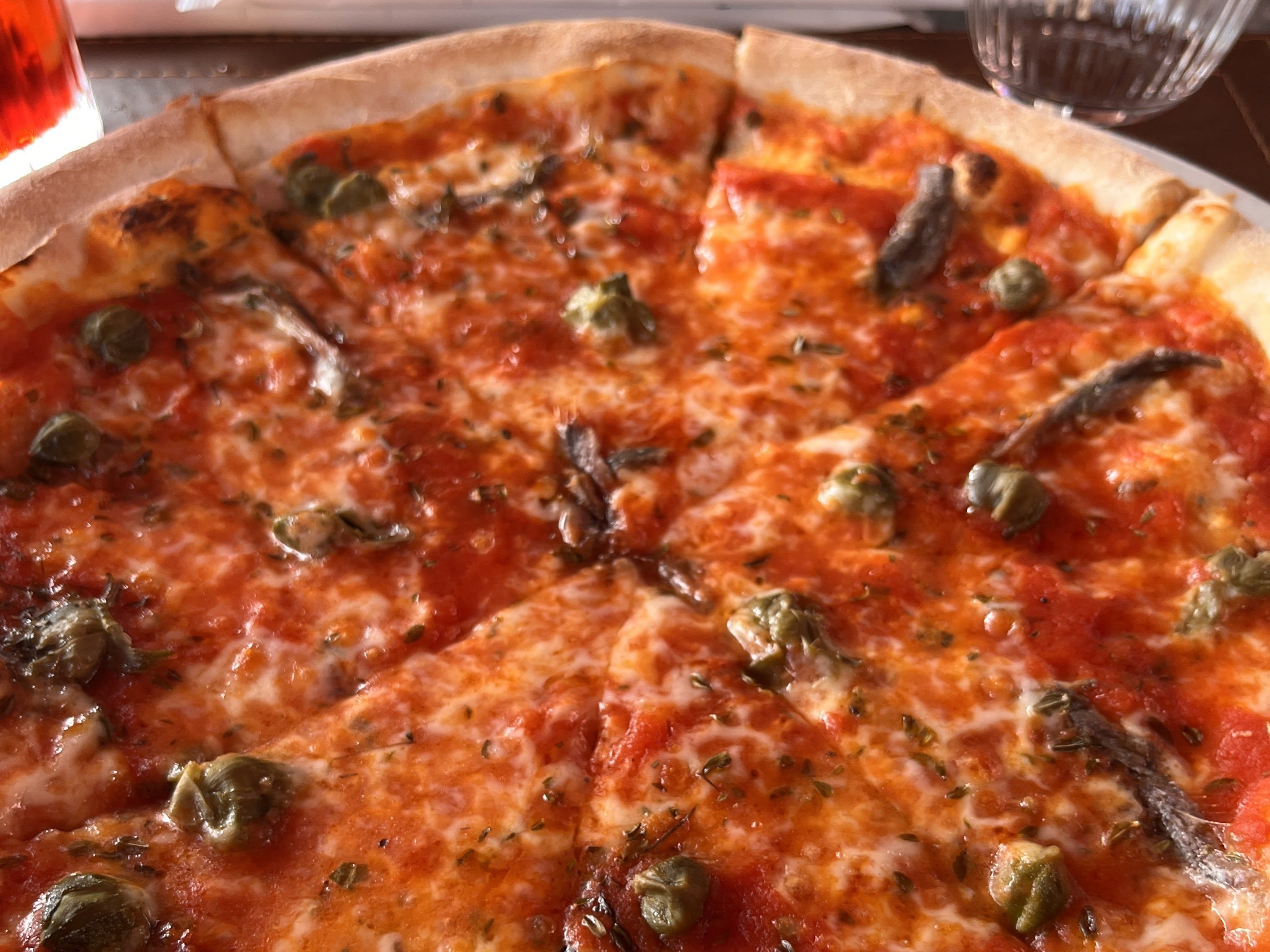
We also enjoyed our first pizza of the trip – the traditional thin, cracker crust with a very light marinara, sprinkle of cheese and dried herbs, and then capers and anchovies to punch up the flavor. Is that a Negroni poking in on the upper left? Yes, yes it is.
So fully fueled by our traditional lunch, we went off in search of our coveted pecorino. A local market had everything we could have wanted and more.
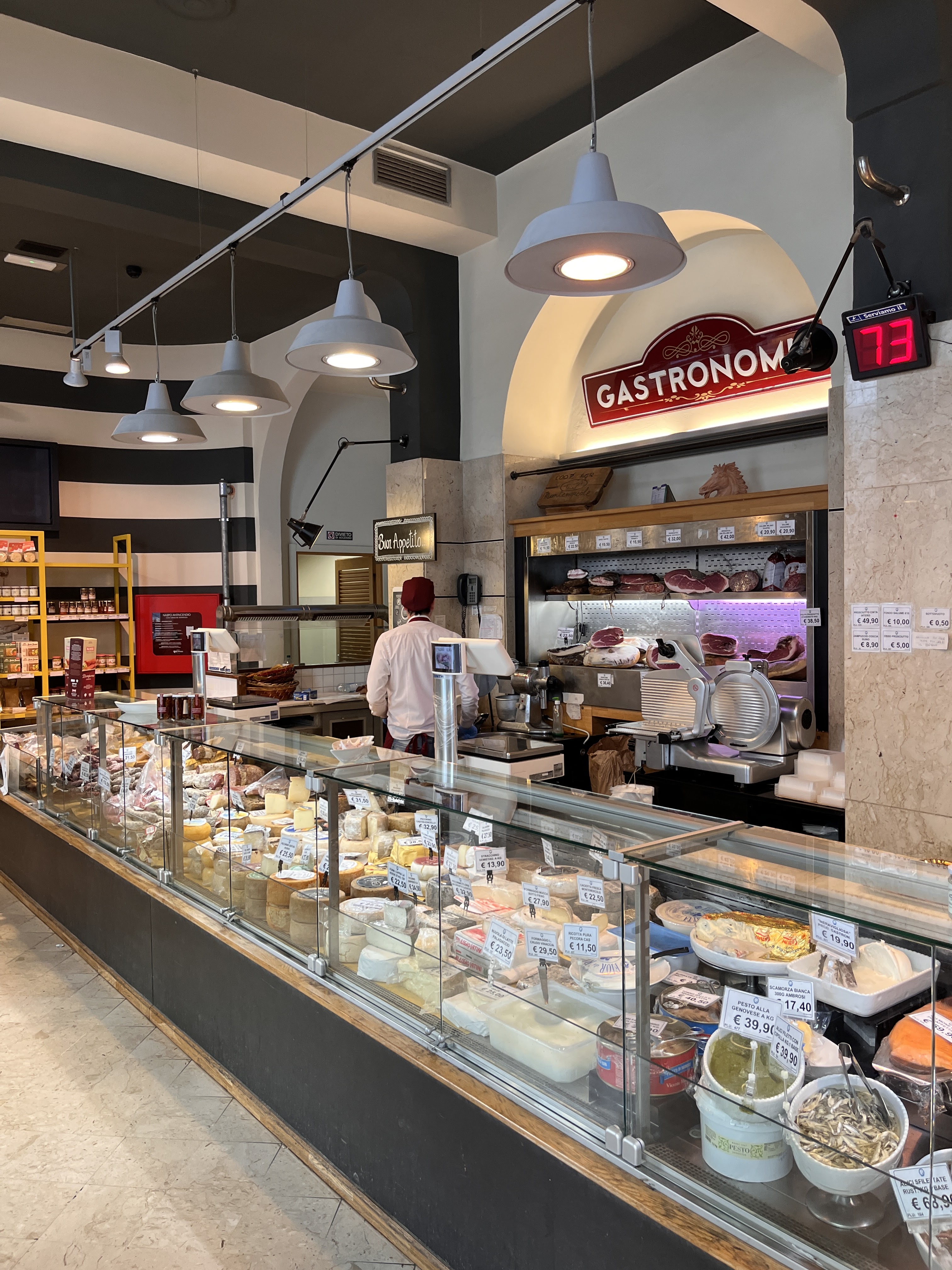
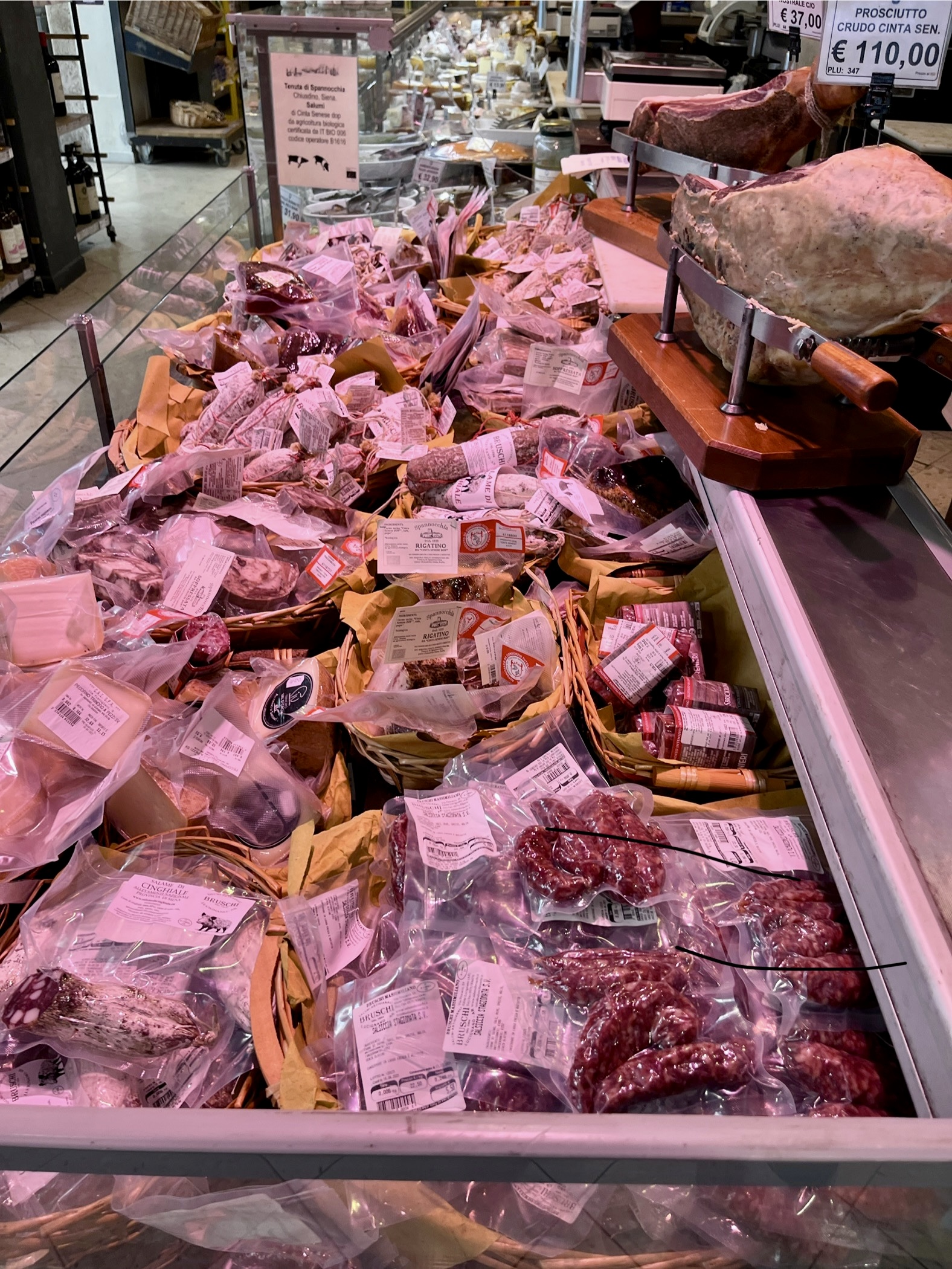
In addition to a local pecorino and an aged variety, we also found the Pecorino Foglie di Noce, which is aged in caves and wrapped in walnut leaves. In addition to the incredible selection of different pecorinos from the area, we also had our choice of any of the local salumi as well.
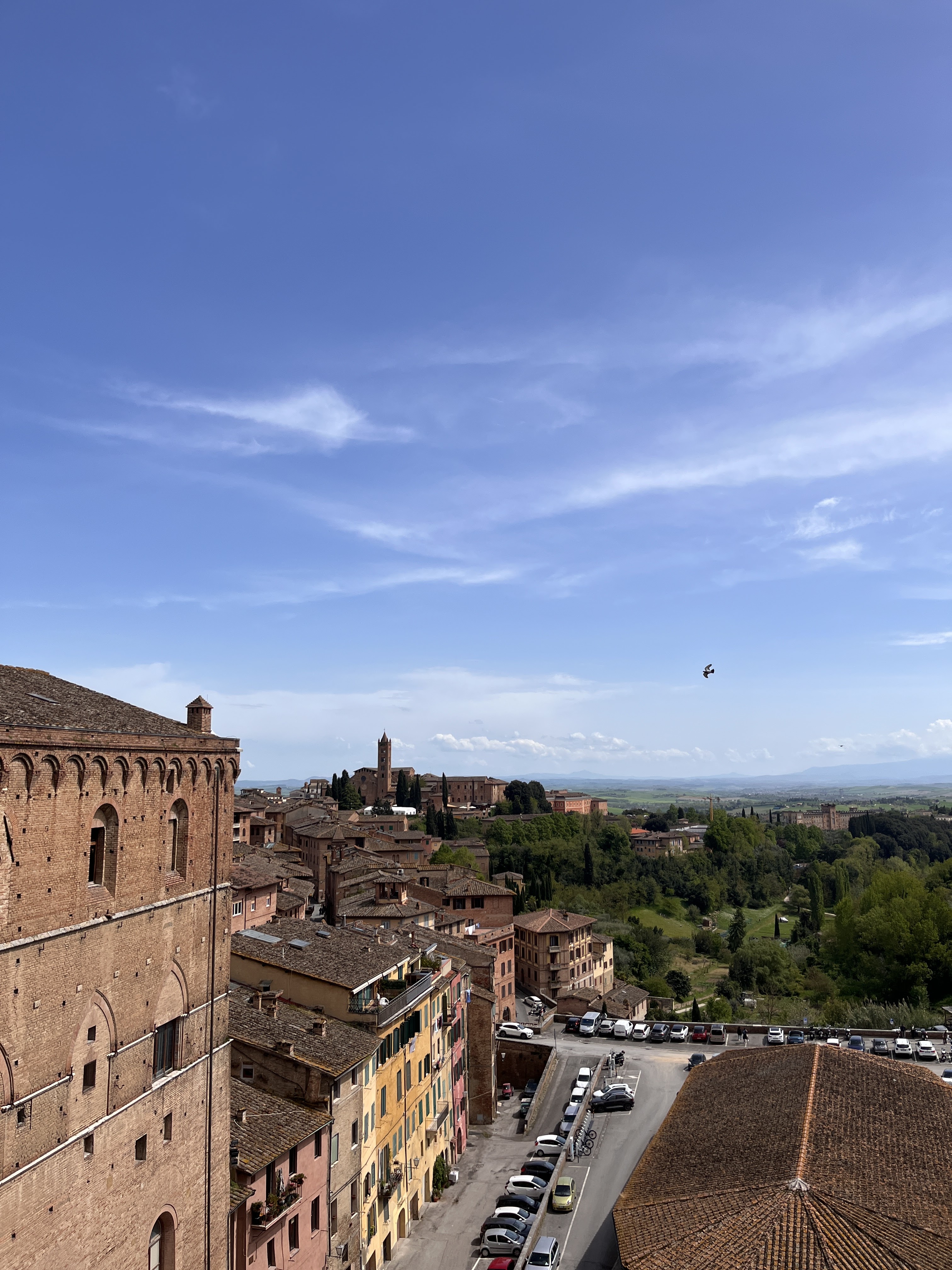
Siena is a town which has fully embraced a very specific identity. Formerly a major banking center for Medieval Europe, the town actively maintains and showcases the historic art and culture developed in those times. In the 13th century, the University of Siena was founded and today comprises about a third of the population of 50,000. The streets wind up and down through historic brick buildings, and shopping is done at local shops specializing in bakery, or wine, or cheese. The neighborhoods maintain their friendly rivalries. And the throughline for it all is the cuisine, based on the sheep grazing on the hills surrounding the city.
And it feels like that history permeates through the cheese produced on those hills, produced with methods guarded jealously by the town. The pecorino from Siena is rich and creamy, more complex and less salty than the Roman counterpart.
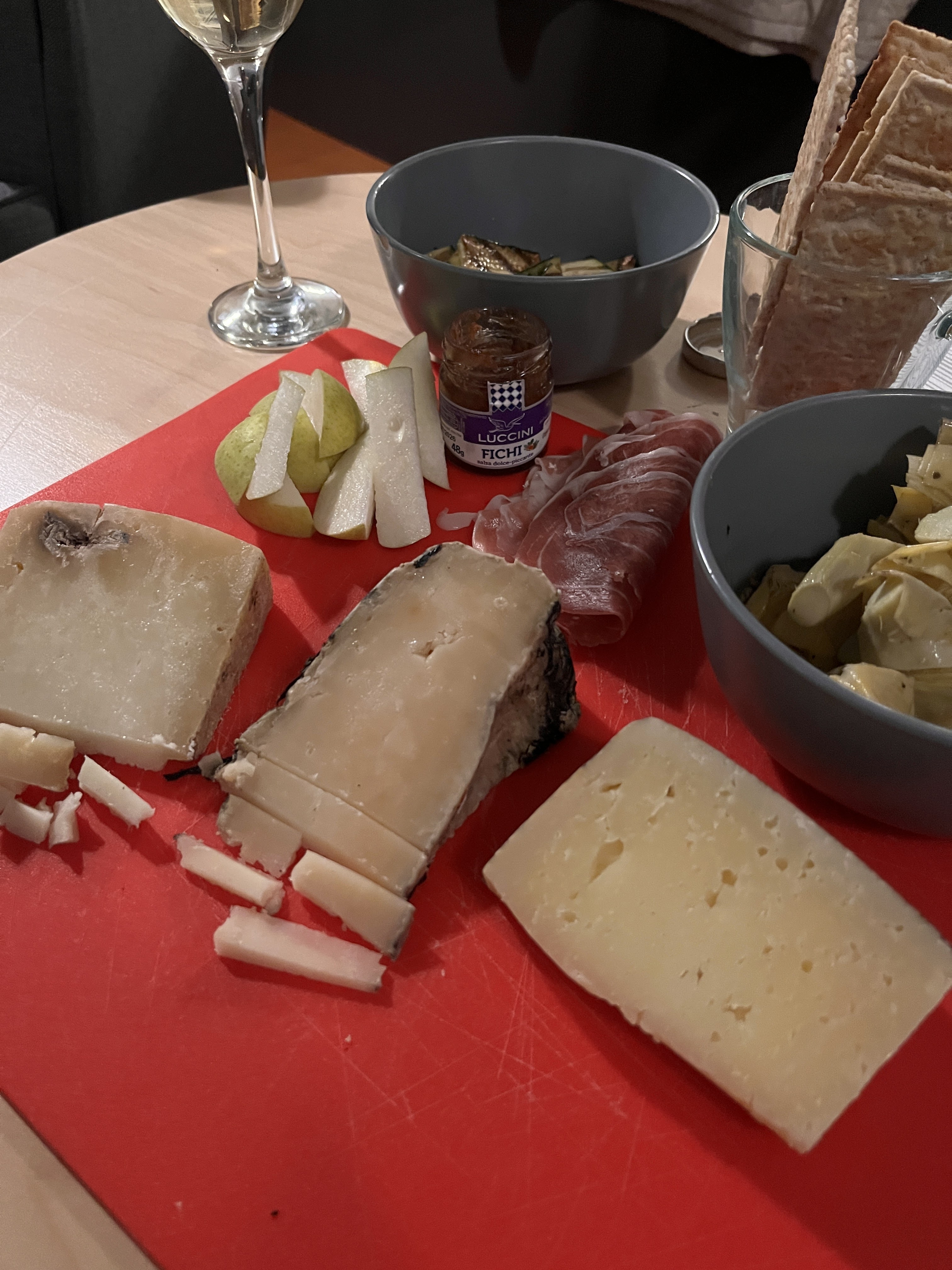
The walnut wrapped pecorino, the center cheese in the above picture, was more complex yet, with a subtle nuttiness. I recommend removing the rind as it overpowered the cheese with slightly bitter, peppery notes due to the high tannins in walnut leaves. We enjoyed our Sienese cheeses with marinated artichokes, grilled zucchini, fig preserves, fresh pear, and local prosciutto.
When the people of any place truly embrace their history, their geography, their identity, something special emerges in the food traditions from that place. That, I think, is what we try to capture when we speak of cuisine. At least that is what we mean when we work to identify Great Lakes Cuisine.
 Great Lakes Cuisine