Visiting the birthplace of Dante Aligheri, we open with a sonnet,
a tribute to Florence, the start of our Italian culinary journey!
For I am one acquainted with the flight –
I am Milwaukee to Vienna bound,
But connection to Florence far too tight,
First to Zurich, then to our Tuscan town.
Airborne vision – patch-worked fields of green,
Swollen river winding both through and round.
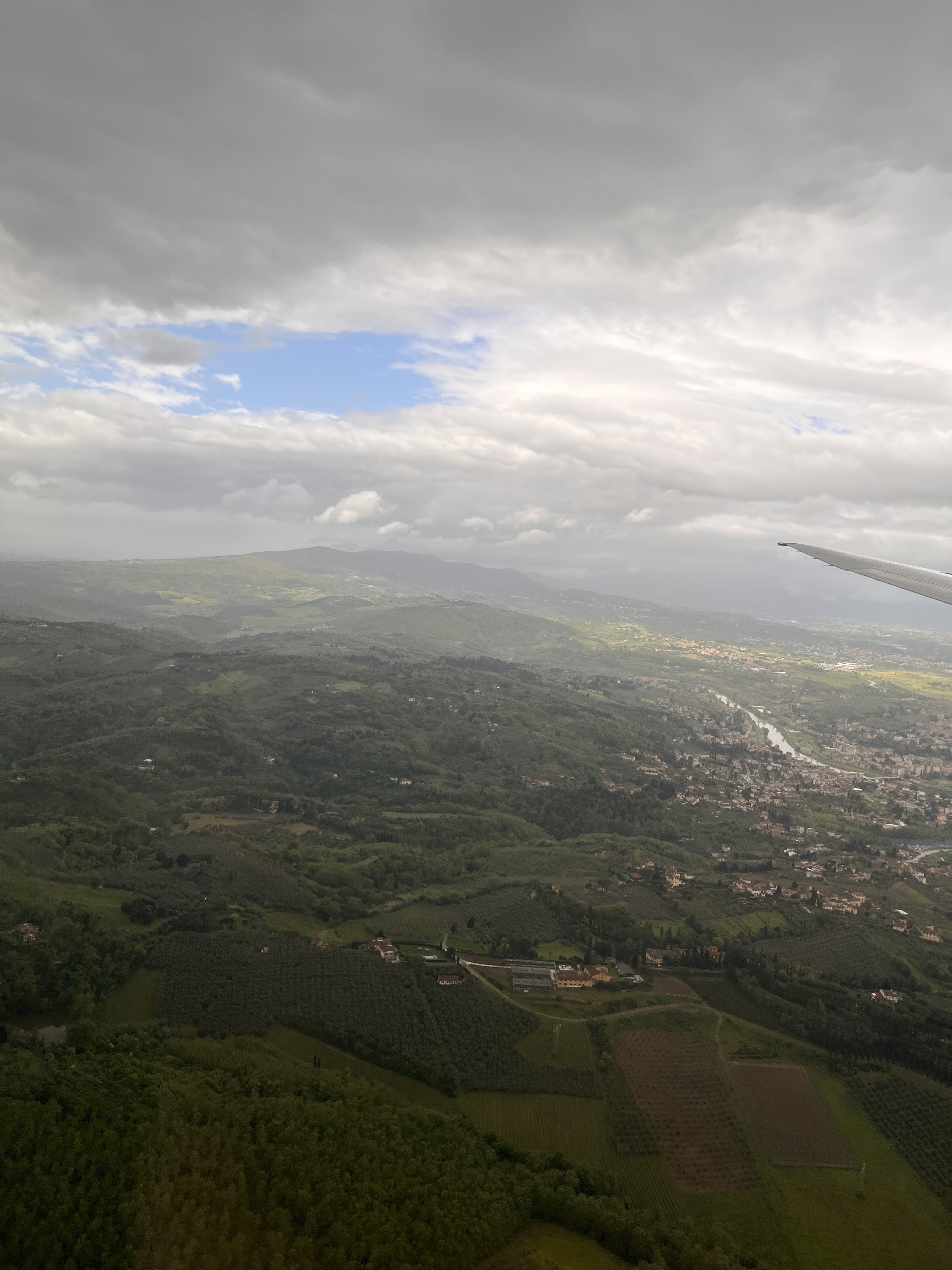
A drive through winding streets, ancient sights seen,
Through giant wooden doors to hallways arch
And a courtyard wet with early rains gleam.
Palazzo windows look on Arno’s march
Past the Palace of Old, the House of Art,
Cafes for the hungry, bars for the parched.
And now depart into the fading light,
Markets of Florence on this maiden night!
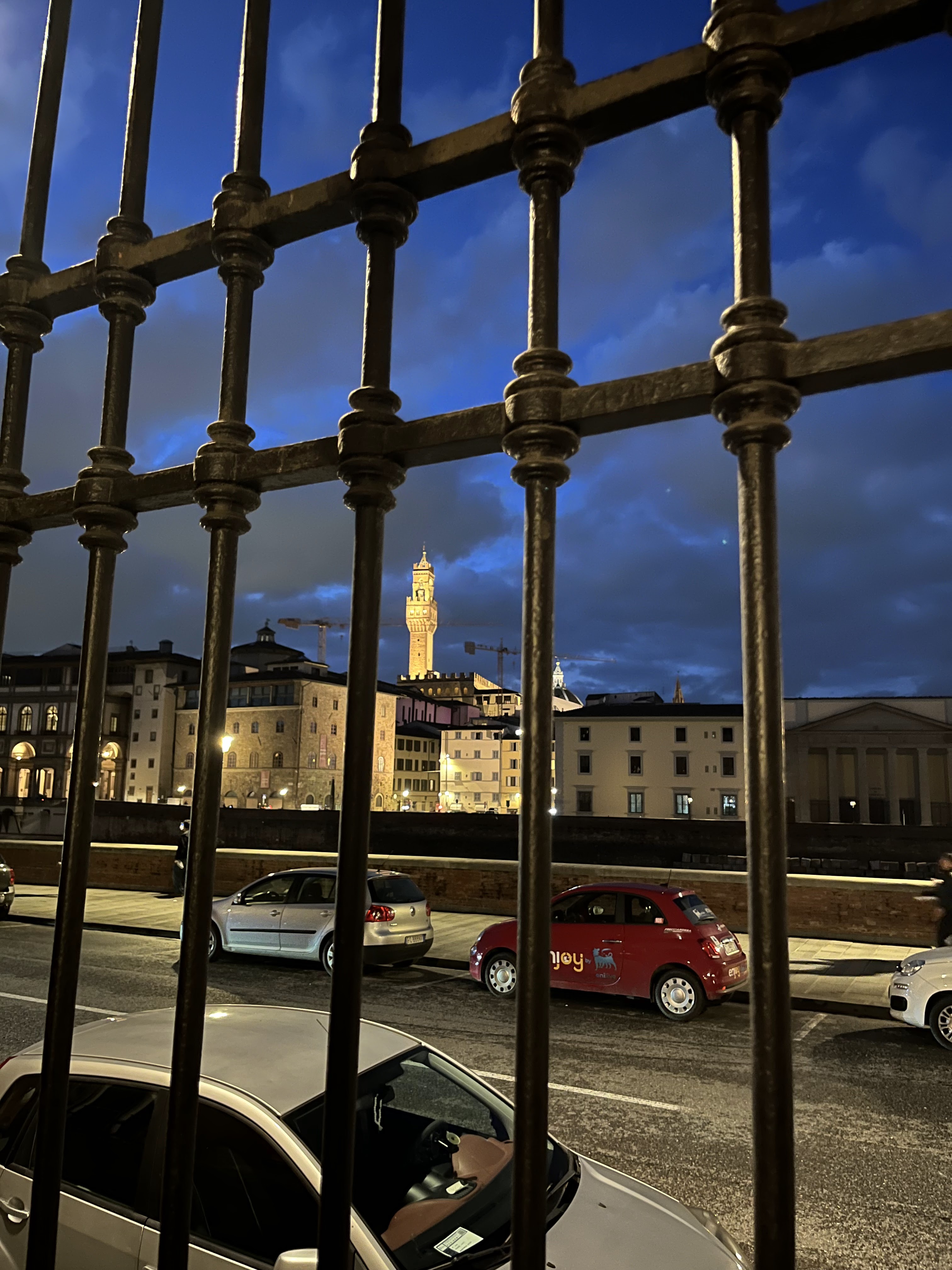
Staying on the southern banks of the Arno River, which winds through the heart of Florence, in an old palazzo converted to a rental apartment, we crossed on the Ponte Vecchio into the main city. Walking cobblestone roads past buildings from the 1300s in a city renowned as the birthplace of the Renaissance is pretty heady stuff. But where was my head? Thinking about food.
So when we stumbled upon a market in the square adjacent to an ancient cathedral, I could not have been happier. And what to my wondering eyes should appear, but Soppressata Toscana made of leftover pig parts, oh dear!
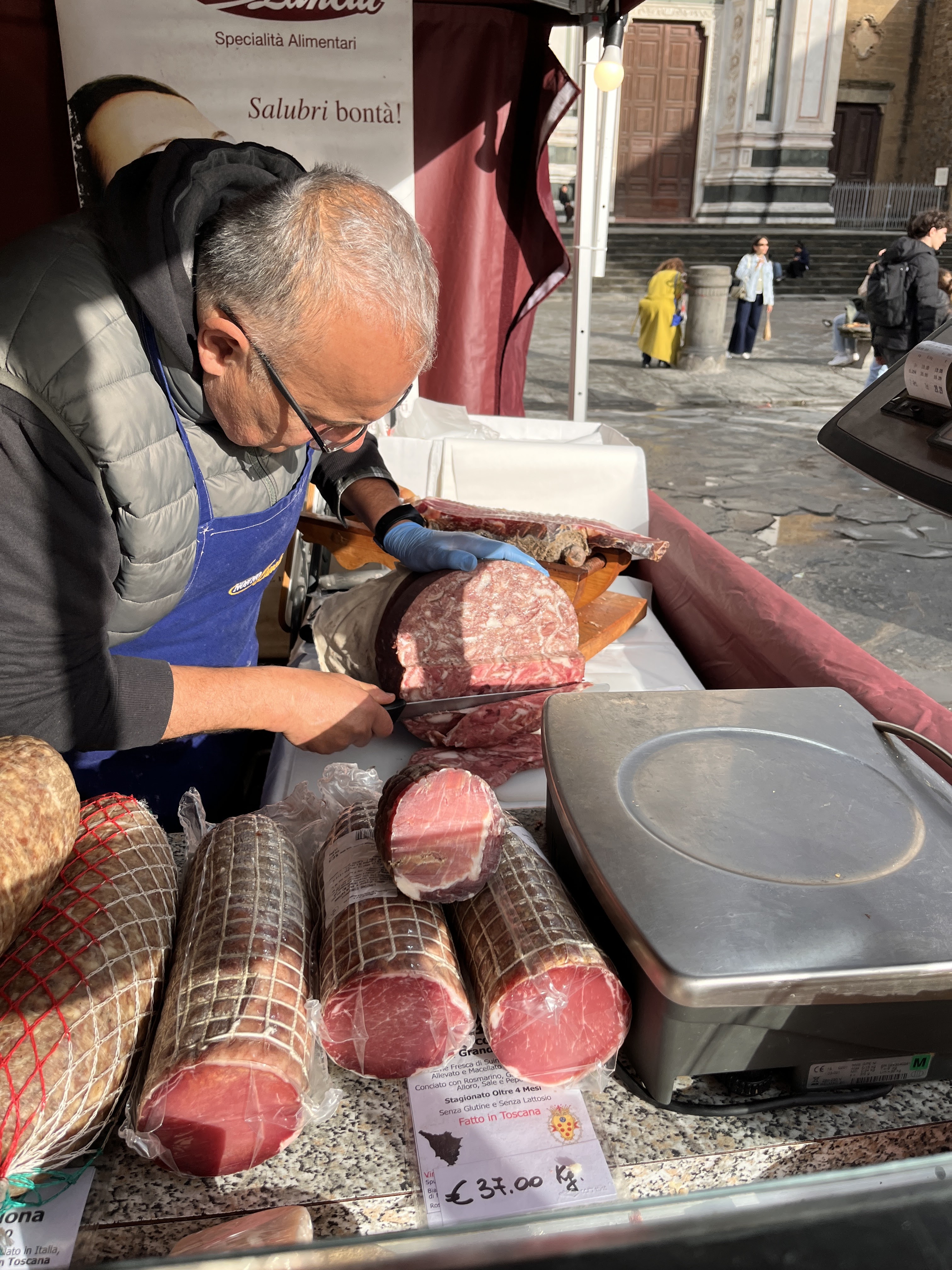
Here is the description of the Soppressata from the Visit Tuscany site:
“Tuscan Soppressata is a round salami made using the maximum amount of parts from the pig as possible, typically those which would not normally have been used. The name “soppressata” derives from the term “compresso,” or “compressed,” and it is made from first cooking the head, heart, tongue and kidneys of the animal. The meat is then divided into pieces, encased with salt, spices and seasoning, which results in a spiced and flavourful salami.”
I love that description – “maximum amount of parts from the pig”, and this guy was super excited to share his version.
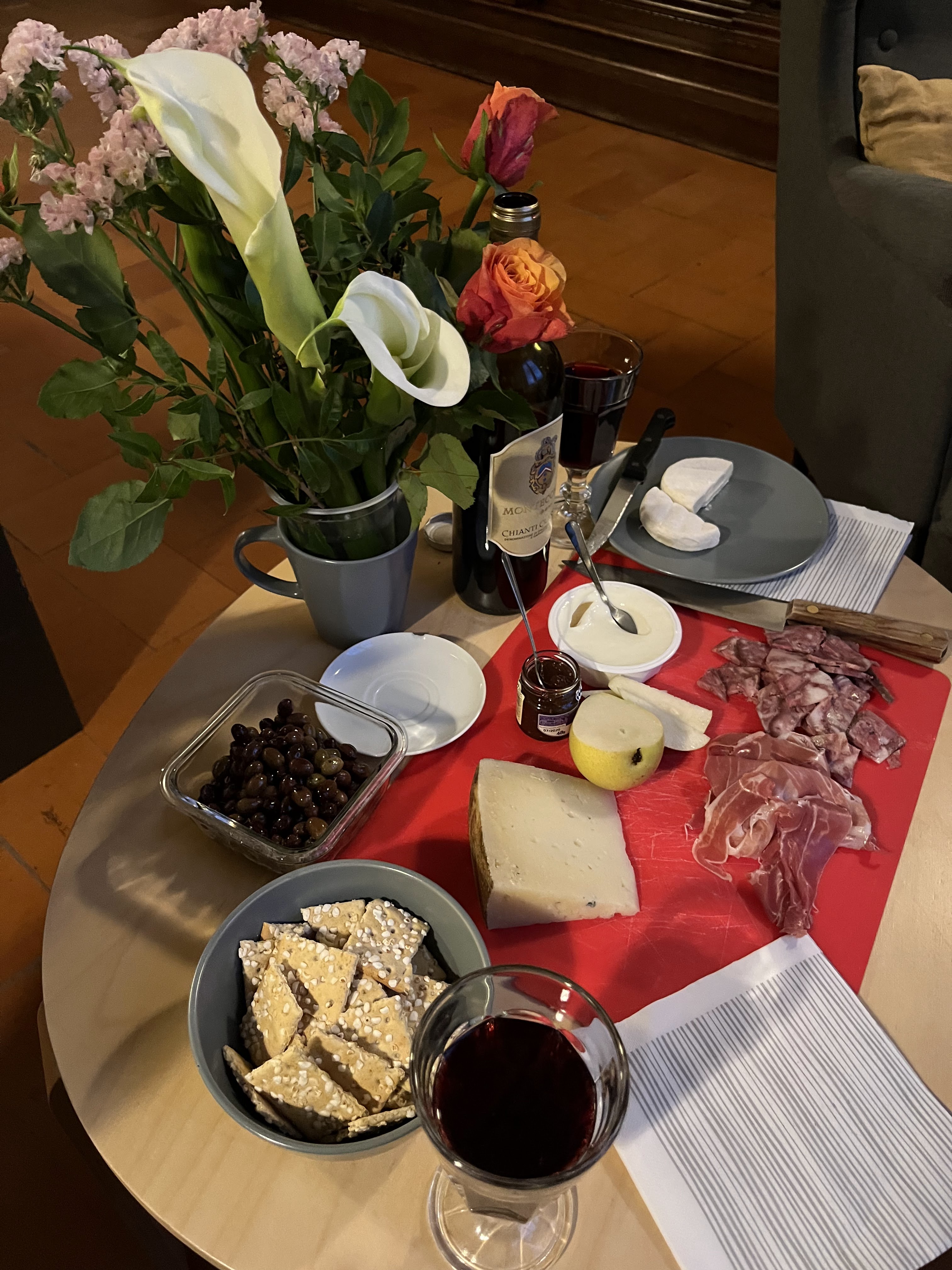
One of our favorite traditions is to open a trip with a cheese and charcuterie of local selections. On the table pictured above, we have a Chianti Classico alongside our Soppresseta Toscana, Prosciutto di Parma, a local pecorino (more on that in a future post), sesame crackers, local olives, a fig preserve, and slices of pear. That soppresseta also found it’s way into a pan of scramble eggs with a soft ripened cheese the next morning. Delicious both ways we enjoyed it.
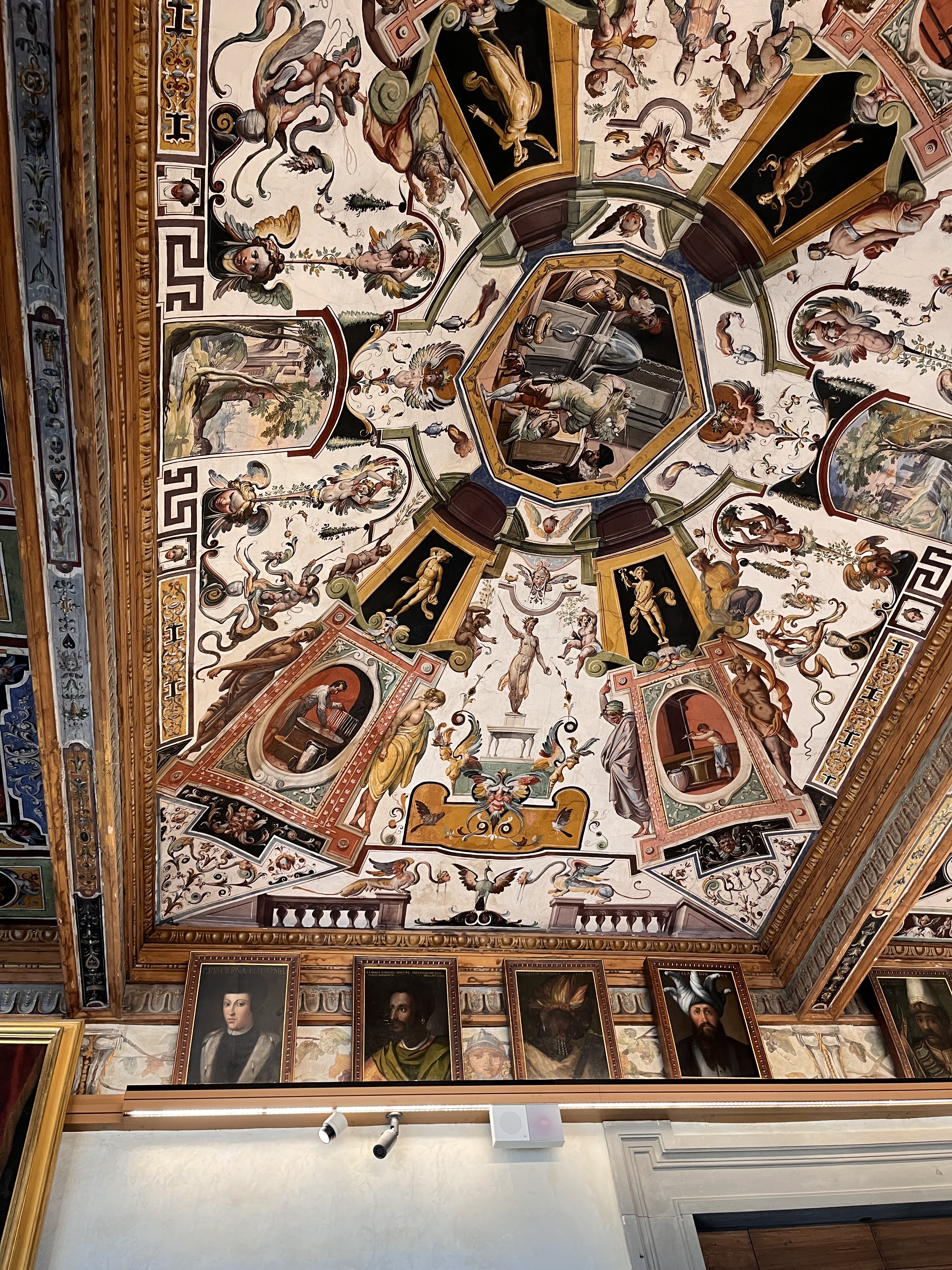
The next day was a walk through the Uffizi Gallery, a former Renaissance palace of the Medici, with spacious halls and corridors holding centuries of art history, including masterpieces such as Botticelli’s The Birth of Venus, Leonardo da Vinci’s The Annunciation, and Michelangelo’s The Holy Family. Just wandering through the corridors with painted ceilings, there were seemingly endless Roman sculptures, interspersed with historic paintings, capped with a series of portraits across the top of the walls which depicted important world leaders dated back to the 16th century.
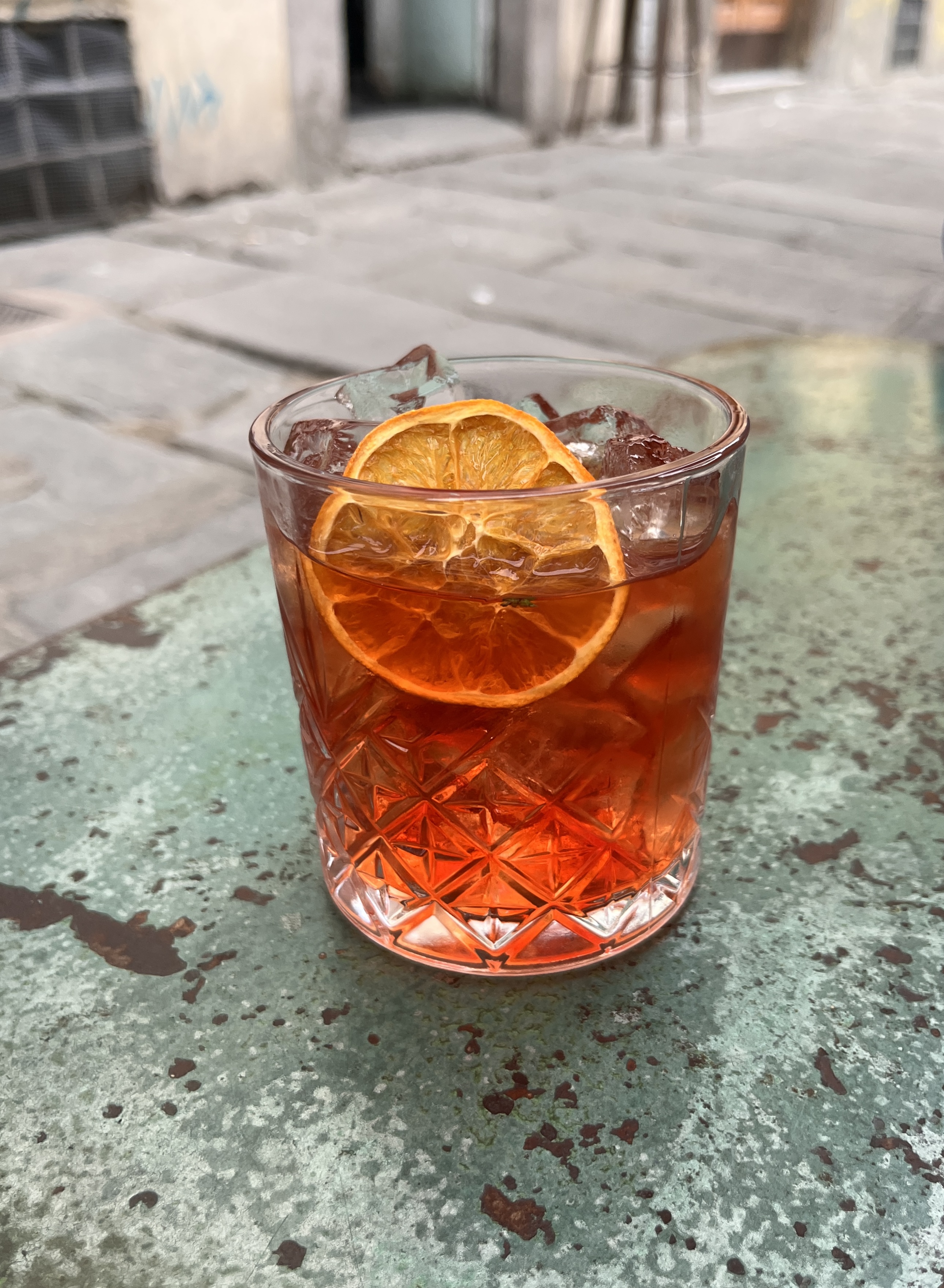
That’s thirsty work, taking in the creative output of the Renaissance. So after a day of sightseeing, it was a stop at another square in front of another ancient cathedral for our first official Negroni garnished with a dried orange. Yes, yes it was the perfect drink for that moment.
And then on to a Michelin Bib Gourmand restaurant out on the west end of the Boboli Gardens, where you enter through the flower shop to Podere 39.
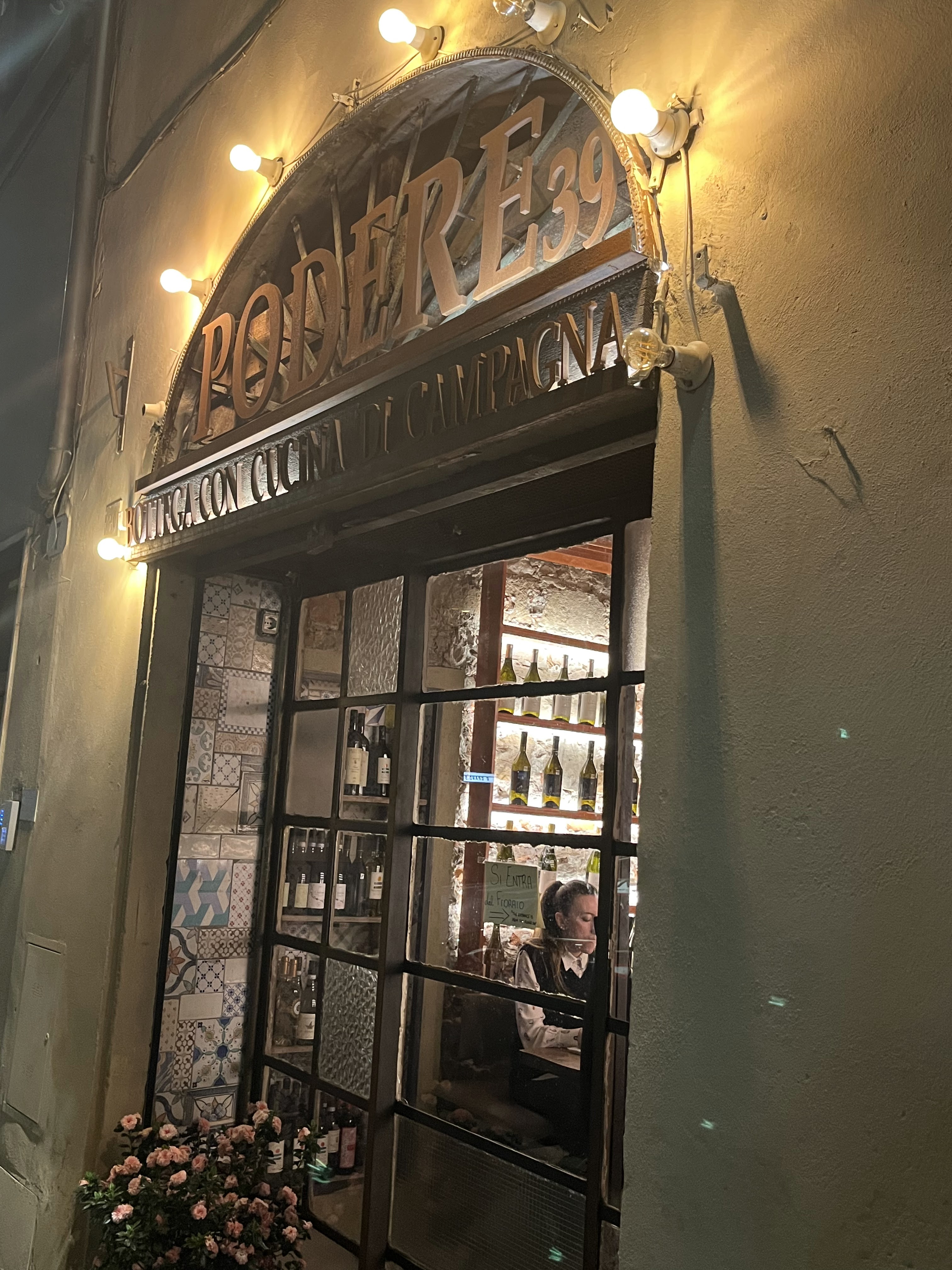
The phrase under the restaurant name indicates this is a “cucina di campagna” or a country kitchen, where everything is used and nothing is wasted; the original “farm to table”.
We opened with a 2023 Costa di Giulia – Bolgheri Bianco which is 65% Vermentino grapes and 35% Sauvignon Blanc grapes from a Tuscan vineyard. Vermentino, Verdicchio, and Vernaccia di San Gimignano are sometimes called the Three “V”s of Italian white wines. They are bright, acidic, crisper than a Chardonnay and more complex than a Sauvignon Blanc or Pinot Grigio, and all are great food wines.
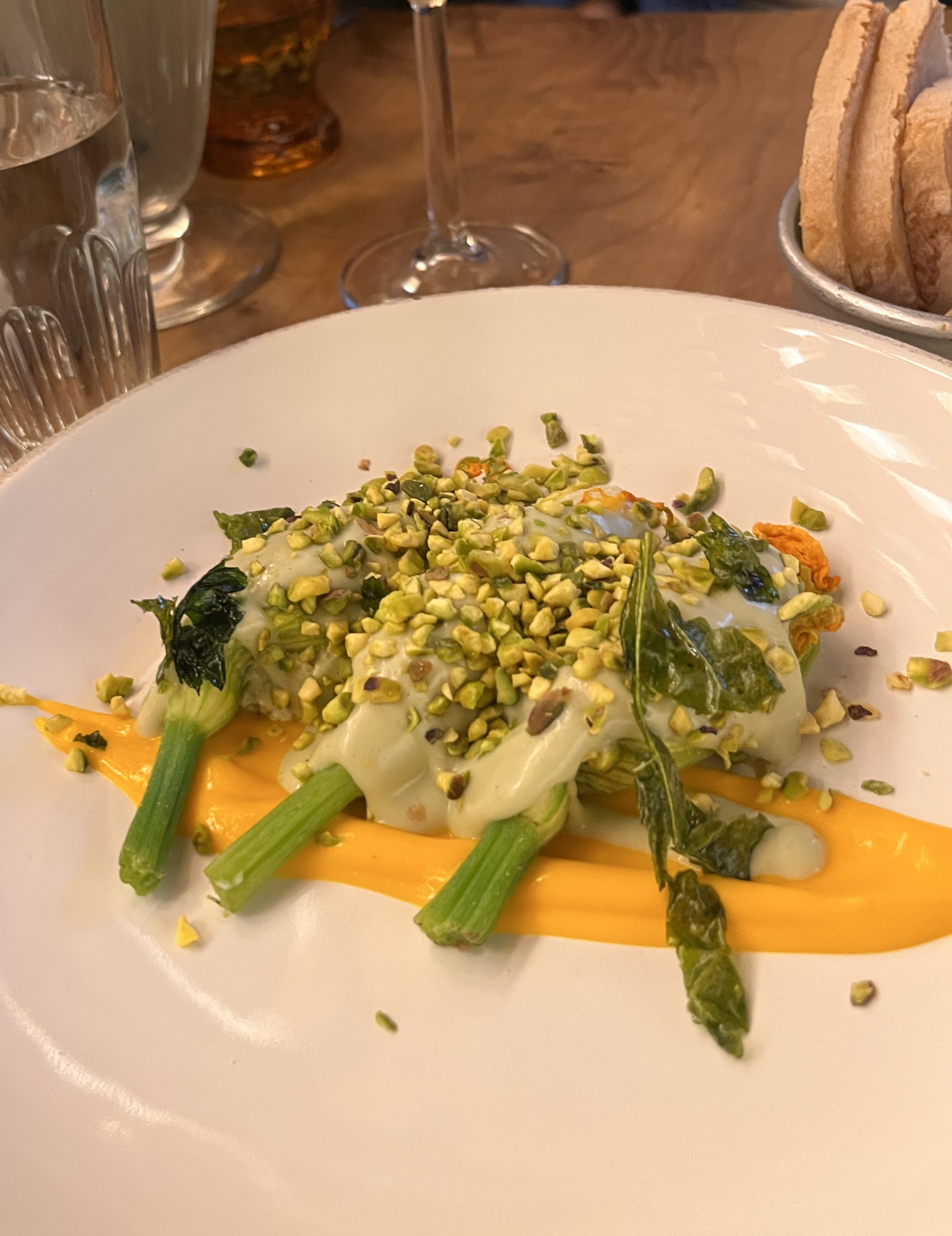
Our first appetizer was squash blossoms stuffed with fresh ricotta, topped with pecorino cream sauce, pistachios, and fried Italian parsley over a squash purée. It felt both fresh and decadent at the same time, and hinted at the the full flavors to come.
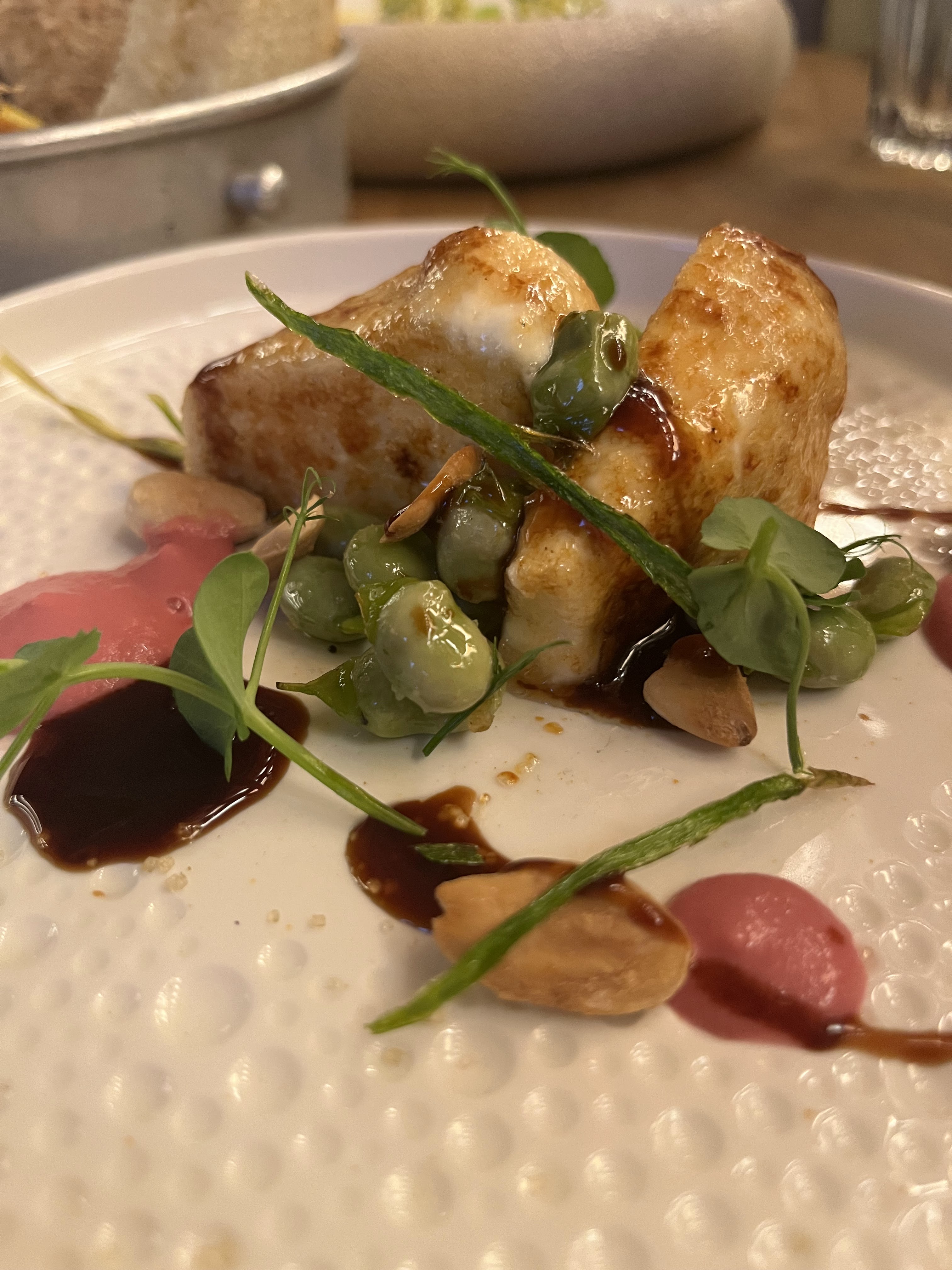
The second appetizer was brûléed goat cheese, peas, pea shoots, peanuts, authentic balsamic vinegar, beet purée (maybe Chioggia?), and fried chives. It was truly delicious – a perfect balance of fresh goat cheese richness under a shatteringly, crisp sugared layer and the surprise of a deeply flavored balsamic vinegar.
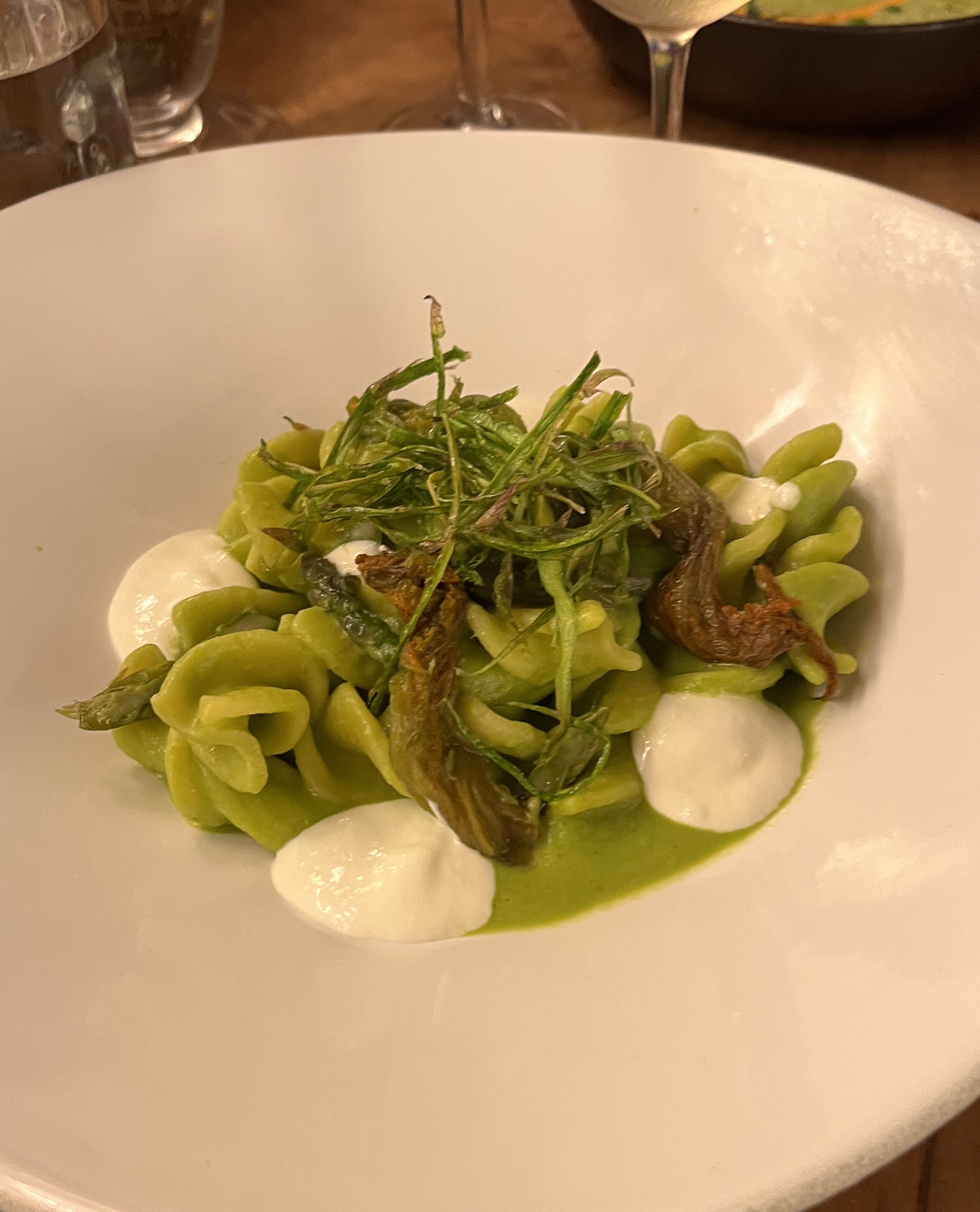
Then a fusilloni pasta with an asparagus and basil purée, pan-fried asparagus tips, fried squash blossoms, topped with fried leeks, and accompanied with dots of whipped ricotta. Again, fresh and decadent…freshly decadent(?).
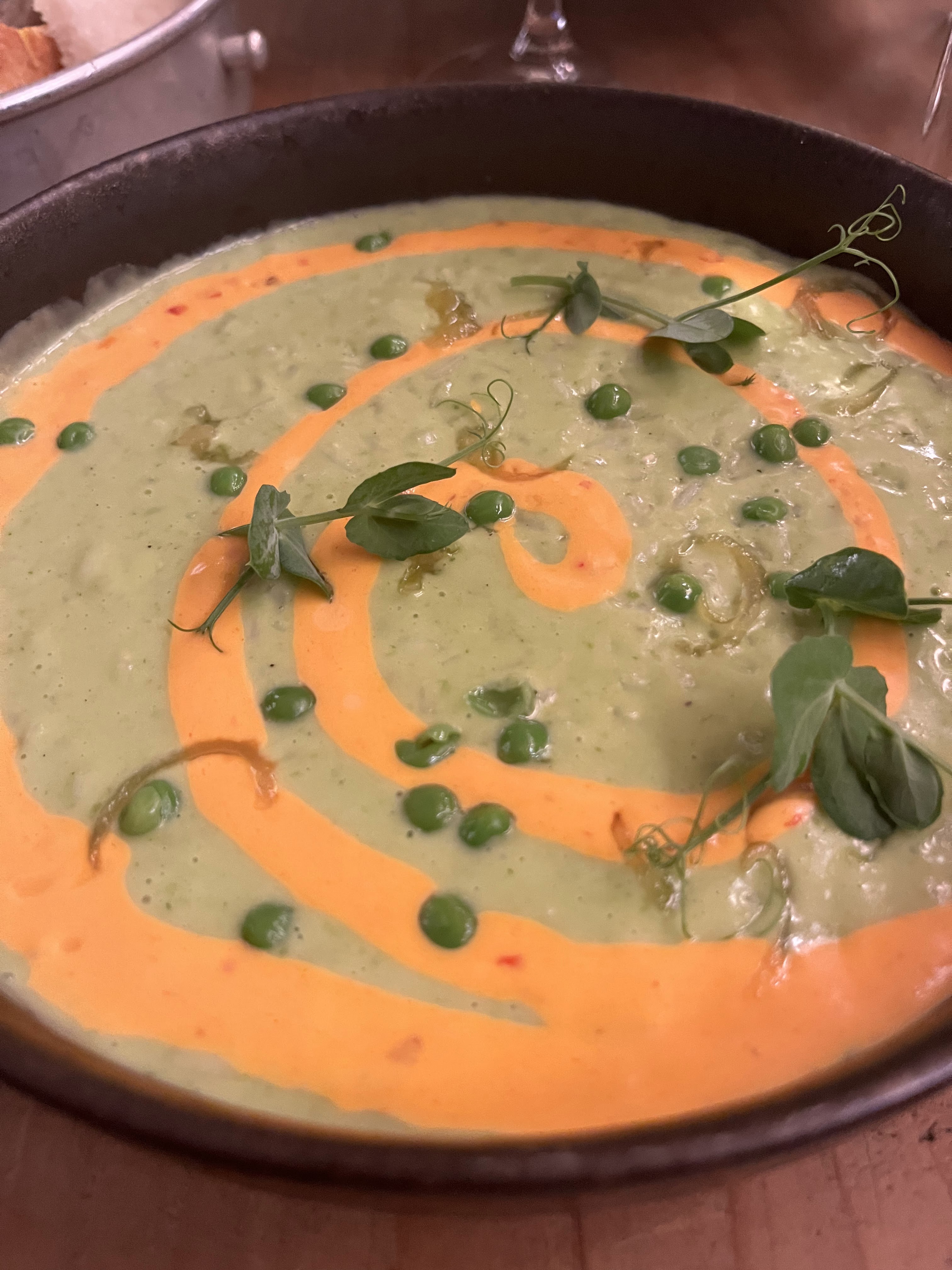
Then a carnolli rice risotto with pea purée and a Calabrian nduja cream sacue spotted with olive oil, peas, and topped with pea shoots. Nduja is a soft, spreadable pork salmi from Calabria which added just a hint of spice to an otherwise richly decadent (fresh!) pea risotto.
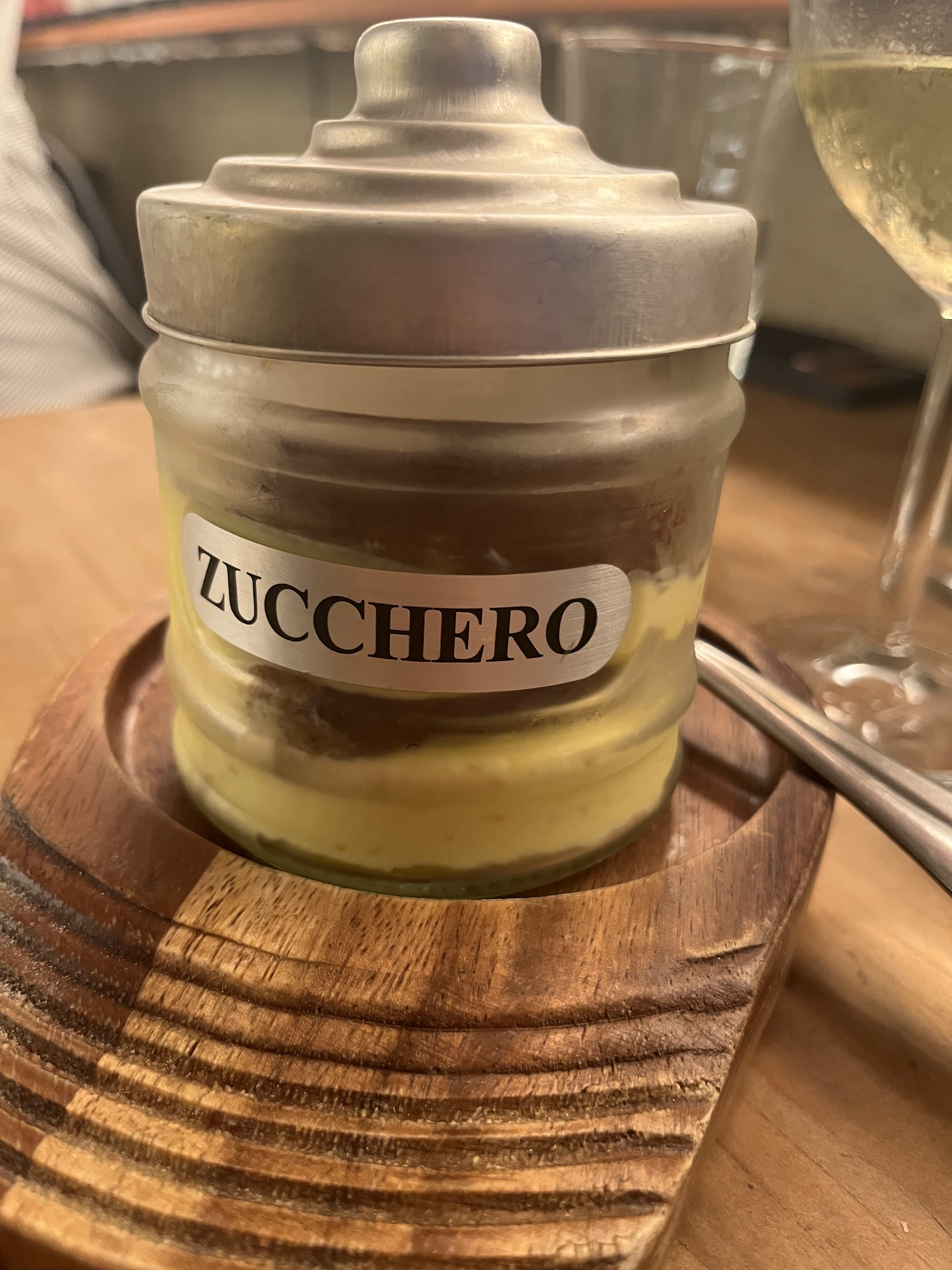
The final touch – A classic Tiramisu served in a glass sugar container, where the coffee soaked ladyfinger cookies and the slightly bitter cocoa offset the lovely richness of the mascarpone cream.
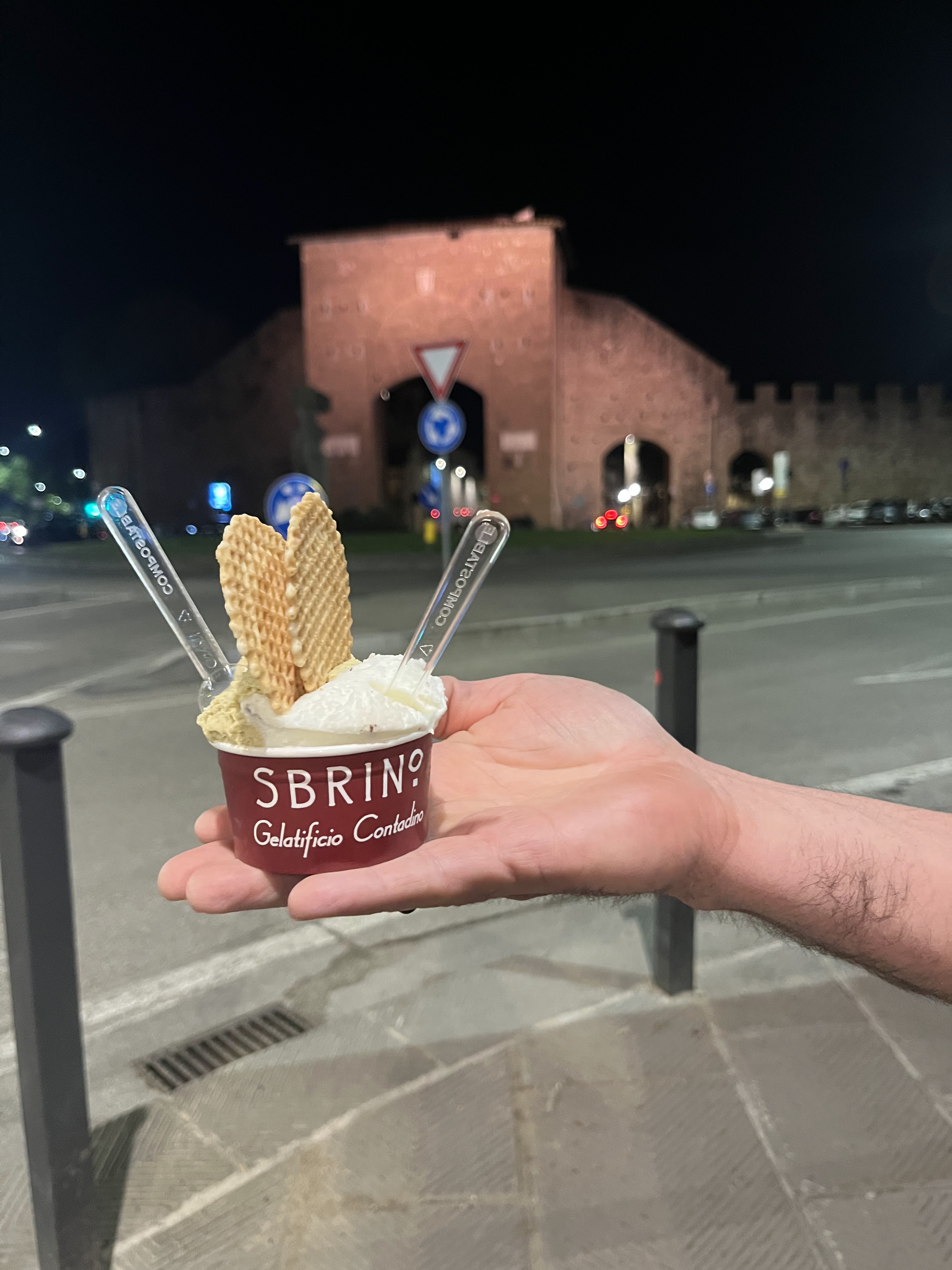
For all the richness, with cheese featured in every course, the fresh garden offerings really took center stage. The accents of whipped cheese, balsamic vinegar or pepper cream heightened the appreciation of what the garden provided. We were definitely not feeling heavy, or weighed down by a big meal. In fact, we still had room for one more small sweet treat – pistachio gelato from Sbrino Gelatificio Contadino.
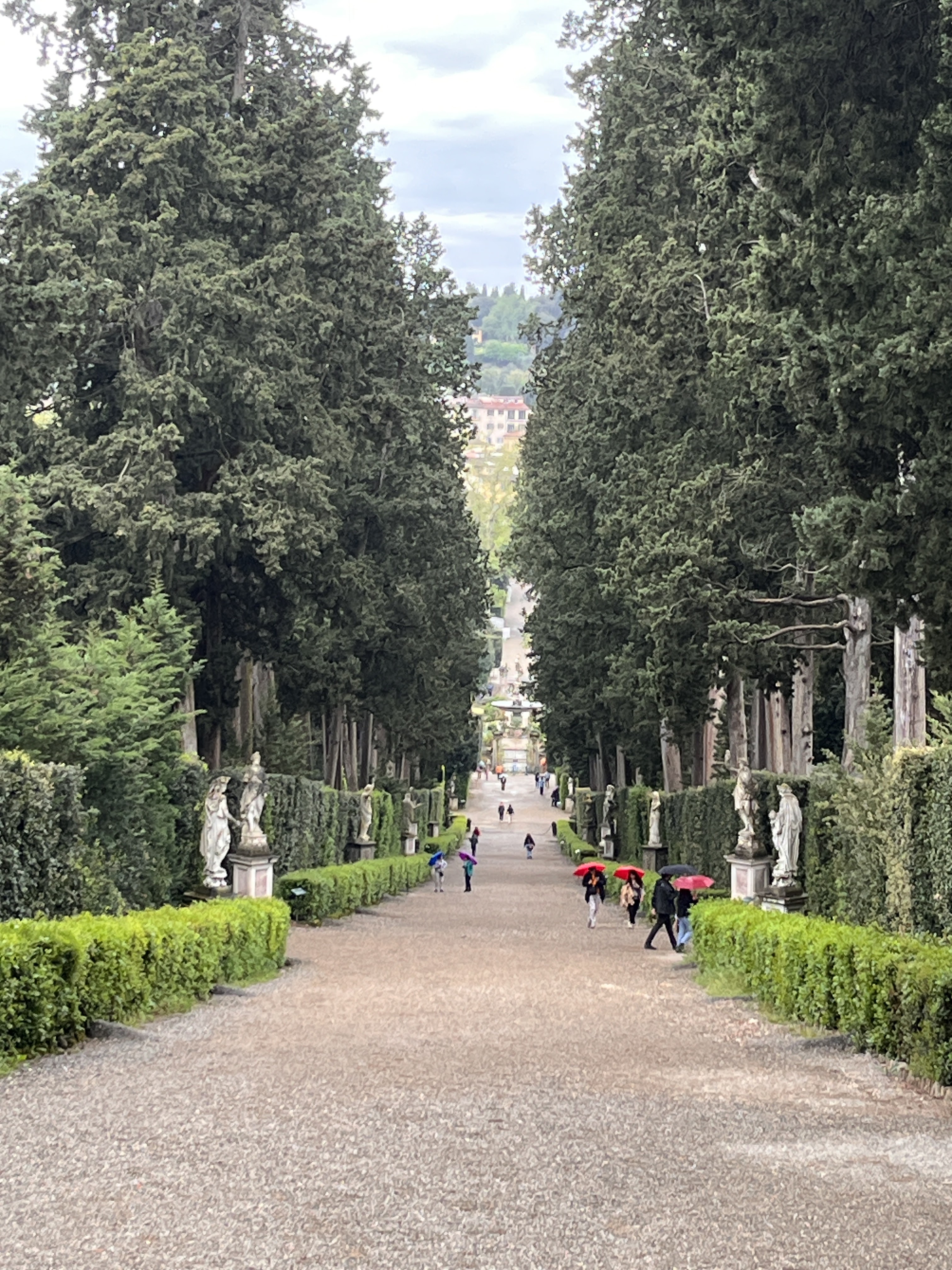
The next day was again filled with sightseeing throughout Florence including seeing Michelangelo’s David sculpture at the Galleria dell’Accademia, the Piazza del Duomo, and then a walk through the Boboli Gardens.
That evening was capped by another Michelin Bib Gourman recommendation, L’Ortone near the Sant’Ambrogio market. It’s a classic bistro, serving classic dishes representative of the Tuscan region.
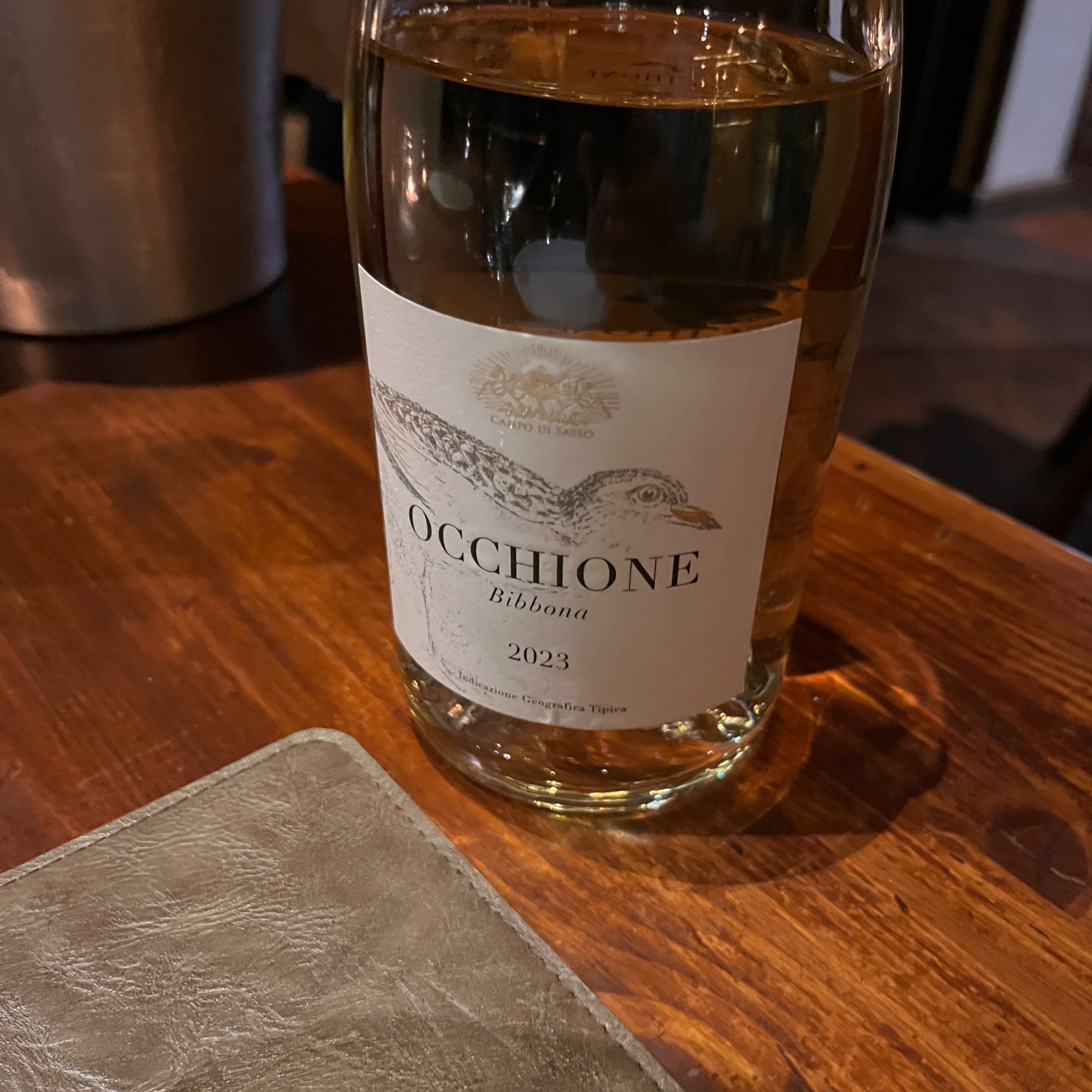
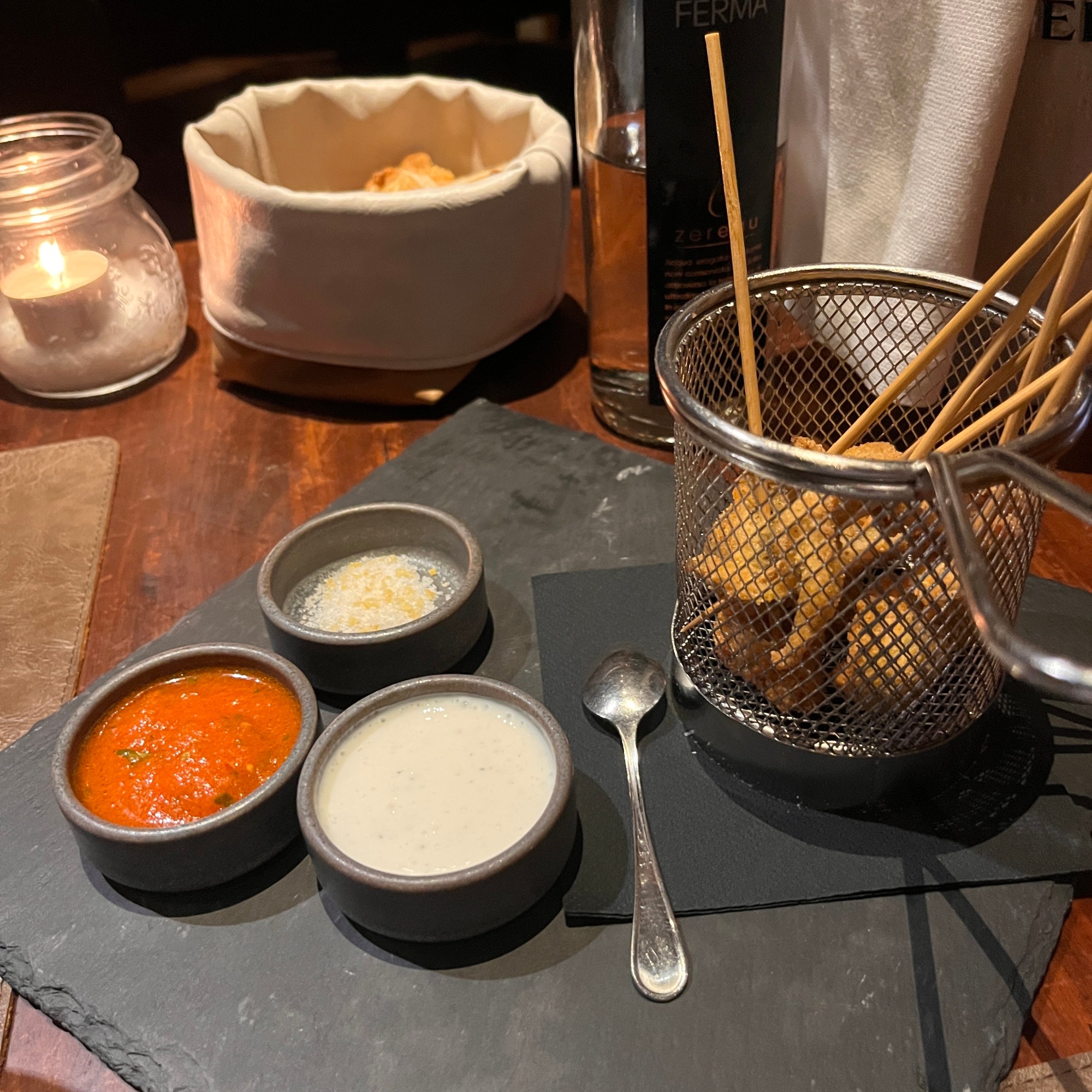
We enjoyed another Vermentino – a 2023 Occhione from vineyards in Bibbona, Italy. It paired beautifully with the fried fresh anchovies served with a choice of fresh tomato romesco, yogurt sauce, and lemon salt for dipping.
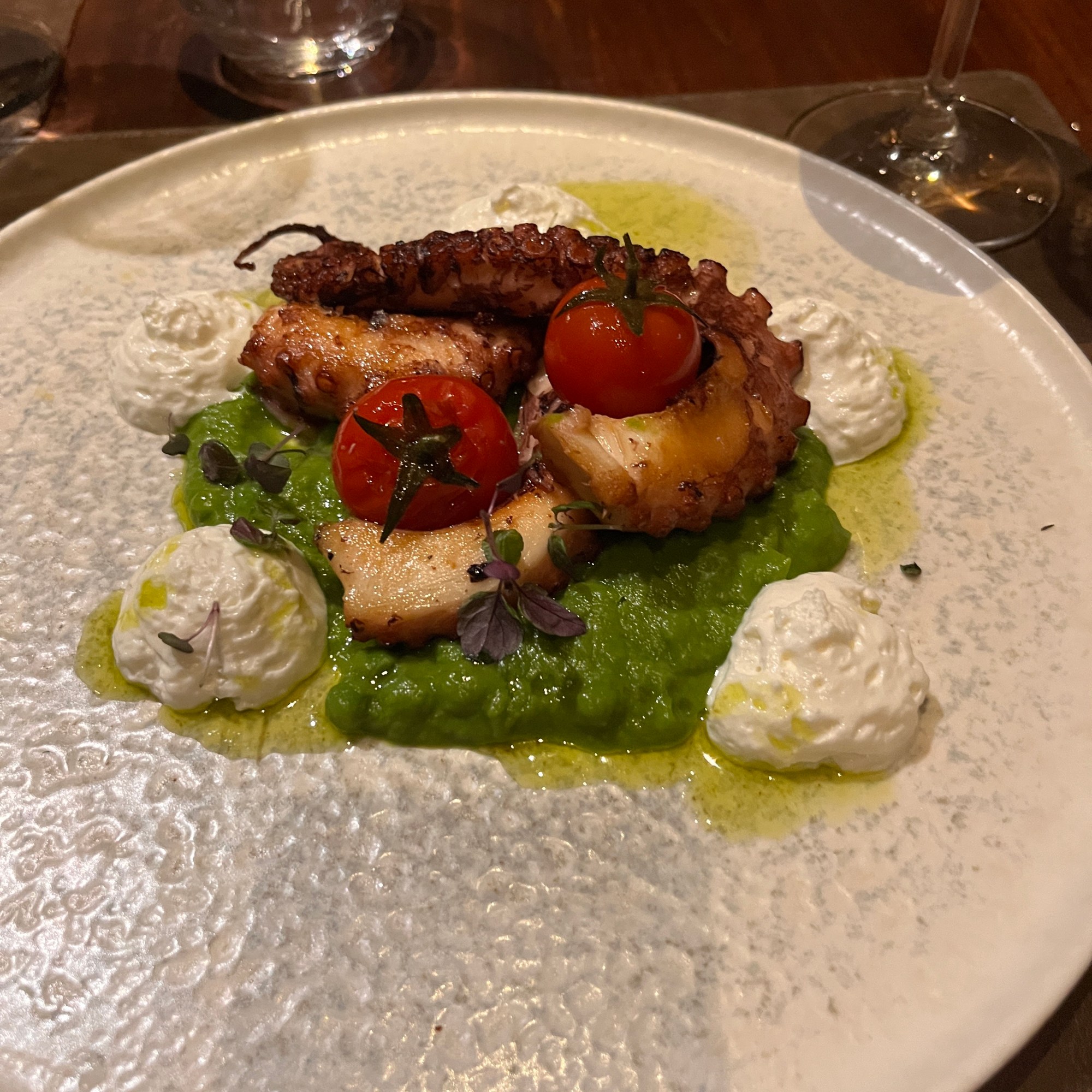
Our centerpiece in the tableau above is a stunningly tender octopus served on a purée of peas with whipped ricotta and confit tomatoes and olive oil. Peas were seasonally fresh and the whipped ricotta added a lovely creamy accent.
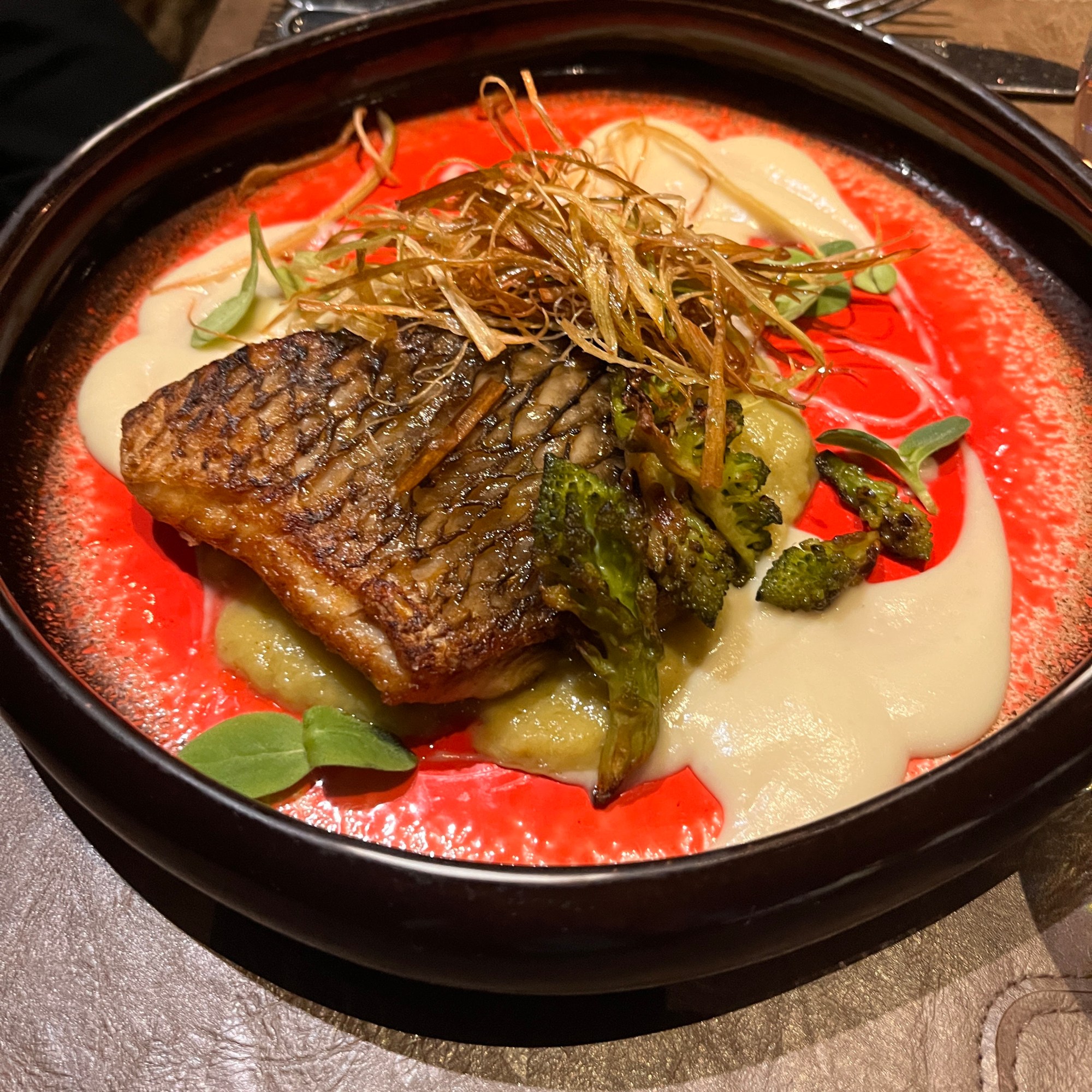
Our other entree was croaker on puréed asparagus with roasted romanesco broccoli with pecorino cream and fried leeks. Croaker is in the same family as sea bream or drum, a delicate, white flaked fish paired here with a seasonal asparagus purée. Note: the red surrounding the dish is actually the stunning plate it was served on.
Perhaps our Florentine muse, Dante Alighieri , would not have approved of our culinary indulgences, he of simple tastes and scorn for wine.
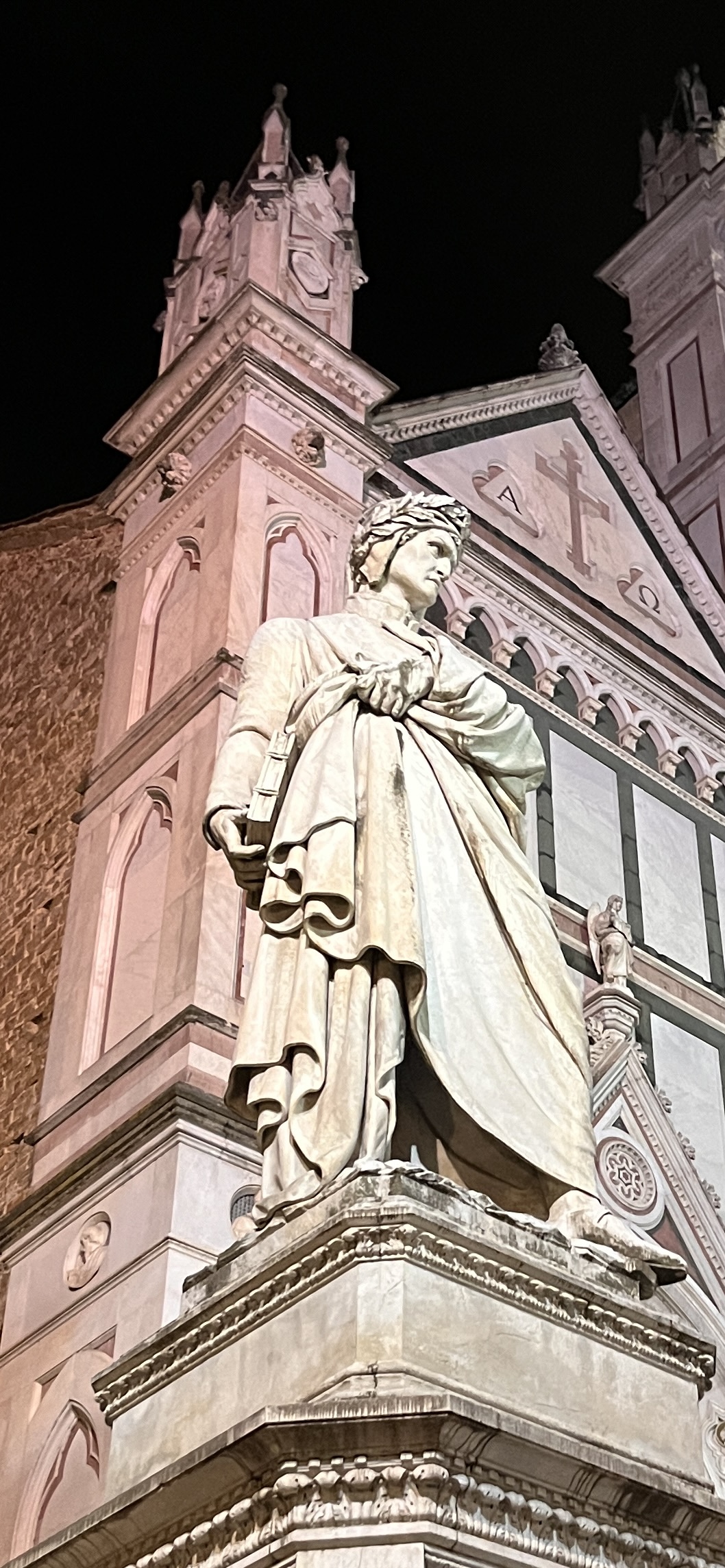
He certainly seemed to frown upon us from his perch in the Piazza Santa Croce as we walked through the streets of Florence after our dinner. Ah well, his loss, our gain. The fruits of the vineyards and vegetables from seasonal gardens are amongst earth’s finest gifts.
These are often celebrated within our exploration of Great Lakes Cuisine, utilizing the unique cheeses, hard ciders, and craft beer vinegar glazes to accentuate the produce of the gardens in their seasons. Of particular note here – the frequent use of the whipped ricotta as an accompaniment to the pureed or pan fried spring vegetables. A similar approach was used when we prepared whipper farmer’s cheese and topped it with smoked whitefish and roasted beets which you can read here. Adapting this for use with peas, asparagus, basil, and the bounty of a spring garden seems like a natural extension.
We will return to Florence in Part 2 of this series of culinary travels for a truly modern take on the traditional Tuscan dishes. But first we will travel to Siena to appreciate the ancient wonder of Pecorino cheese.
 Great Lakes Cuisine
2 thoughts on “Culinary Journeys – Florence, Italy (Part 1)”