This is part 4 of 5 in our series on our Culinary Journey through Northern Italy. See our last post on Florence here.
A key aspect of Great Lakes Cuisine is “terroir,” the French term meaning the “agriculturally relevant features of an area of land.” For example, the Bordeaux region, according to The Wine Bible, has a geological foundation of limestone, with well-drained soil, heavy in calcium. The Gironde River and its tributaries irrigate the land. The Atlantic provides a mild, oceanic climate. These “agriculturally relevant” features comprise “terroir” and influence the production of the wine.
Here in the Great Lakes region, we have the largest group of freshwater lakes on Earth with over 20% of the world’s freshwater. The glacial flows which created these lakes left behind mineral deposits. The combination of fertile soil, a moderating effect on the climate, and access to fresh water all define the “terroir” of the Great Lakes region. These fertile lands and fresh water attracted early tribal settlers and later European farmers. All of those settlers were challenged by the changing of the seasons in this Northerly climate to maximize the yield of the land in the summer, harvest through the fall and preserve the harvest through the harsh winters. The land dictates what is possible, the waters furnish the crucial ingredients, the climate sets the limits.
I’m reflecting on this influence of terroir on Great Lakes Cuisine because the land, the climate, and the sense of place is so crucial to the next leg of our Culinary Journey around Parma, Italy. Yes, the home of Prosciutto di Parma, co-producer of Parmigiano Reggiano, and neighbor to Modena, the home of true Balsamic vinegar.
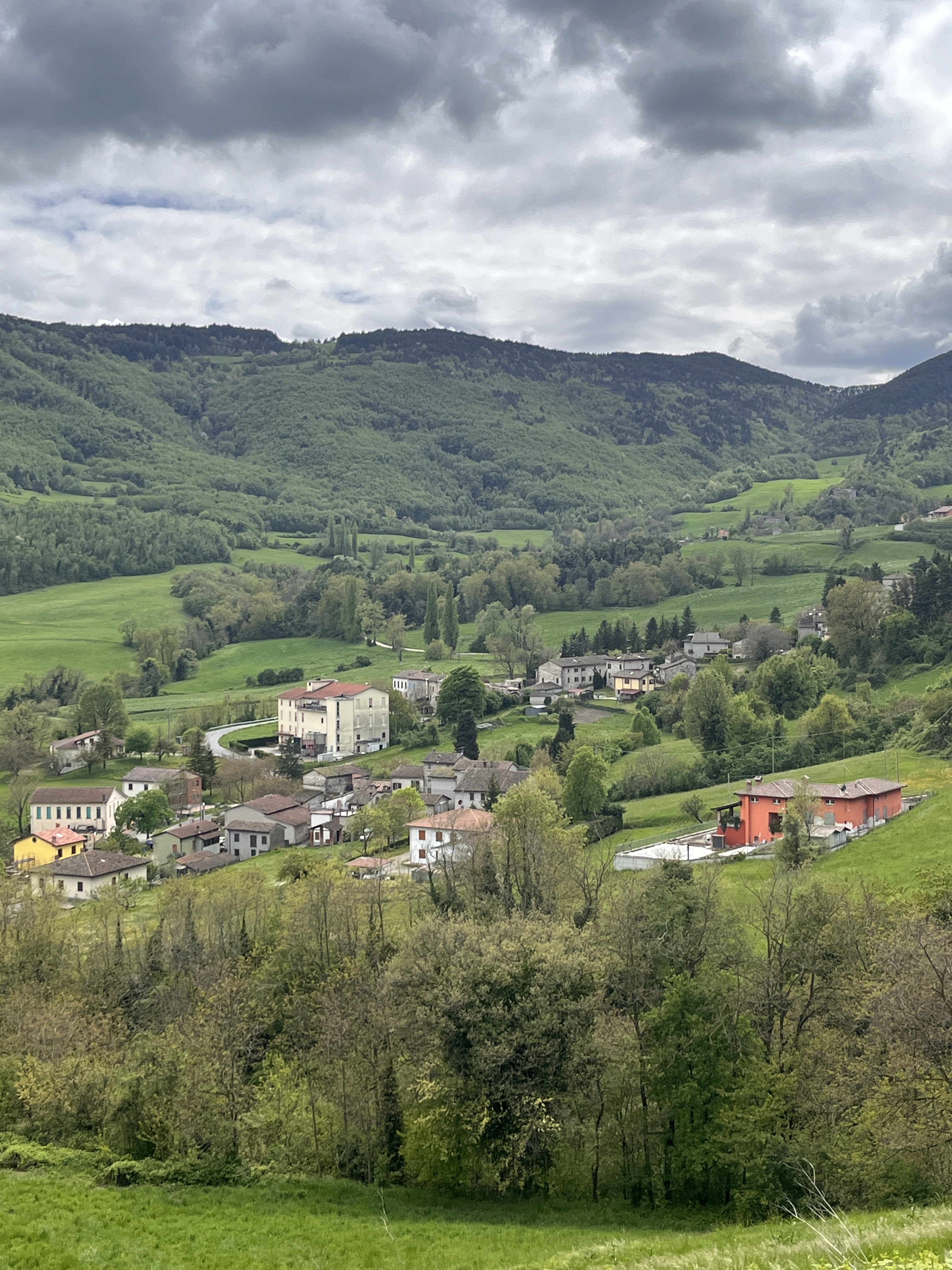
The northern portion of the province of Parma includes the actual city of Parma, Fidenza and various smaller towns, and is bordered by the Po river. Though there is a strong industrial presence here, most of the land is dedicated to growing crops, mainly wheat (Barilla, the world’s largest pasta maker, started in Parma), tomatoes (with Mutti and various other producers based here) and alfalfa to feed the cows whose milk is used to produce Parmesan cheese.
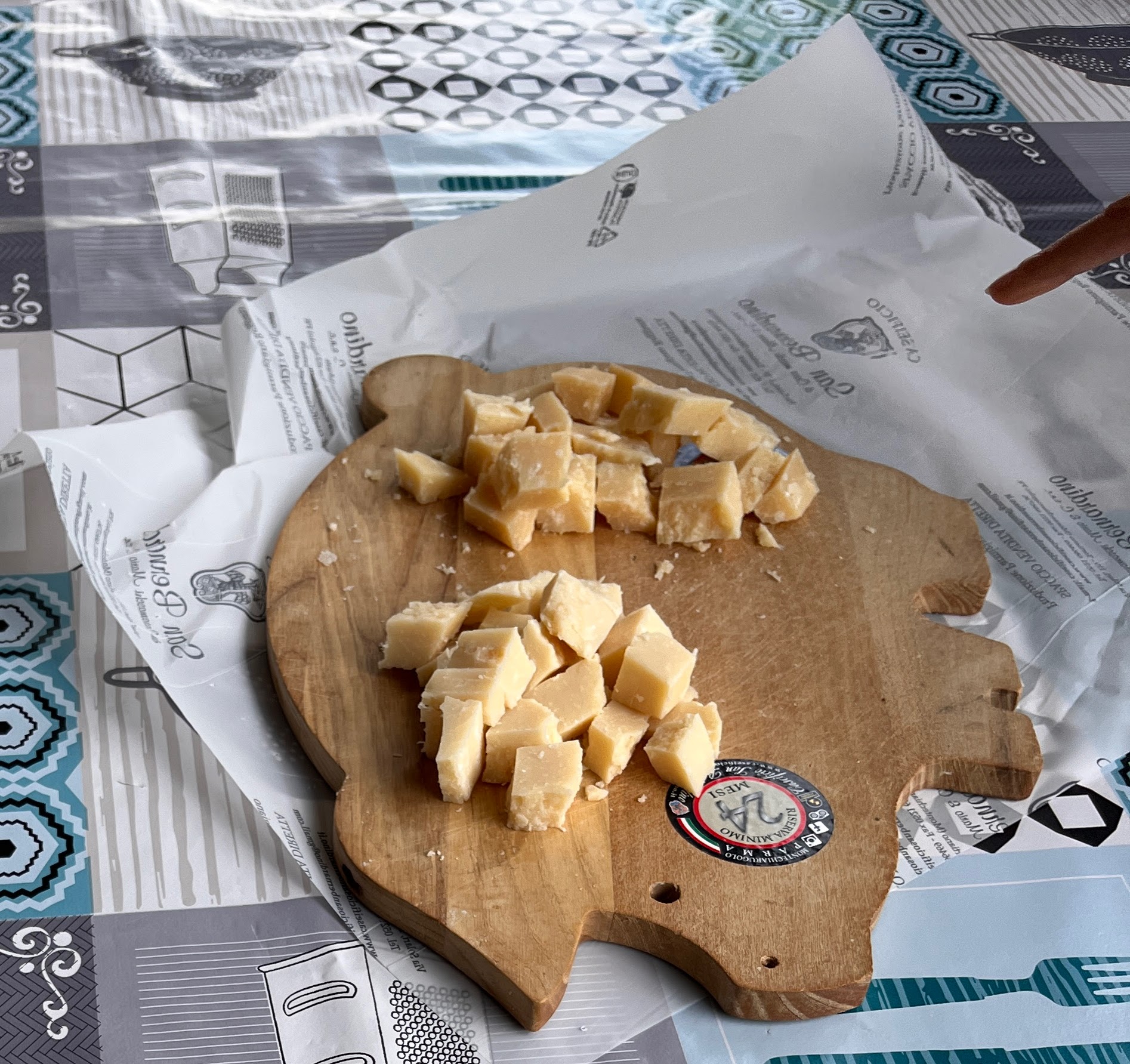
And Parmesan cheese is where we started our food tour, at a small, local producer who was kind enough to allow us to watch and participate in the entire cheese making process, from heating the milk in giant copper kettles, to producing the curds, to gathering the curds into hoops which create the characteristic shape, to the aging process in the warehouse.
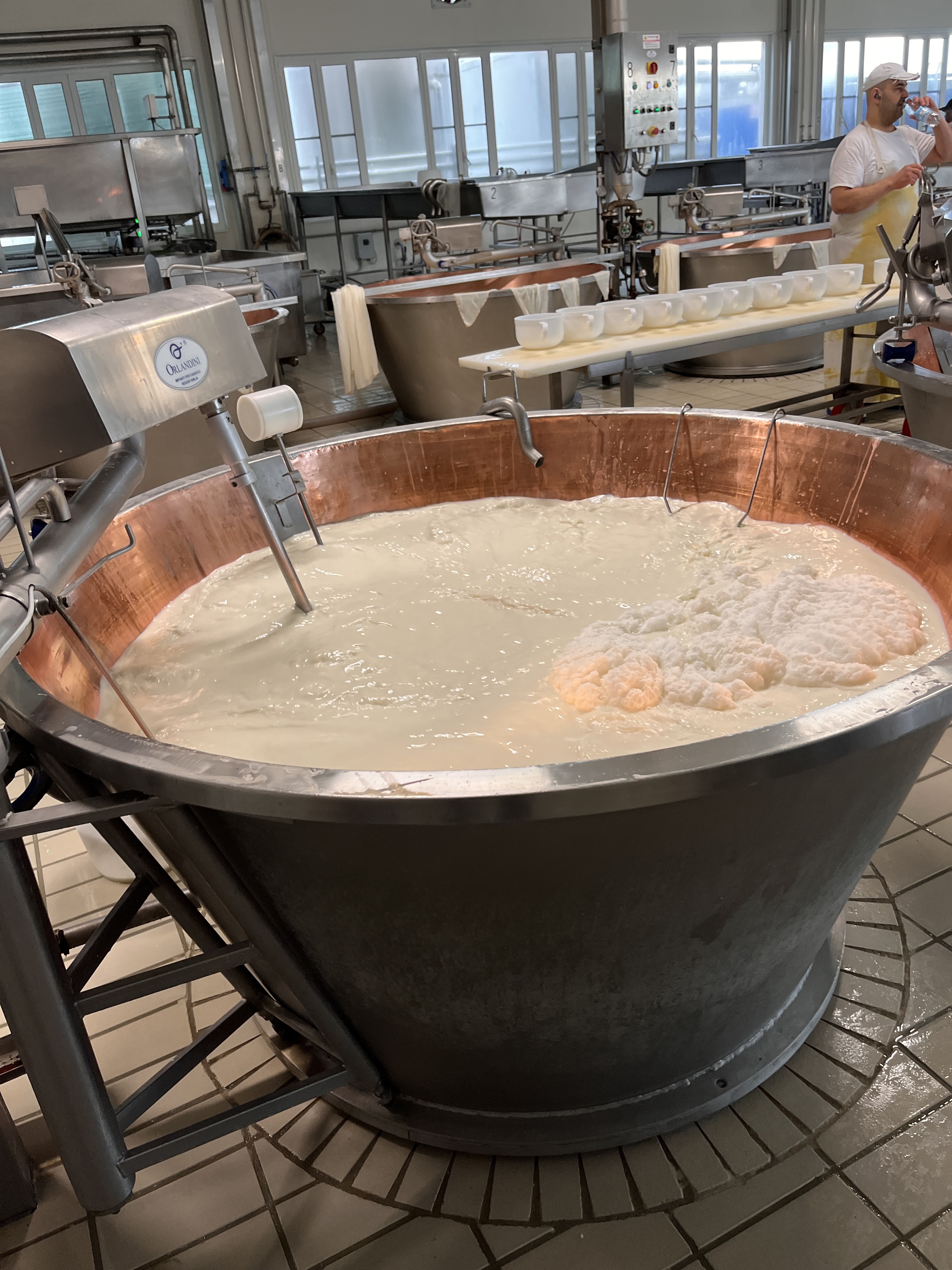
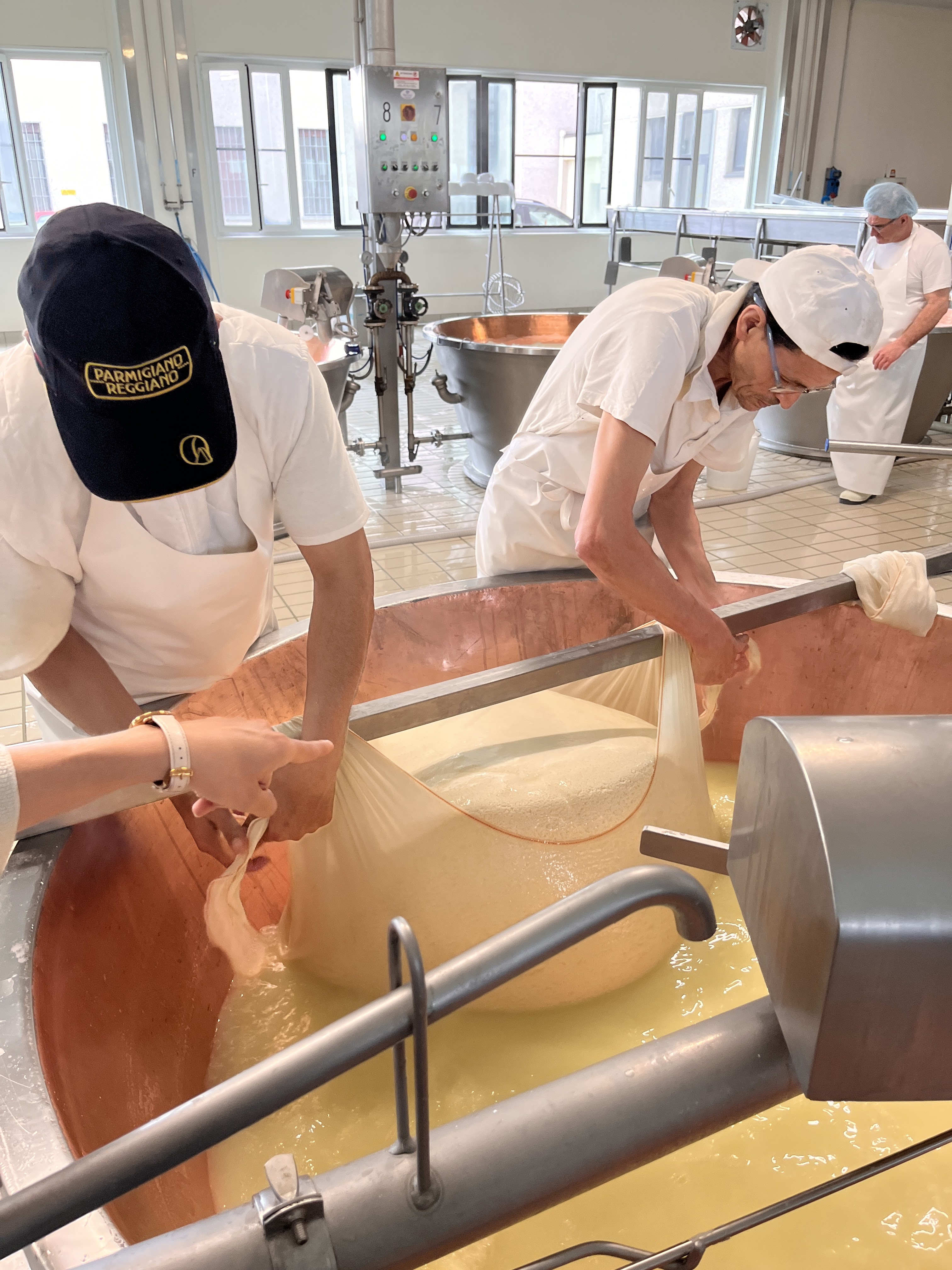
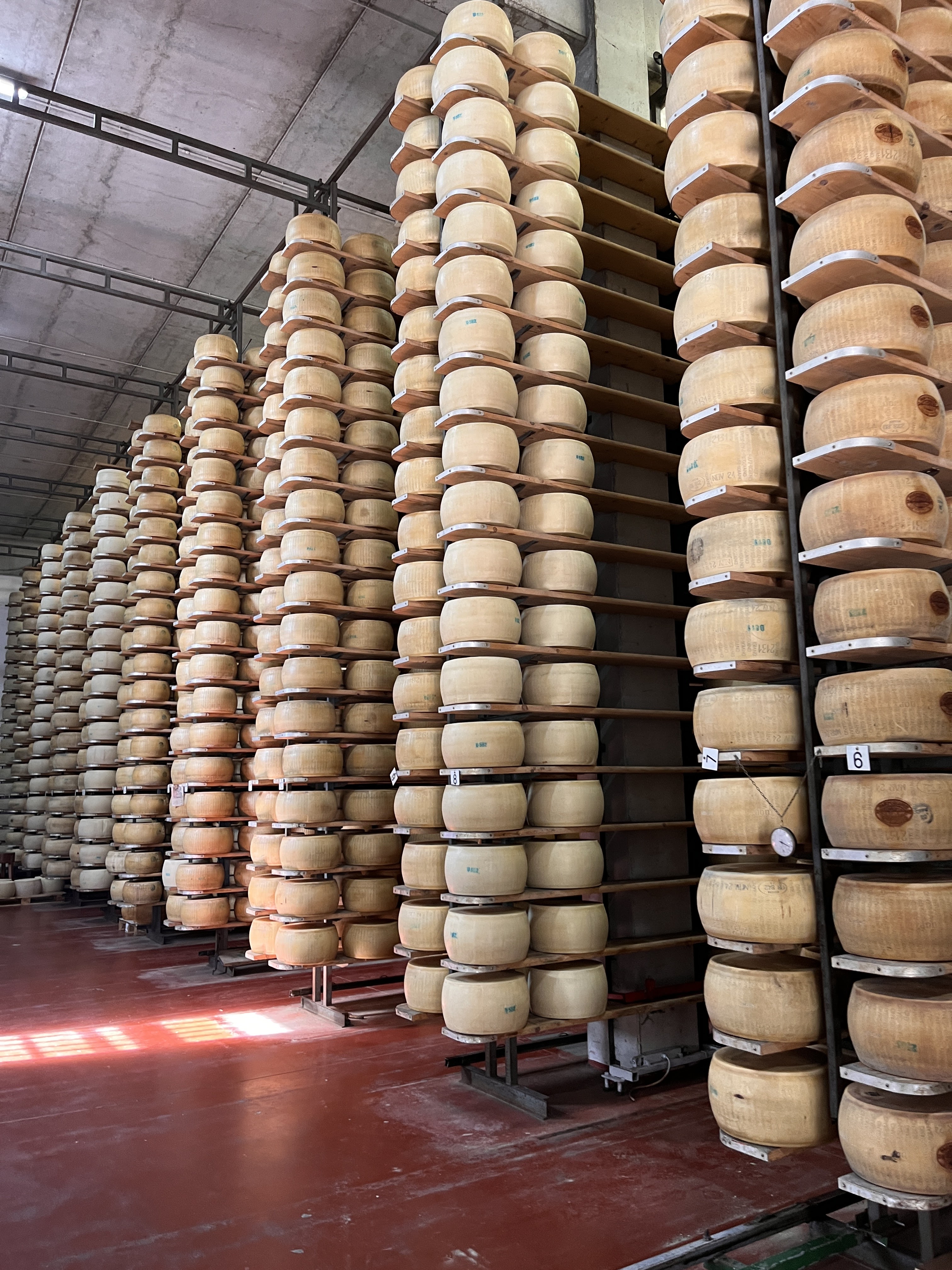
How glorious are those towers of cheese?!? They taught us the strict standards that are required to meet the official Protected Designation of Origin (PDO) and the highest grading from the Consorzio del Formaggio Parmigiano-Reggiano. Within view of the dairies which dot the surrounding hills, we enjoyed a sample just steps from where the cheese was produced and aged.
The next stop on the culinary journey took us to Modena, the birthplace of balsamic vinegar. Having learned the exacting specification of official Parmigiano-Reggiano, the rules around “official” balsamic vinegar take it to another level. Part of the challenge is simply the time it takes to age true balsamic before it can be labelled as such. Most of what people outside of Italy have access to as balsamic vinegar is just the first few years of the aging process, made in large quantities, primarily for export. For the “real” stuff, look for a small red and yellow label on a 12 or 25 year aged product. The aged product will be on the top shelf of the vinegar section at a specialty grocer and the price may be five times or more compared to the younger product.
We had the great fortune to learn the process at a very small, local vineyard which grew the grapes used for the balsamic vinegar entirely separately from their vineyard for wine production to avoid cross-contamination. We explored a tiny storage facility (a “loft”) with aging barrels of many types of wood to impart different flavors to the final product.
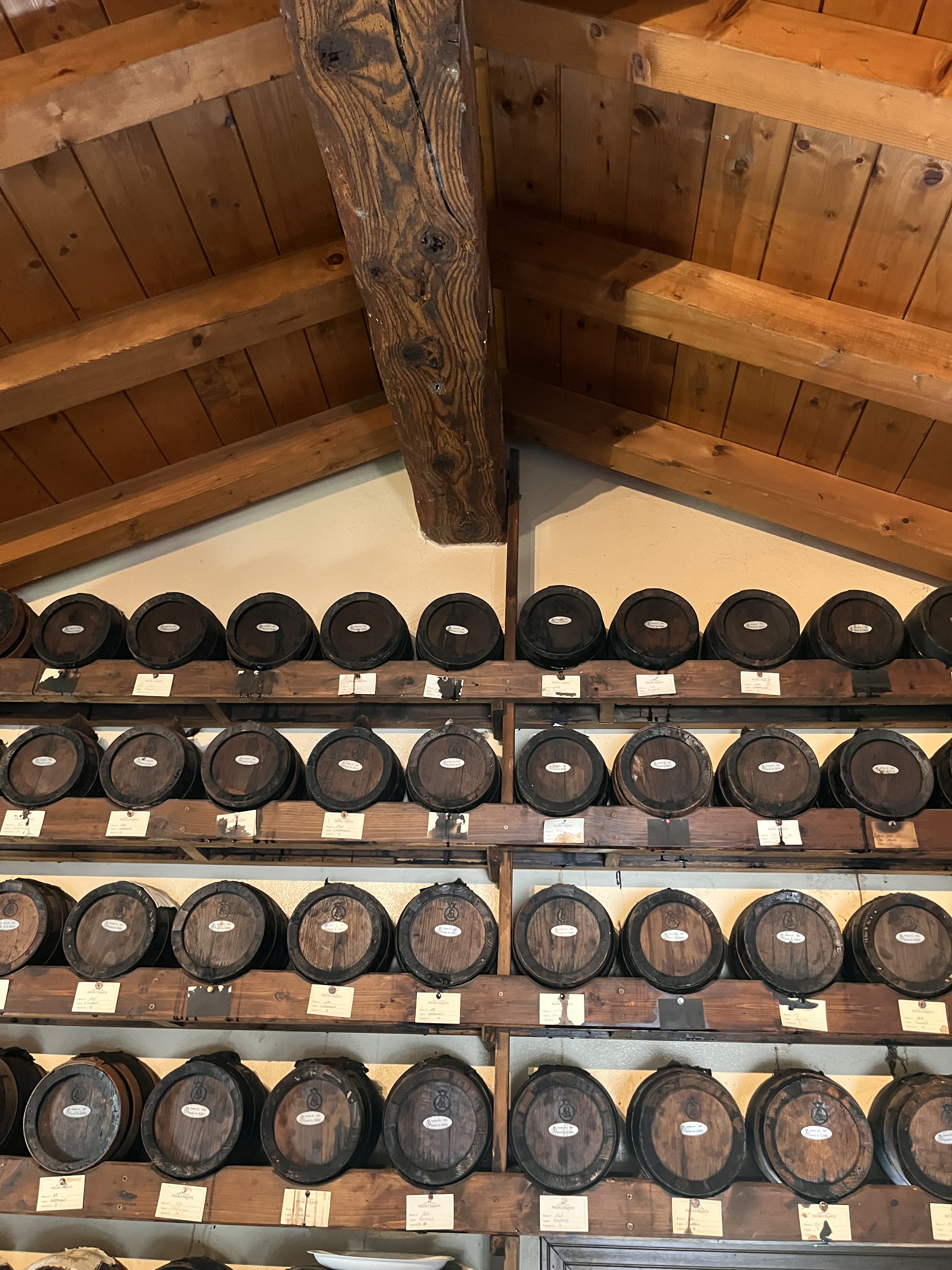
The designation of Traditional Balsamic Vinegar of Modena PDO is very carefully maintained by a Consortium just as Parmesan and is only available in two types – 12 years, 25 years. Traditional Balsamic Vinegar of Emilia-Romagna PDO is managed by a similar Consortium and is available in 12, 25, and 30 year varieties. They say the tradition started as a dowry for young women, with an initial batch placed in a barrel at the child’s birth, then each year moved to a new barrel and topped off with juice from the new harvest.
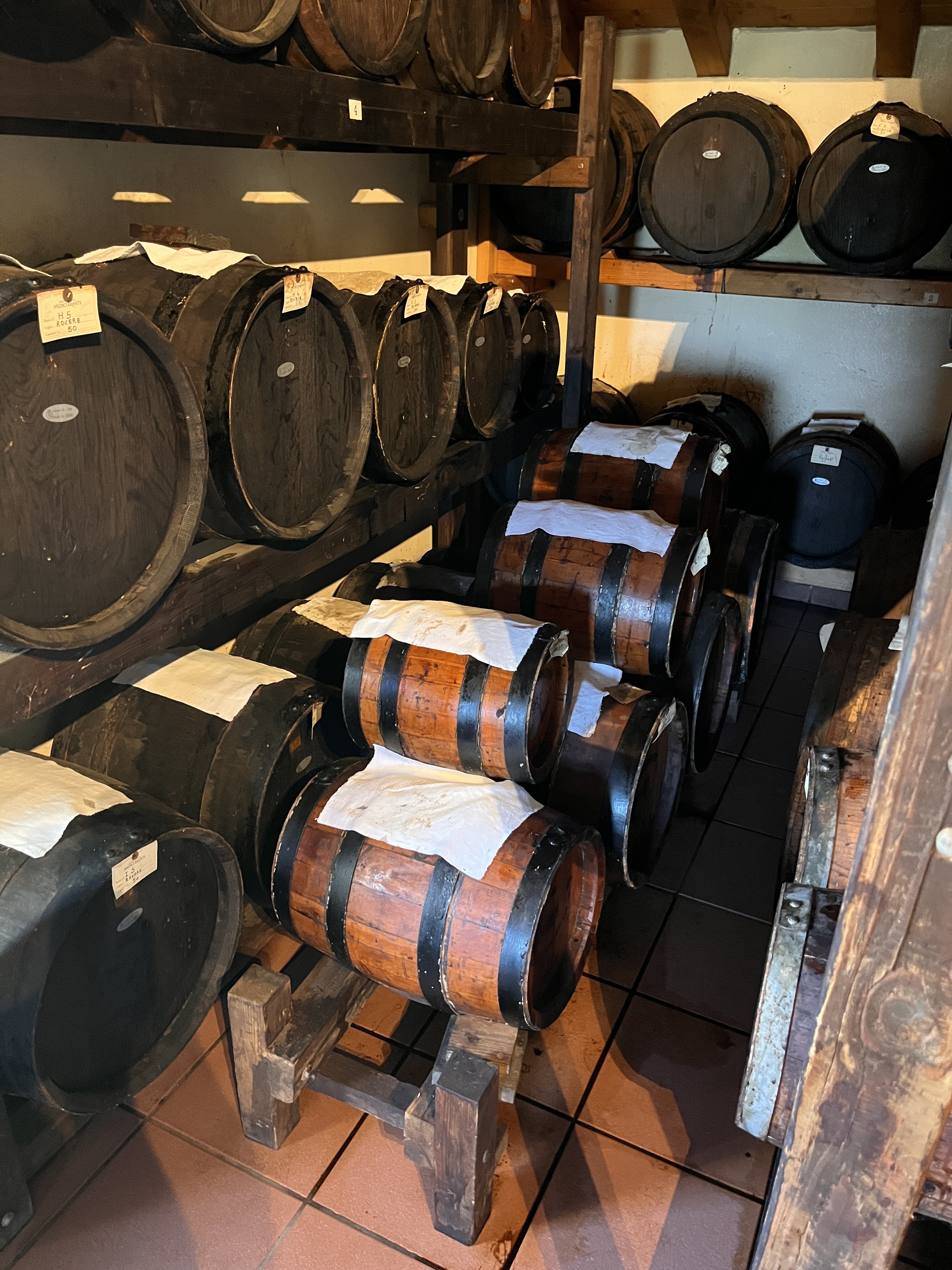
Traditionally, as seen above, the barrels get smaller and smaller each year, concentrated the vinegar into the perfect sweet concoction, taking on the subtle variations of each barrel used for aging. Many barrels are traditional woods like oak and cherry, but in this operation, they also used juniper barrels to impart an additional, ephemeral hint of pine. After a tasting, we purchased a small set of all three varieties to treasure the flavors for years to come.
We left the picturesque vineyard, sun streaming through the clouds rolling over the Apennine peaks. Our next stop took us through the valleys on winding roads, past farms and fields, dotted with small communities. These mountain valleys create the unique geographic circumstance for our next culinary wonder – Prosciutto di Parma. Let’s take another look at the geography we’re traversing. It strikes me as quite similar to the Driftless Region in Wisconsin.
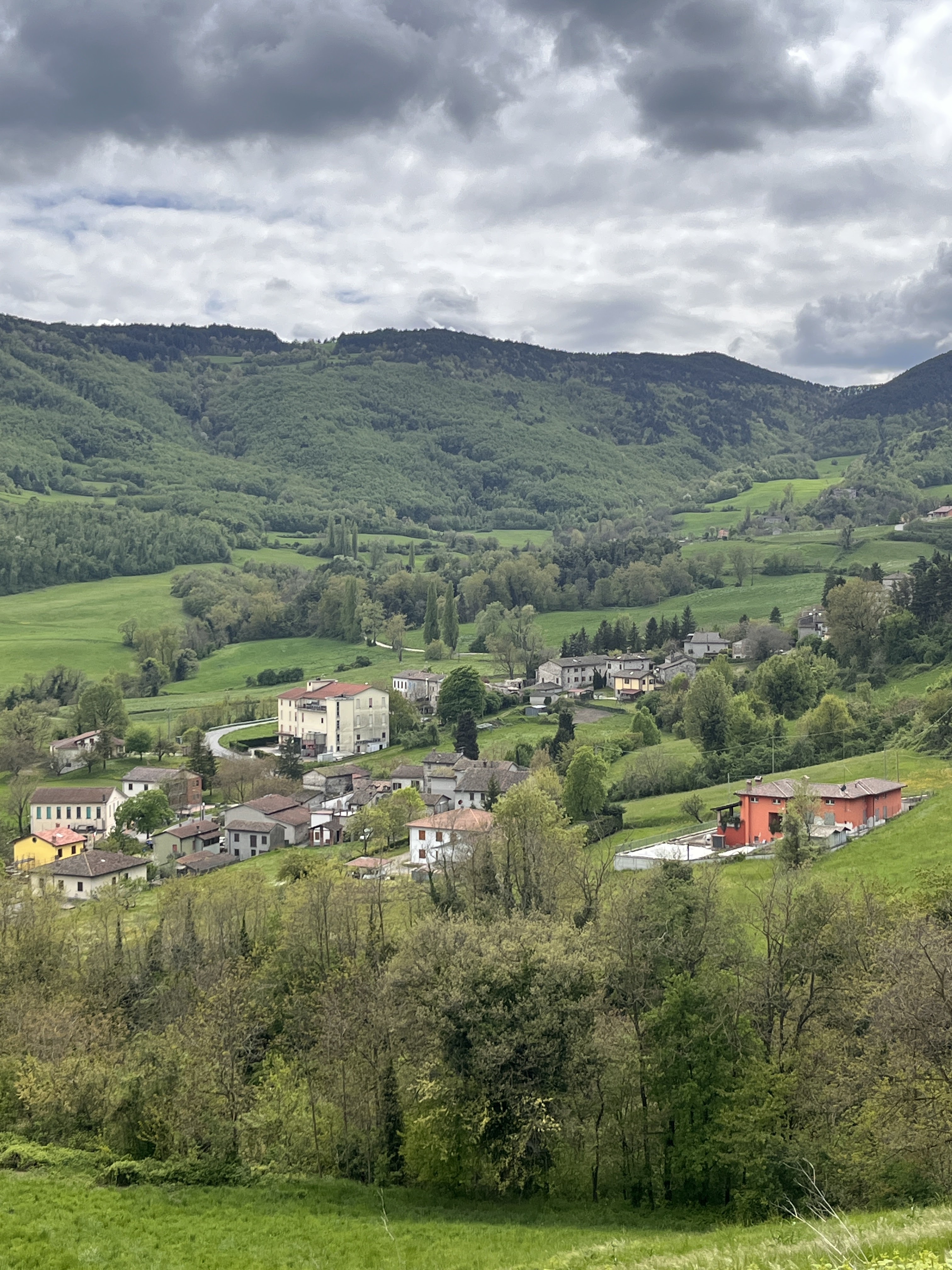
The making of true Prosciutto di Parma is tightly controlled by…you guessed it…another Consortium! Traditionally the pigs were raised in the hills, then the hind legs were cured with just salt in the homes down in the valley. The mountains allowed the perfect temperature and the valleys created a gentle, but persistent air flow to cure the hams naturally without any added nitrates or nitrites as preservatives.
Hams have been cured this way since the Roman empire and have become a prized product across Italy. Today, the pigs are raised across the country, but within a set of agreed upon guidelines, and the oceanic salt must be from coasts of Italy as well.
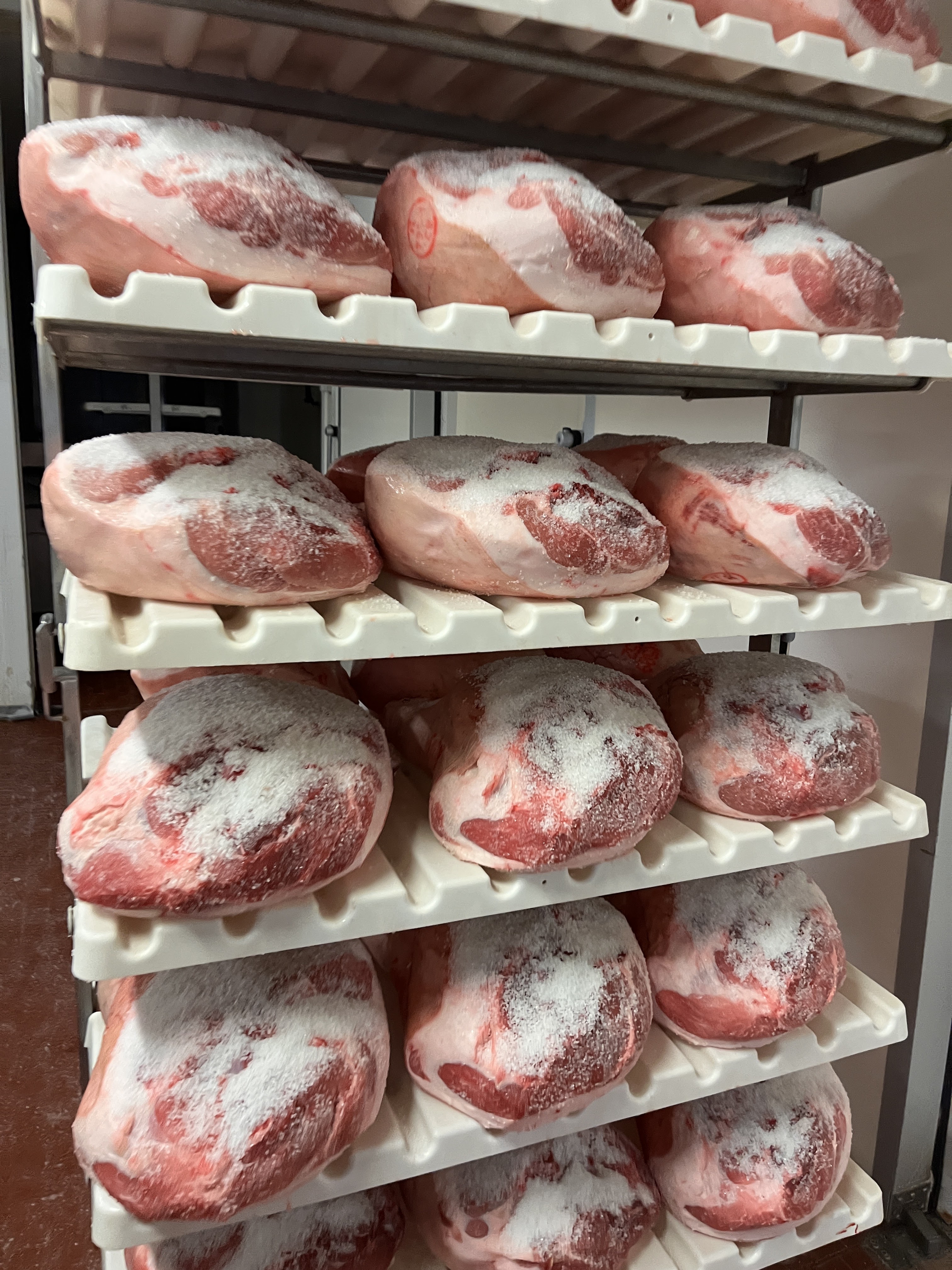
But all the aging must occur in these valleys. Yes, the facilities are now modern, clean, and temperature controlled and the first 3 months are in refrigerated, humidity controlled rooms. Yet when the weather is just right and the breezes blow down from the mountains, they still open the facilities to the outside air and allow it to wash over the aging ham for an additional three months.
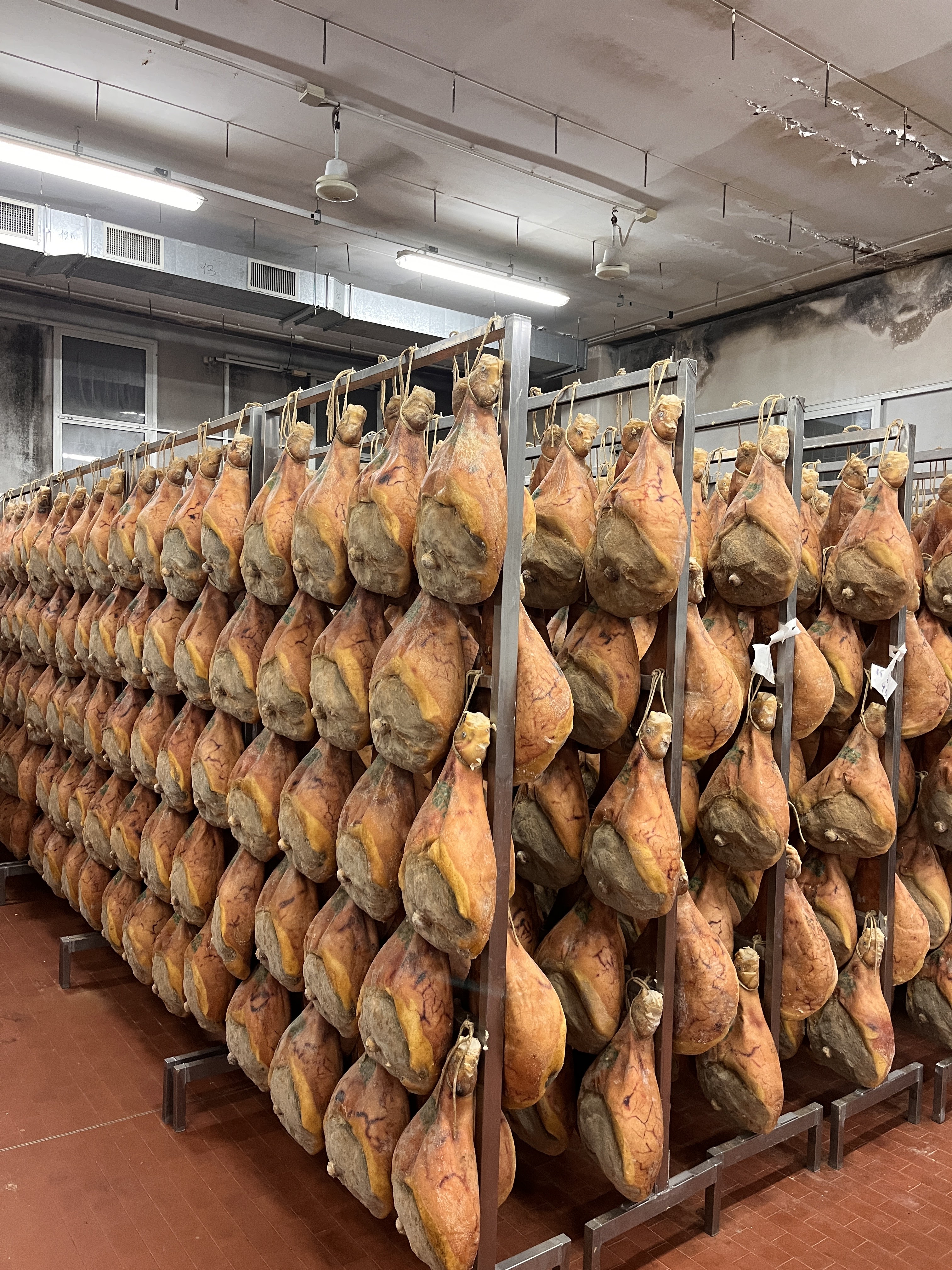
The ham cures for at least another eight months in the “cellar”, which in this facility felt very much like a traditional cellar, though of course impeccably clean, but dark with low ceilings and endless racks of gloriously aging ham.
Witnessing the tradition, the artisanal commitment, and the impact of the terroir, we were more than ready for lunch at a family-run restaurant with maybe twenty tables, nestled in along the roadside in one of the mountain valleys.
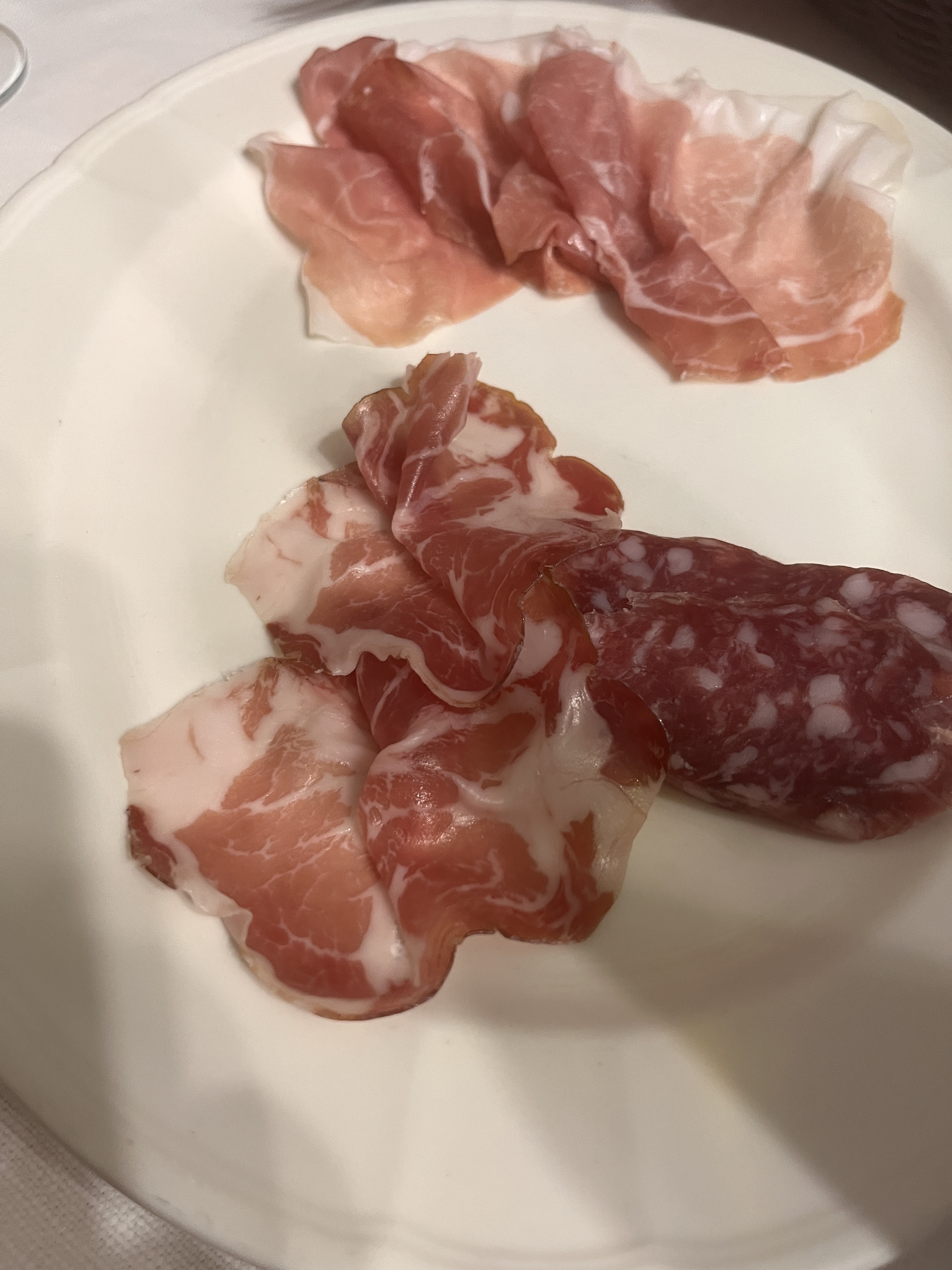
We began with a plate of thinly-sliced local meats: Prosciutto di Parma (top item in the picture above), Coppa di Parma (left side), and salumi di Parma (right side) Our wine to accompany the tasting was a Talete Malvasia Frizzante from Cerdelli Cellars, which produces just a few thousand bottles each in the hills of Parma. Malvasia is a grape varietal I had not previously enjoyed, but it is crisp and deeply aromatic, enhanced by the light bubbles (the “Frizzante” part of the name). Our culinary guide, Alicia, avoids red wines with prosciutto as it overwhelms the delicate flavor of the fat. The local Malvasia was a delight and complemented the subtle, richness of the fat. Don’t think bacon fat, but like a farm-fresh butter with hints of acorn that simply melts in your mouth.
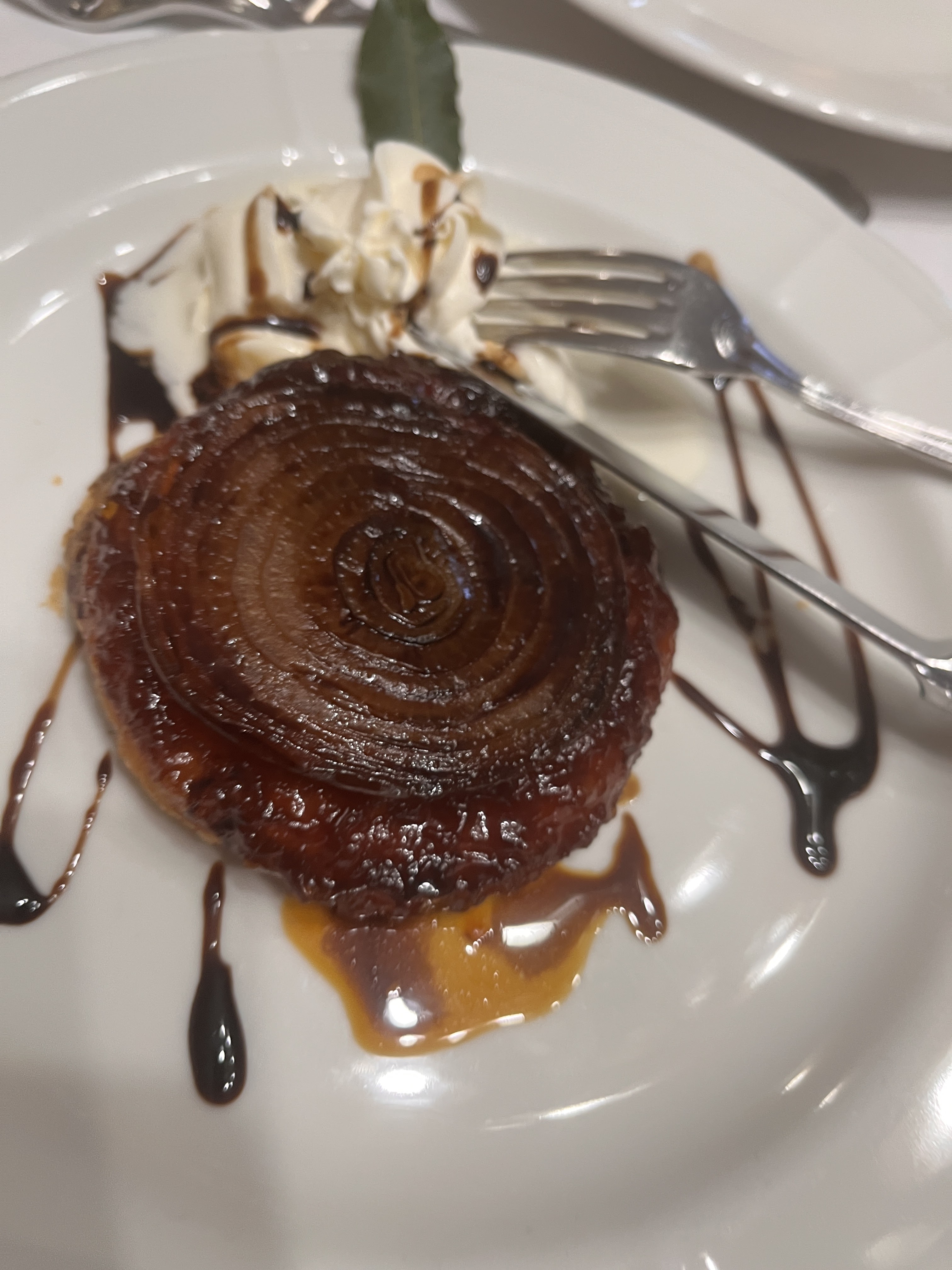
Next was a slow-roasted onion with a drizzle of balsamic vinegar and whipped ricotta. I didn’t get the recipe but I’m betting this one is fairly close, though they may cook them a bit lower temperature for longer based on the caramelization you can see in the picture above. We’ve explored the whipped ricotta approach here before, duplicating it Farmer’s Cheese. I can imagine a slow roasted onion with an apple cider reduction and whipped farmer’s cheese being an interesting Great Lakes take on this dish.
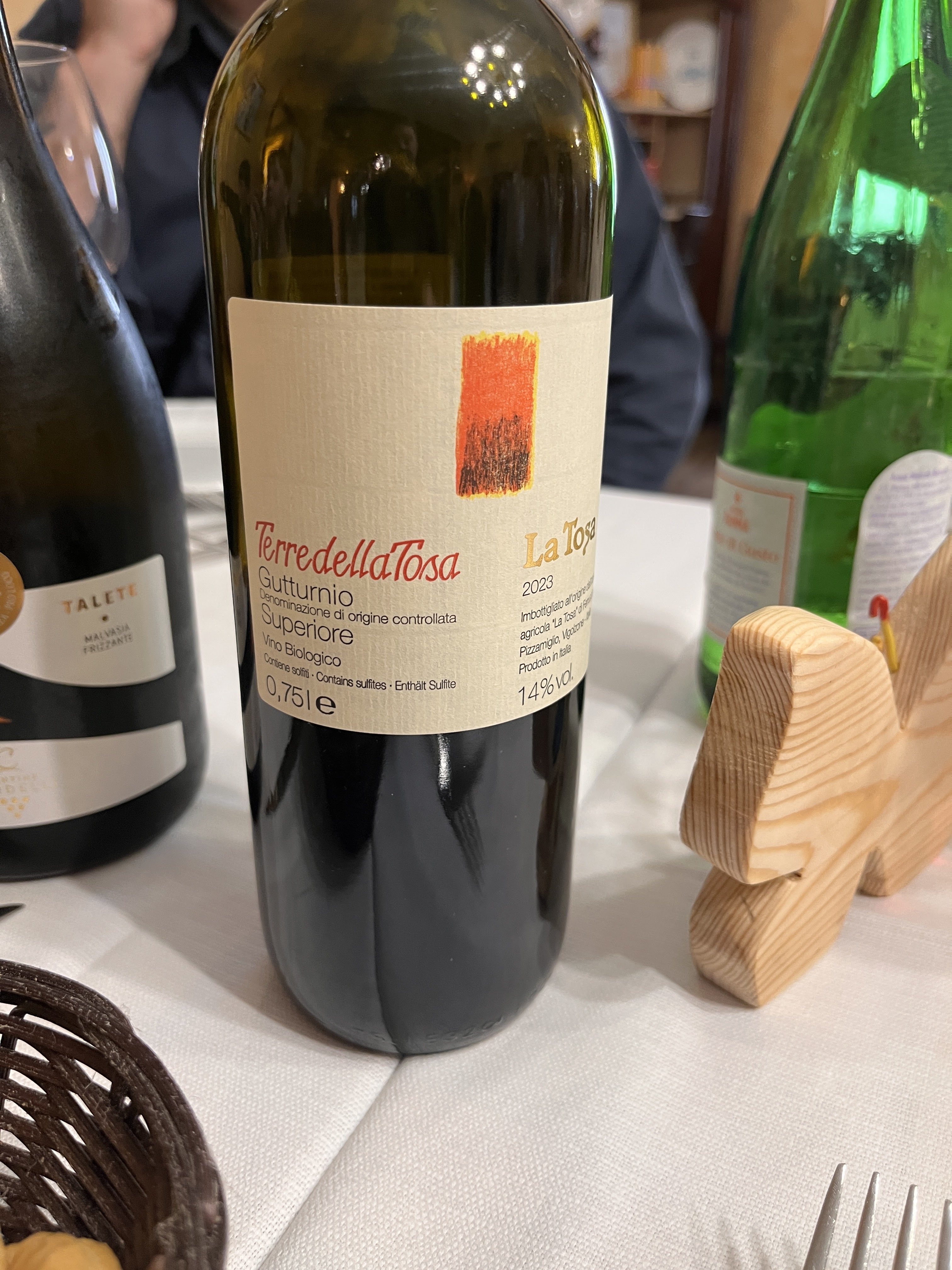
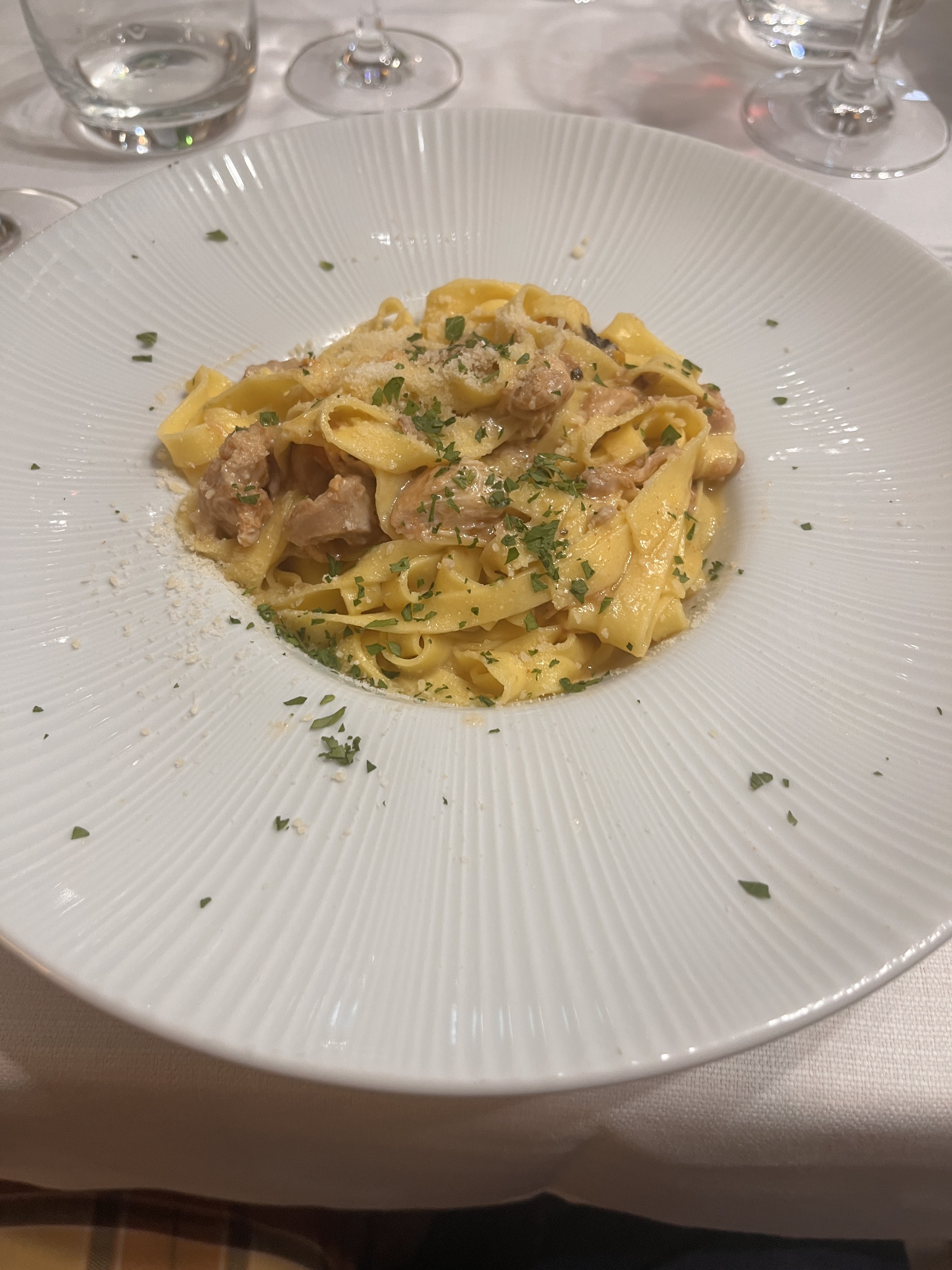
We paired the caramelized sweetness of the onion and balsamic vinegar with another local offering, a TerredellaTosa – La Tosa Gutturnio 2023, which also was lovely with my entree, a rabbit ragù with a very light tomato sauce with fresh, house-made pasta. The pasta was topped with herbs and a dusting of freshly shaved Parmigiano Reggiano.
The meal was capped with a vanilla bean gelato served with local preserved sour cherries. Given that Amarena cherries are grown in the Modena and Bologna region of Italy, and based on the flavor, I would hazard a guess that is what we enjoyed. Thankfully, Trader Joe’s has a version that is pretty spot on.
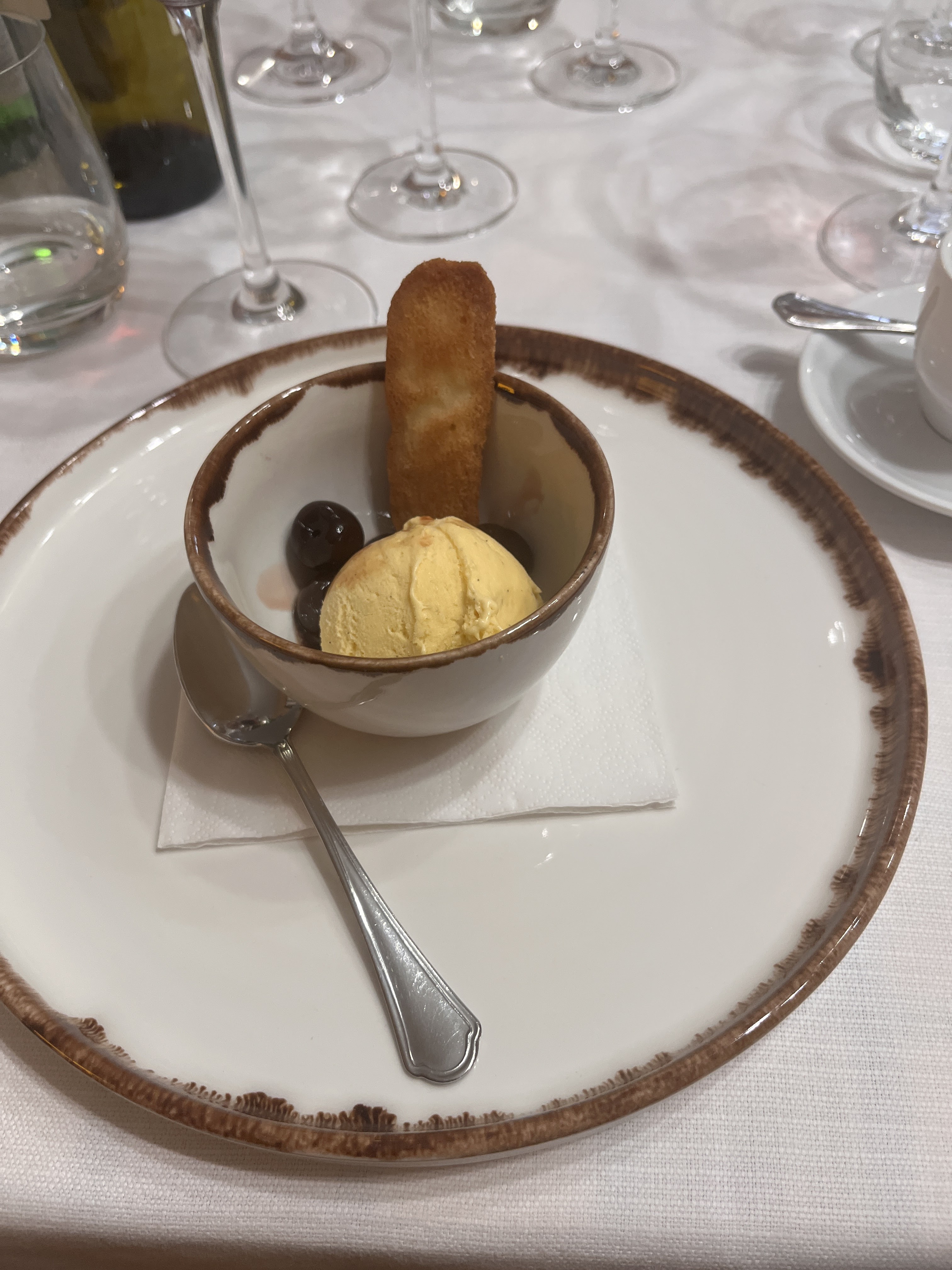
The gelato was undoubtedly made with the milk from a local dairy. And if you do have a little, old grandma that can make buttery, crisp almond wafers, this is the perfect place for them to shine.
The entire day was an exploration of what it means to honor tradition and stay deeply rooted to a sense of place. A place where the winds rolling over the mountains settle into a soft breeze through these fertile valleys. A place where farms and fields knit the landscape together in a quilt of agricultural production. A place where artisan traditions have been taught, cherished, and codified for generations.
Parma is truly a unique Italian city and it’s products are uniquely it’s own. And in a similar way, we can point to culinary traditions in the Great Lakes region which are just as reliant on the terroir of our area and generations of tradition, though admittedly, a lot less generations than Italy! It is in exploring what makes up our history here in this unique land that we find the road that leads us forward through the valleys of innovation.
 Great Lakes Cuisine