In a few weeks from the writing of this post, James Beard Foundation will announce it’s winners for Best Chef for 2024. The Great Lakes region in the awards includes Illinois, Indiana, Michigan, and Ohio, which puts Chicago, Detroit, and Cleveland all in the same category. Tough sledding for the Great Lakes cities. Milwaukee (thankfully!) is moved into the Midwest category. And one of the top nominees is Chef Kyle Knall of Birch restaurant and deservedly so.
We featured Birch a few posts ago as a source of inspiration. A more recent meal was simply one of the finest I’ve ever been privileged to experience and I wanted to share the meal with commentary on what worked so well in this tasting menu. We will offer a few minor tweaks we might make if we wanted to be rigidly adherent to Great Lakes Cuisine. Come along on a culinary journey.
The mantra for the restaurant sets the tone for the meal – a keen focus on local producers and then treating those ingredients with great respect. On this trip we elected to go with a tasting menu expertly matched with wine for each course.
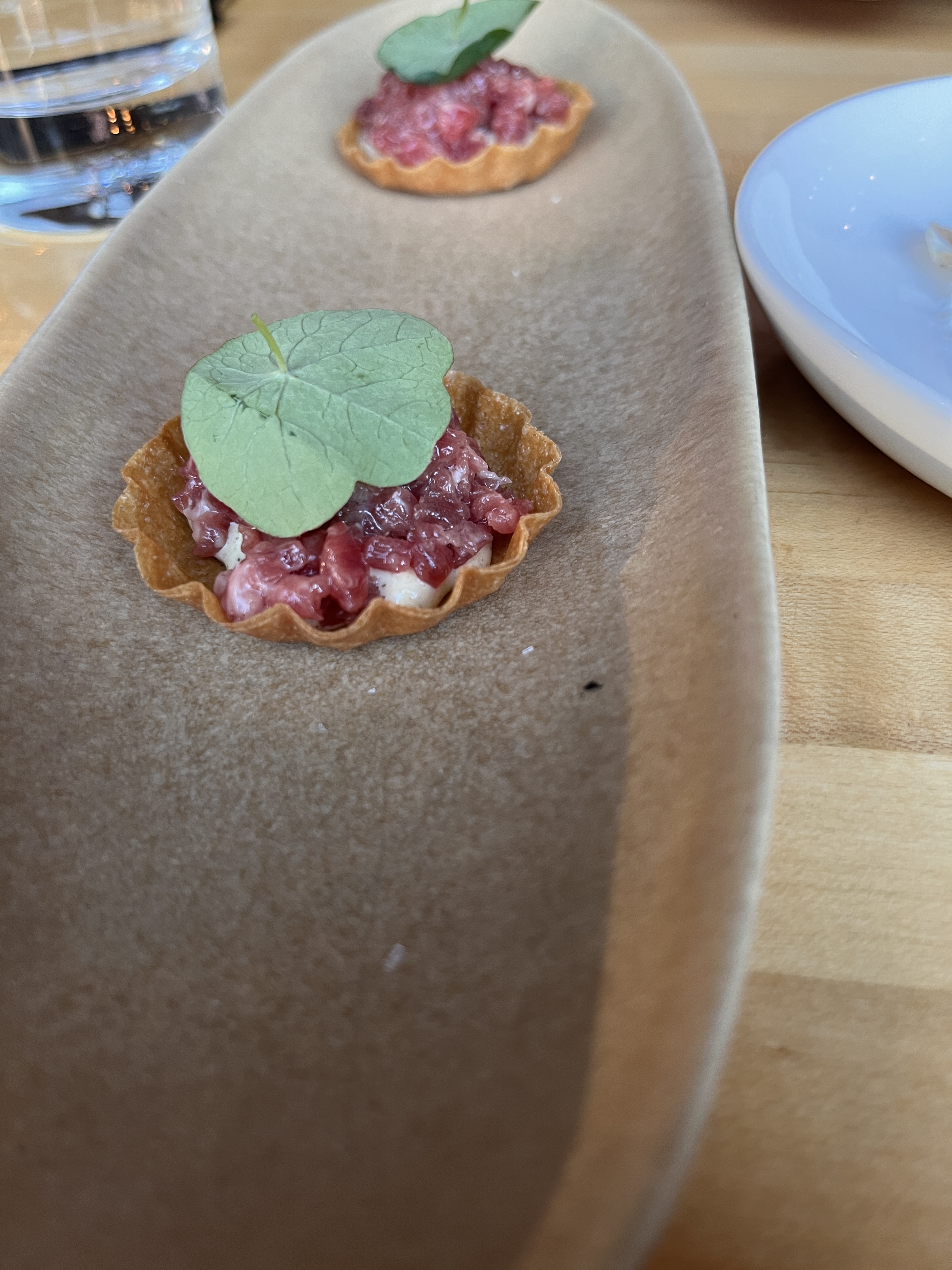
Opening dish was a lamb tartare with nasturtium leaf along with a cured lamb coppa (not shown above). The sauce under the chopped lamb created a luxurious mouthfeel, and the peppery hint of the nasturtium was a beautiful replacement for ground pepper that might accompany a more traditional beef tartare.
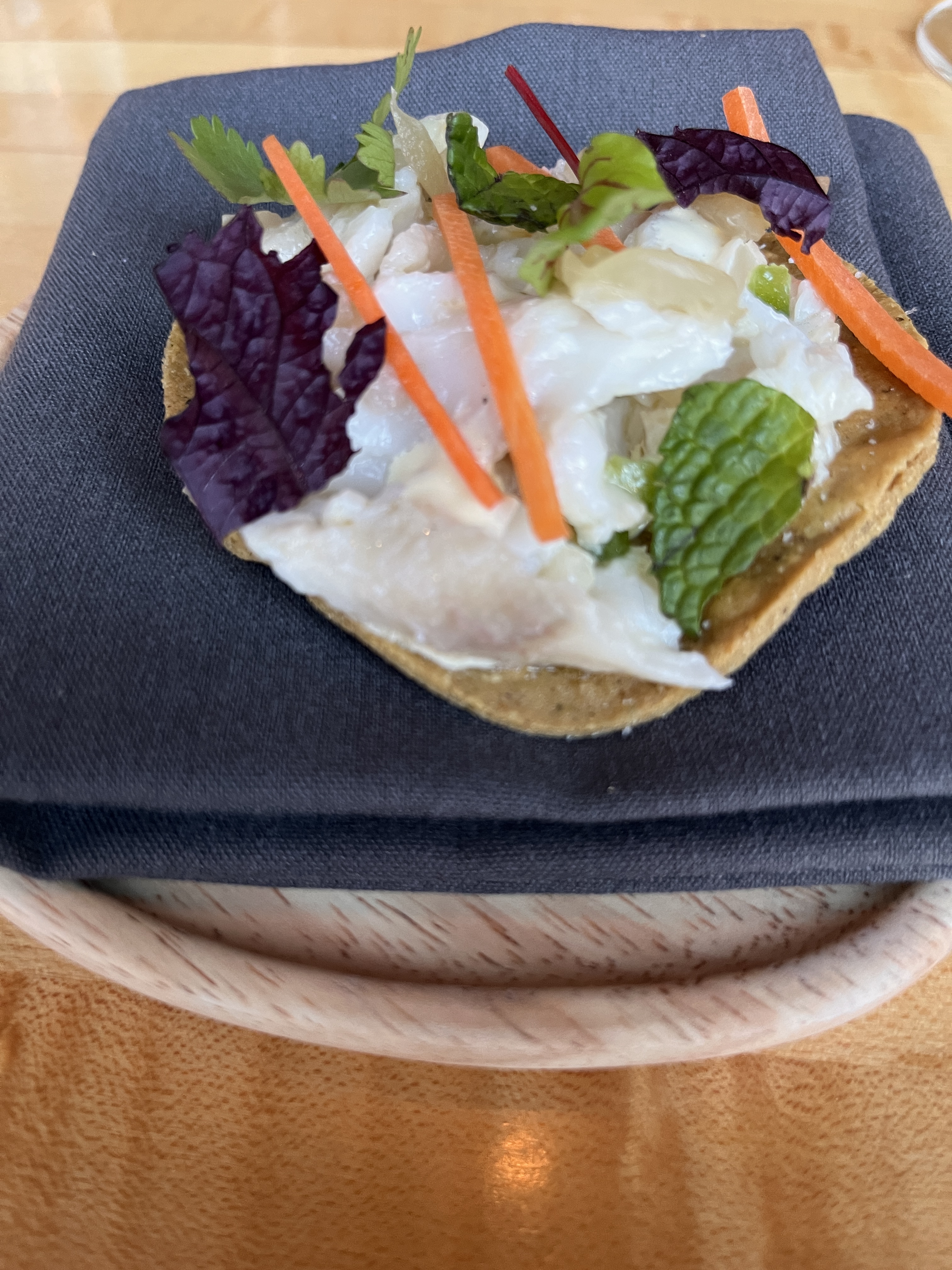
Second dish was a walleye tostada served with fermented cabbage and seasoned with a touch of jalapeño and lime, dressed with a set of greens and julienned carrots. The walleye was wonderfully tender flakes, achieved by poaching the fish. The lime and jalapeño offered a punch of flavor which echoed the tostada presentation, yet there may have been a opportunity here to lean into our Great Lakes options. I’ve enjoyed the sour lemon hint of wood sorrel on rich preparations liked this. The “green” spice of jalapeño is harder to mimic, but another peppery green could have brought that note to the dish. A very successful dish, so we’re only nit-picking items that would lean more into our notion of Great Lakes cuisine here.
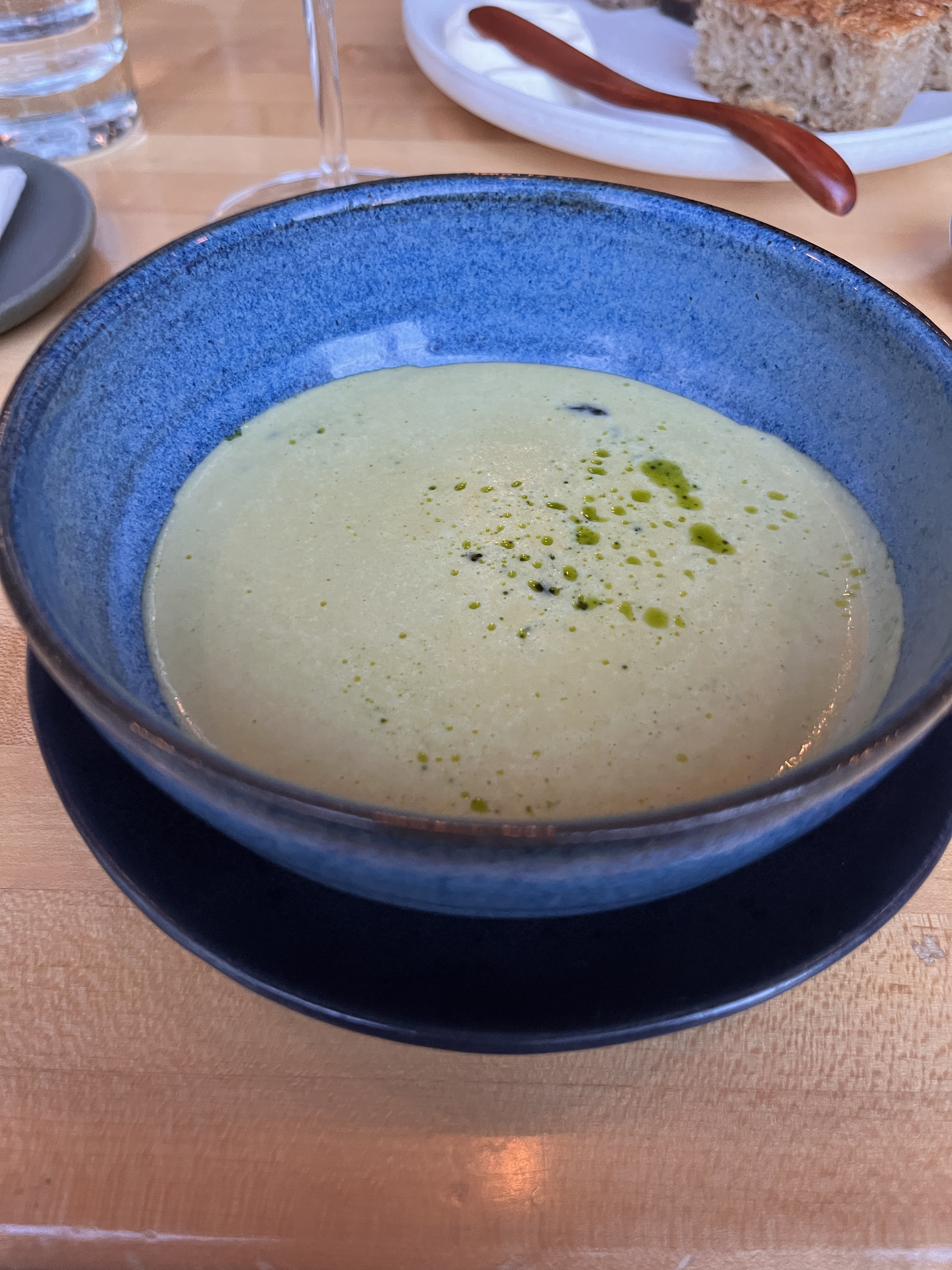
This simple looking soup was actually the star of the show. It is a “spring allium” soup. Not certain which specific spring alliums they used here, but I’m reminded of Chef Alan Bergo’s (aka The Forage Chef) take on Wild Garlic Soup. An amazing blend of creaminess and green oniony goodness, but the whole thing was elevated to another level with the addition of the bread.

Oh, did I bury the lede? Yes, that is a grilled short rib skewer with an ember roasted leek. Incredible. The focaccia they serve is dense, moist, and hearty, along with a swirl of whipped ricotta. The skewers and bread served alongside the soup made for one of the highlights of the evening. I would change nothing. Ever. Amazing.
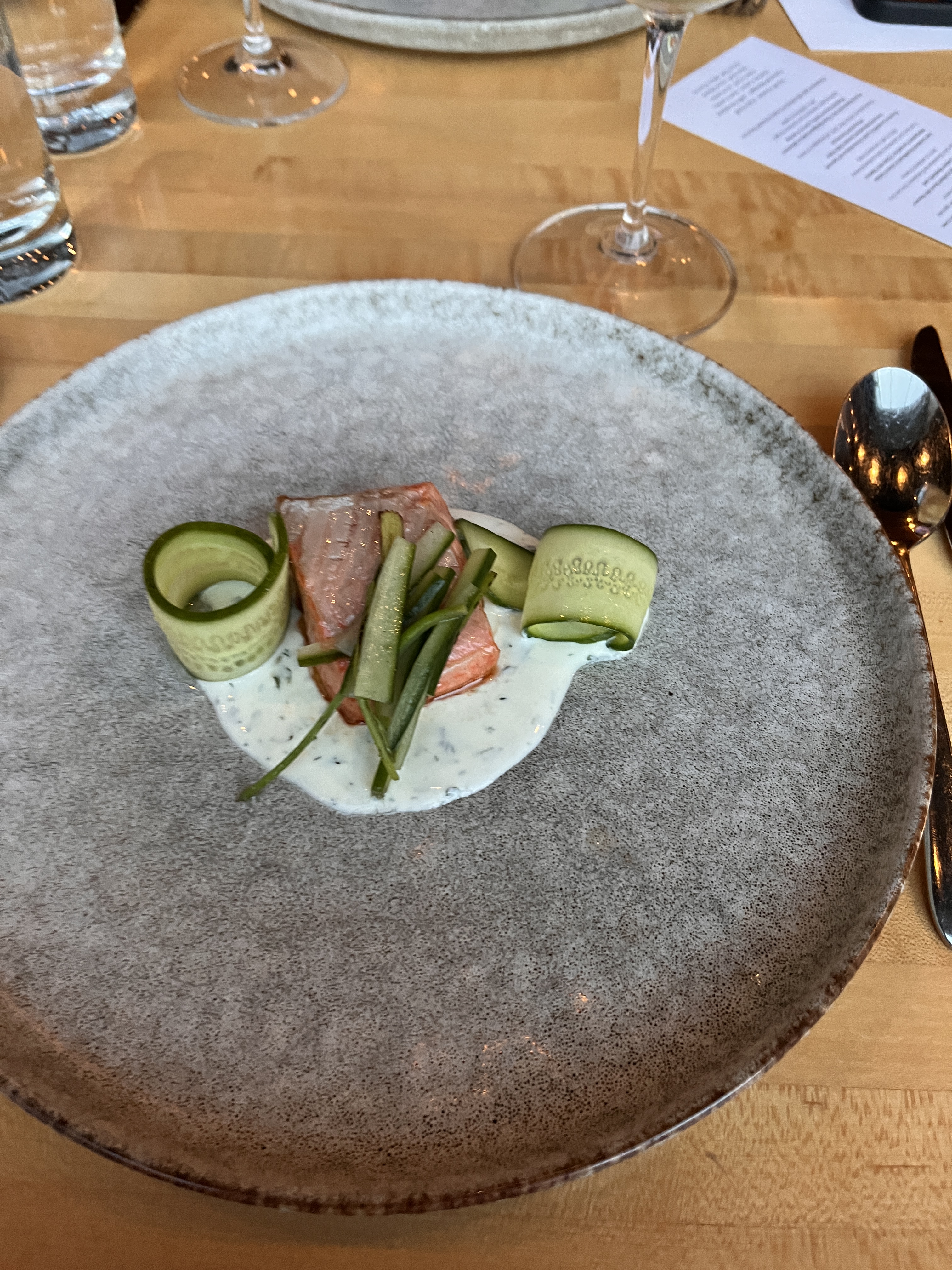
Hot smoked steelhead was next with a charred-cilantro creme fraiche and marinated cucumber. The hot smoke did not impart a heavy smokiness but did allow the chef to prepare the trout to the perfect doneness. Steelhead trout are present in the Great Lakes, and are the same species as the coastal steelheads present in the American west coast and Asian east coast. The Great Lakes fish obviously do not migrate to the ocean, and so some hold they are not “steelheads” but rather just large lake trout. Not sure of our origin for the particular trout we enjoyed, but it was delicious and perfectly prepared. Charred ramp creme fraiche would have been delightful here as well. Nothing wrong with cilantro, its just Mediterranean in origin, but it has been used for probably 10,000 years. But if we’re staying Great Lakes, there are a couple other options.
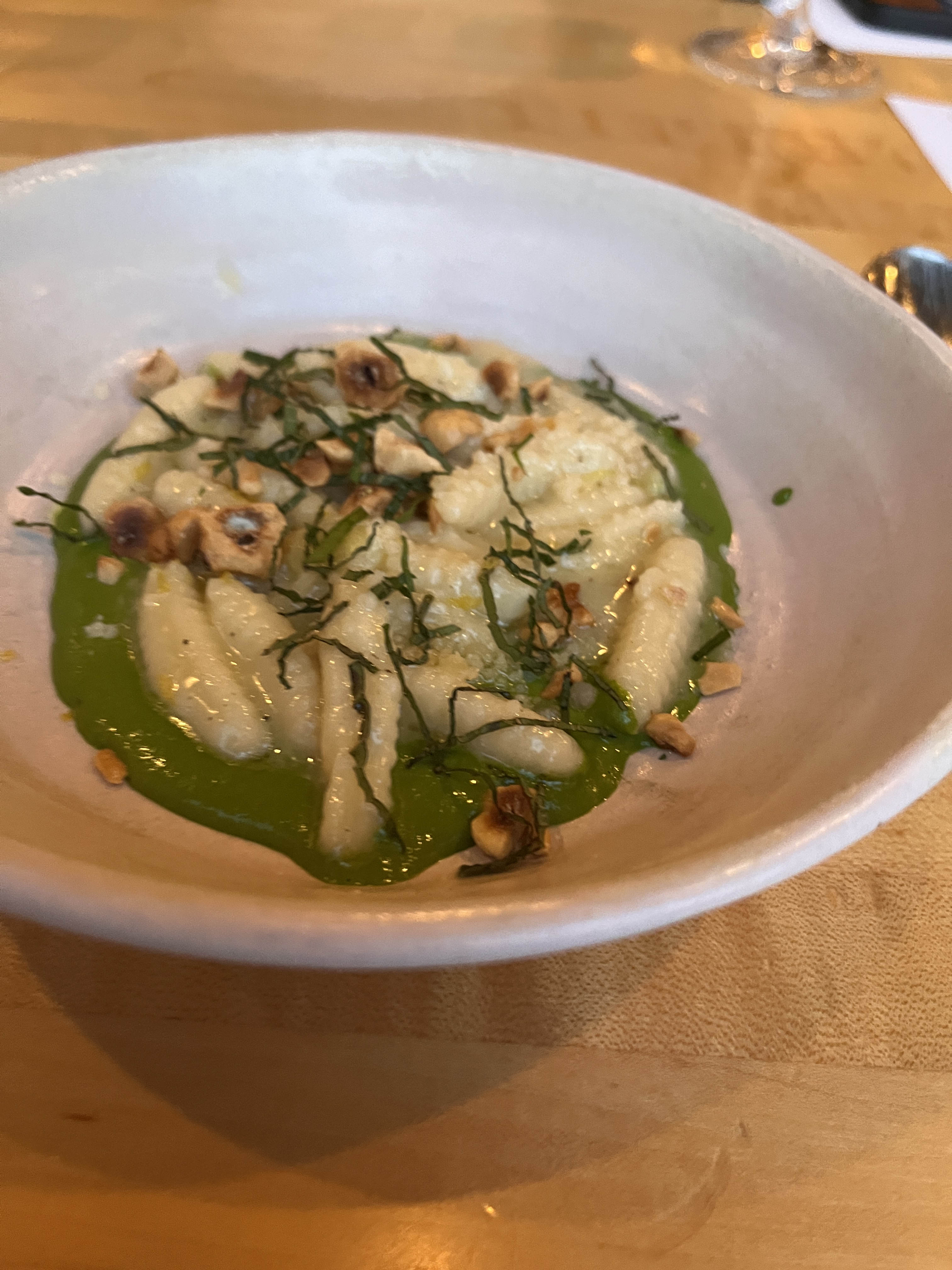
Over-wintered spinach was a new ingredient for me, featured in this dish in the luxurious green puree with decadently tender ricotta cavatelli. The nut may have been black walnut, which is a species native to the Midwest, but I failed to note. If we wanted to stay Great Lakes, rather than go with the Italian cavatelli, we could go with a cheese infused spaetzle here.
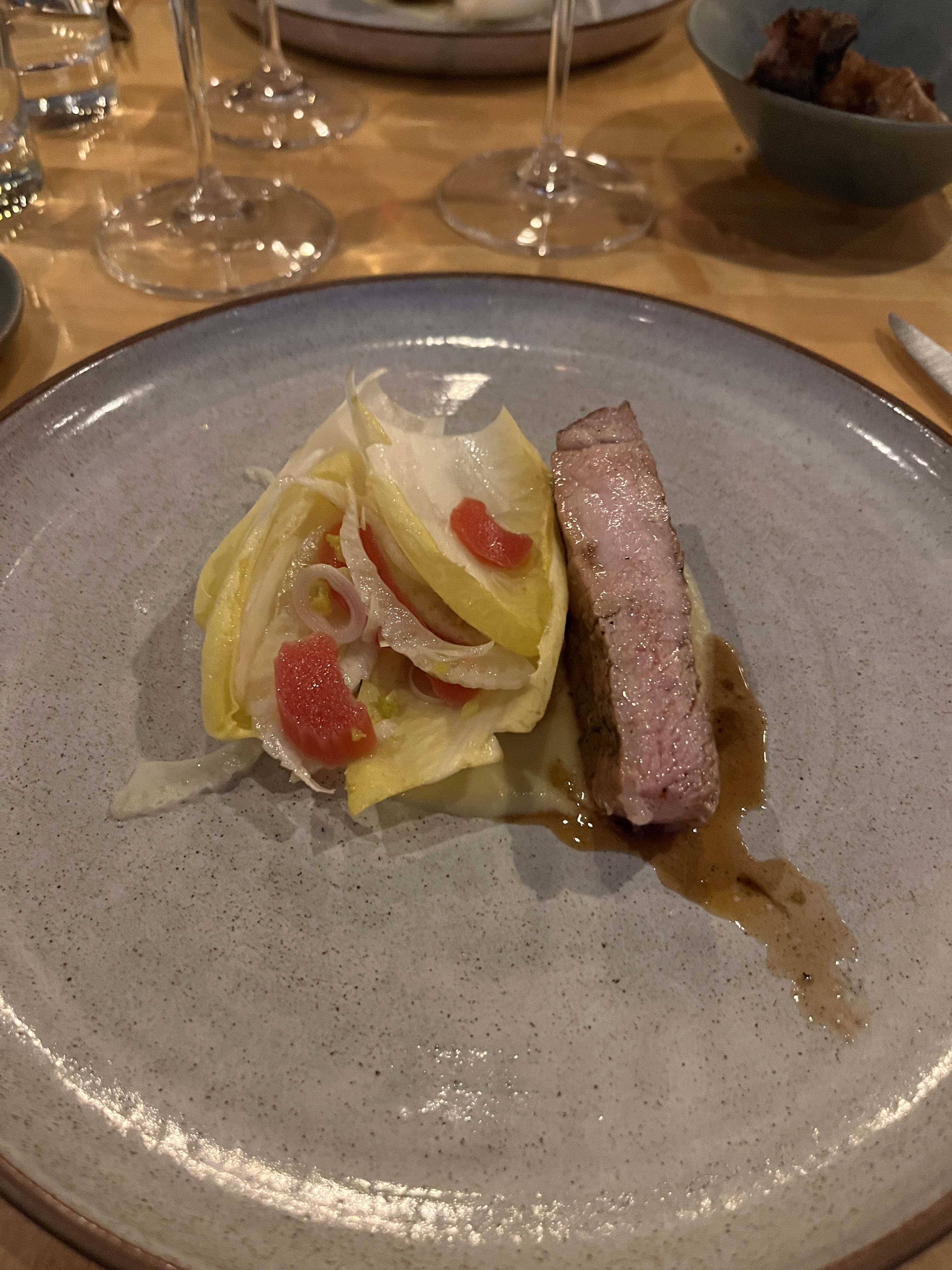
The salad served alongside this wood-roasted pork chop consisted of endive, fennel, and pickled rhubarb; a perfect foil for the rishness of the chop. Birch served the pork boneless, as seen above, but they brought the bones to the table so diners could grab them by hand and chew the last little bits from the bone. And as you probably already guessed, I did gnaw every last bit of porcine goodness off that bone. Another dish without a single change to stay in our Great Lakes approach. The use of pickled rhubarb was genius and the fennel echoes the famous Upper Peninsula porchetta.

A small pistachio cake with ricotta ice cream finished the meal, a perfectly sized bite after the rich, filling meal. Pistachio isn’t native to the Great Lakes region, and not grown in the region to my knowledge. Hickory or hazelnut might have been any easy substitution to stay local. The ground cherry here appears to have been pickled or poached, but did not add a significant punch to the dessert. Though ground cherries are native to the Americas, I might have preferred to see a preparation of some of our coveted Door County cherries here.
In all, this was a truly memorable meal from start to finish. My commentaries on what might change are solely our own effort to keep things somewhat specifically to our Great Lakes cuisine approach. None of the suggestions are meant to suggest our approach would have resulted in a better tasting dish. This meal was spectacular as served with more than a few examples of what we’d claim as Great Lakes cuisine.
 Great Lakes Cuisine
2 thoughts on “Restaurant – Birch”